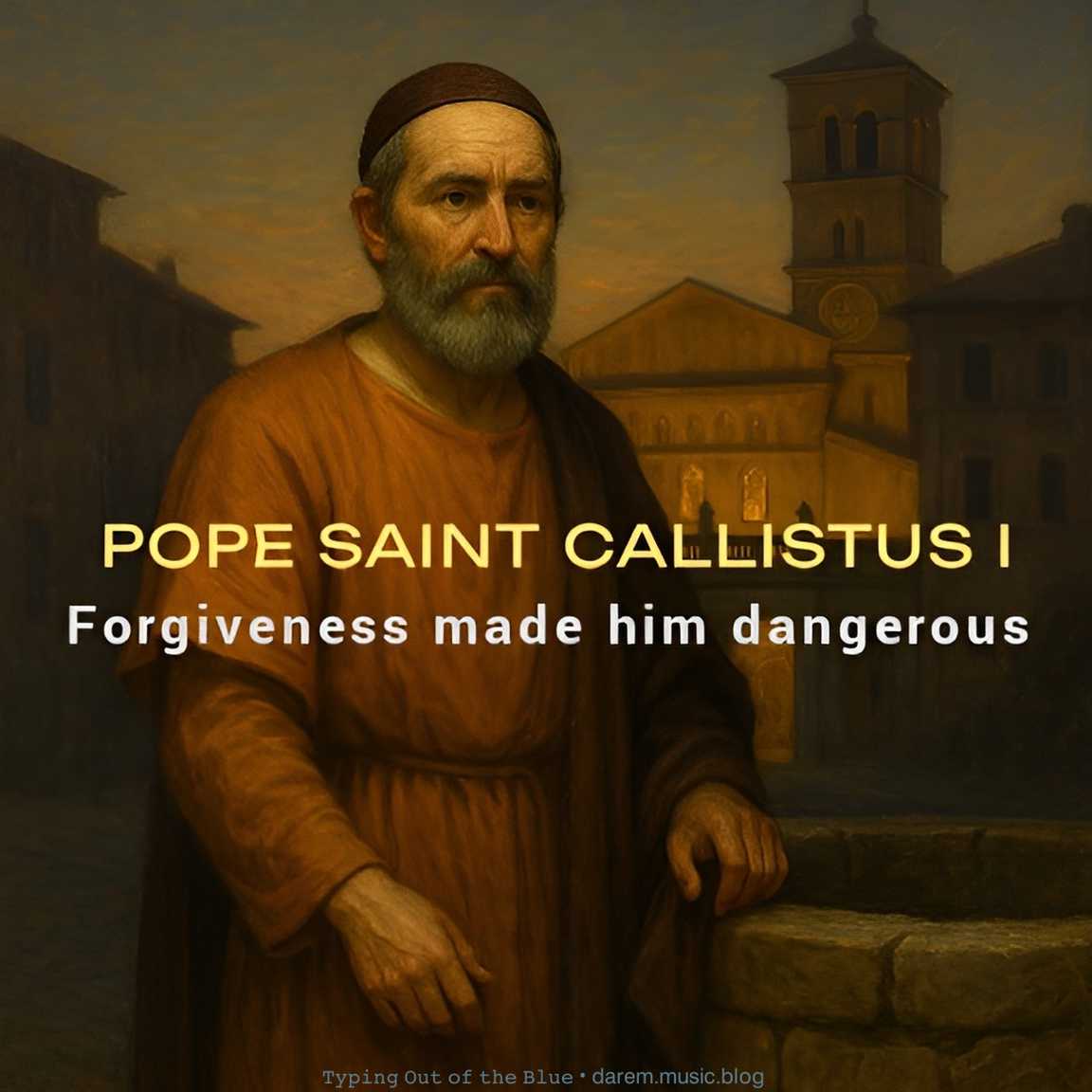
Pope Saint Callistus I

From the mines to the papacy, Pope Saint Callistus I showed that mercy, not fear, is the strongest power of all.

Forgiveness made him dangerous

In the early 200s, when the Roman Empire still ruled with iron and fear, Pope Callistus began as a slave—one of those stories you wouldn’t expect to end with a crown. He once worked with money meant for Christians, lost it, got punished, and ended up working hard in the mines. From the pit to the Pope’s chair—yeah, life has a wild sense of irony.

When freedom finally found him, he didn’t seek revenge; he built tombs. The Catacombs of St. Callistus became his mission, a quiet place for souls. That’s where mercy started to breathe again.

As Pope, he fought not with swords but with scandal—the scandal of forgiveness. A wise priest named Hippolytus stood against him, saying he was too soft for letting even murderers and adulterers return to the Church. But Pope Callistus stood firm: the Church wasn’t a museum of saints—it was a hospital for sinners. That truth divided many, but it shaped mercy forever.

He died a martyr around 222 AD—thrown into a well, fitting for a man who once rose from the depths. His name now lives in Santa Maria in Trastevere, one of the oldest churches in Rome, found in a quiet old street where the story of mercy still lives.

Some saints ruled by fear. Pope Saint Callistus I ruled by forgiveness. And that made him dangerous—in the holiest way possible.

⌨ ᴛʸᵖⁱⁿᵍ ᴏᵘᵗ ᵒᶠ ᵗʰᵉ ʙˡᵘᵉ ᵈᵃʳᵉᵐ ᵐᵘˢⁱᶜ ᵇˡᵒᵍ
Traces of courage, silence, and sacrifice—this is Saints.

Listen on Apple Music, Apple Music Classical, and YouTube Music
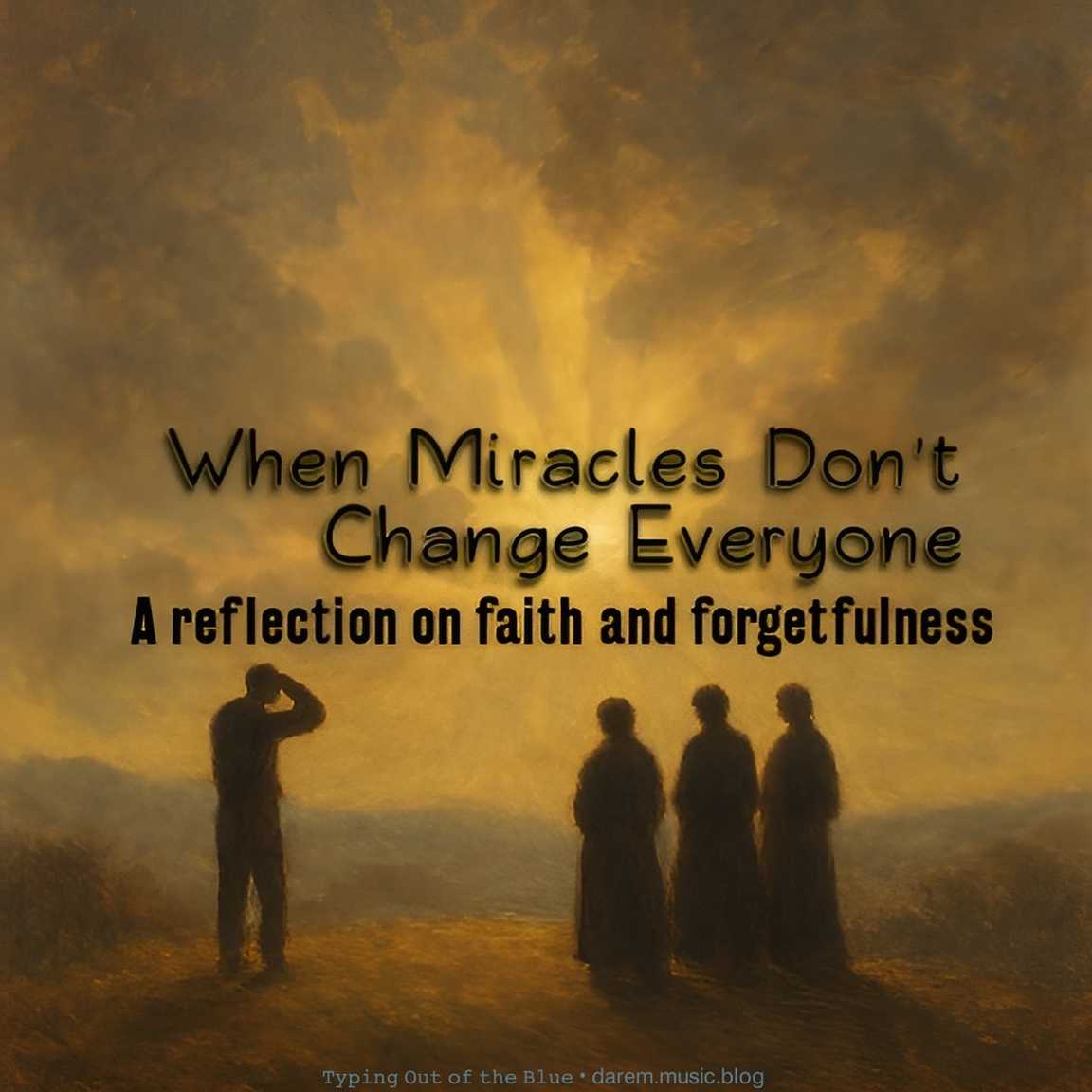
When Miracles Don’t Change Everyone

Even when miracles came true, not everyone believed—but heaven keeps trying anyway.

A reflection on faith and forgetfulness

Through the centuries, heaven has found ways to reach us—sometimes through visions, sometimes through tears, sometimes through silence that feels louder than thunder.

Mary appeared to children, to shepherds, to crowds that numbered in thousands. The sun danced, the sick were healed, the unbelieving were stunned. And yet, after all those miracles, the world somehow stayed the same. We still fight. We still lie. We still forget to pray. But heaven doesn’t stop trying.

At Fatima, Portugal in 1917, people dropped to their knees when the sky spun and the sun seemed to dance above them. Thousands witnessed it, from farmers to journalists, and many walked home changed—at least for a while.

In Zeitoun, Egypt from 1968 to 1971, Mary was seen as a luminous figure above a church roof. Christians and Muslims stood together, speechless under the same sky. No words were spoken, just light—and in that silence, faith found a way to unite. Yet even then, many treated it as rumor or illusion. The light faded, but not all hearts stayed awake.

In Kibeho, Rwanda in 1981, Mary appeared to young students, warning of suffering and violence to come. Thirteen years later, in 1994, the Rwandan genocide happened exactly as she foretold. But even after the warning came true, not everyone turned to faith. Some doubted, others forgot. Still, a few found the courage to forgive—and maybe that was the real miracle.

In every place where Mary’s face appeared, at least one soul decided to change—and maybe that was all heaven needed. Because not all miracles are meant to amaze us. Some are meant to awaken us.

The real miracle isn’t the sun that danced. It’s the person who chose to forgive. It’s the skeptic who prayed again. It’s the quiet heart that finally listened.

Heaven doesn’t need everyone to believe. But maybe one day—when the world grows quiet enough—everyone finally will.

And until that day comes, we keep walking, forgiving, and believing—Under the Same Sky.

Under the Same Sky • Darem Placer
In The Quiet Between Piano Notes, silence unfolds, revealing the beauty in stillness and the thoughts left unheard Under the Same Sky.

Listen on Apple Music, Apple Music Classical, and YouTube Music

⌨ ᴛʸᵖⁱⁿᵍ ᴏᵘᵗ ᵒᶠ ᵗʰᵉ ʙˡᵘᵉ ᵈᵃʳᵉᵐ ᵐᵘˢⁱᶜ ᵇˡᵒᵍ