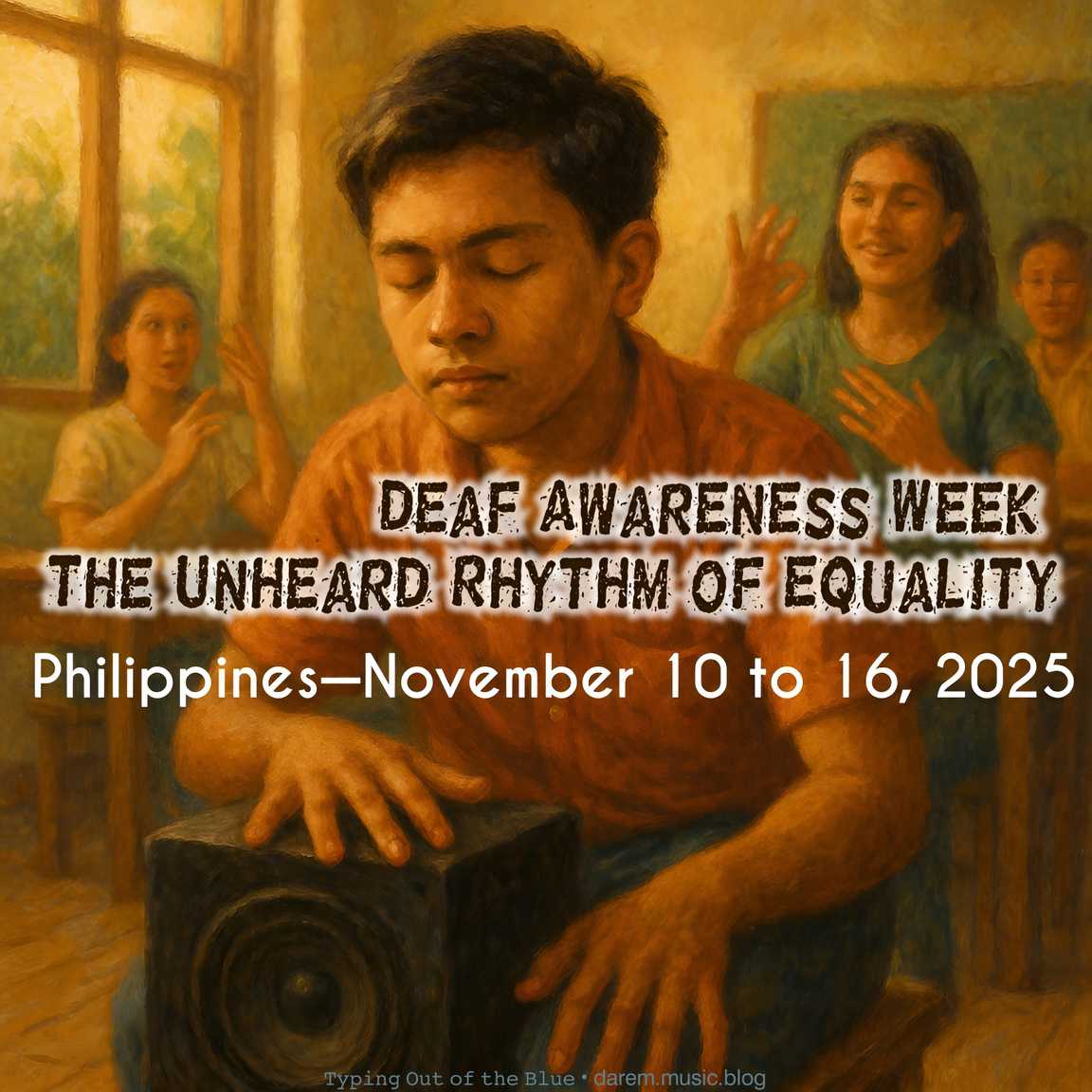
Deaf Awareness Week: The Unheard Rhythm of Equality

Deaf Awareness Week moves beyond sound—building equality, connection, and rhythm that even silence can carry.

Philippines—November 10 to 16, 2025

Some hear the world through music. Others feel it through silence.

This week is for those who prove that rhythm doesn’t belong only to the ears. The Deaf community has always known how to turn silence into art—feeling the beat through vibration, seeing melody through movement, and expressing harmony through sign.

The week’s main goals:

• Educate the public about the culture, rights, and abilities of Deaf Filipinos

• Promote Filipino Sign Language (FSL) as their official and natural language

• Push for accessibility in schools, workplaces, and public spaces

• Empower Deaf individuals through education, training, and employment

• Strengthen inclusion and equality in all areas of society

• Build connection between the hearing and the Deaf—through respect, understanding, and shared creativity

Here in the Philippines, Deaf Awareness Week isn’t about pity.

It’s about equality, visibility, and rhythm shared beyond sound.

Because silence, too, can sing.

⌨ ᴛʸᵖⁱⁿᵍ ᴏᵘᵗ ᵒᶠ ᵗʰᵉ ʙˡᵘᵉ ᵈᵃʳᵉᵐ ᵐᵘˢⁱᶜ ᵇˡᵒᵍ
Hands That Speak

From ancient silence to today’s fight for rights, sign language proves hands can change history.

International Day of Sign Languages • September 23

History books usually talk about swords, kings, and empires. But there’s another story—one told without sound. A story of hands that refused to stay still.

In the old world, thinkers like Aristotle decided the Deaf couldn’t reason. Imagine that—someone loud deciding silence means ignorance. That single lie kept doors locked for centuries.

But silence doesn’t stay quiet forever. In 1500s Spain, a monk named Pedro Ponce de León taught deaf kids using signs and writing. Against the “impossible,” he chose proof. And once proof exists, the world can’t unsee it.

Jump to Paris, 1700s. The streets had deaf children abandoned, forgotten. Enter Charles-Michel de l’Épée—he watched, he learned their signs, and he gave them back a school. Out of those classrooms, French Sign Language was born. From neglect came culture.

Cross the ocean, 1800s. Gallaudet meets Clerc. One hearing, one Deaf. They blend signs, and from their hands grows American Sign Language. Two men, two worlds, one language that would outlive them both.

Then the twist. Milan, 1880. A room of so-called educators bans sign languages from schools. Hands were silenced by force. Generations of kids told their own language was shame. Yet the Deaf didn’t stop. They kept signing—in kitchens, in playgrounds, in secret. Resistance was built into every gesture.

By the 20th century, truth clawed its way back. Linguists had to admit: sign languages aren’t “broken speech”—they’re full languages, with grammar, poetry, and fire. By 2006, the UN made it official. In the Philippines, 2018 put Filipino Sign Language into law. What was once shamed is now national pride.

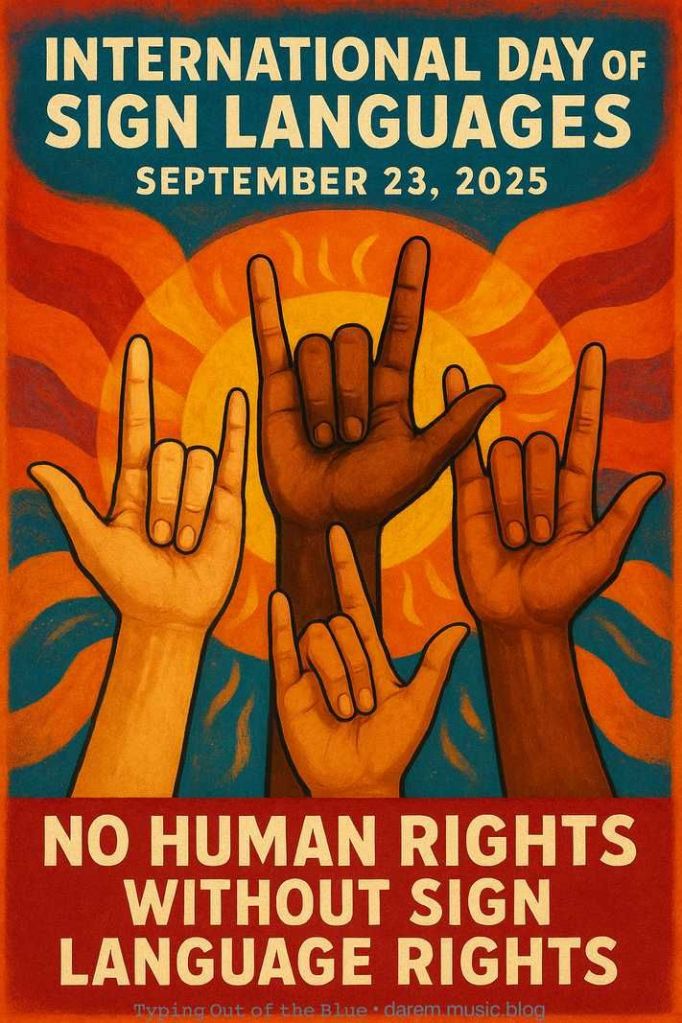
And today? Every September 23, the world is reminded: there are no human rights without sign language rights. History’s lesson is loud even without sound—silence doesn’t mean nothing. Sometimes it means everything.

ᴛʸᵖⁱⁿᵍ ᴏᵘᵗ ᵒᶠ ᵗʰᵉ ʙˡᵘᵉ ᵈᵃʳᵉᵐ ᵐᵘˢⁱᶜ ᵇˡᵒᵍ