Why Pinoy Questions Sound Negative—but Come From a Good Place
Hindi mo ba napansin na maraming tanong ng Pinoy parang naka-helmet agad? “Wala bang sasama?” “Hindi ba sabi mo?” “Di ka pa tapos?” Sa unang dinig, parang nega. Parang laging may duda o kaba sa hangin. Pero hindi yan pessimism. Defensive framing yan.
Defensive framing is the habit of shaping questions and requests in a way that reduces emotional risk. Hindi para umiwas sa truth, kundi para alagaan ang relasyon. Negative ang form, pero positive ang intention.
One good thing about defensive framing is how it protects dignity. Instead of cornering someone, it gives space. “Hindi ba pwede…” sounds softer than “Pwede ba o hindi?” May exit. May grace. Walang napipilit, walang napapahiya.
It also lowers conflict by default. Pinoy language grew in close spaces—pamilya, barangay, barkada—kung saan mabilis masira ang harmony kapag diretso agad ang tono. Defensive framing works like shock absorbers. Hindi mabilis, pero safe. Hindi efficient, pero maingat.
Another strength is how it reads the room before speaking. These sentences aren’t just words. They’re emotional sensors. When someone asks, “Okay ka lang?” hindi lang yan inquiry—it’s concern without pressure. Empathy muna bago clarity.
Defensive framing also shows what we value. In some cultures, being right matters most. Sa atin, being okay together matters more. We don’t ask to win arguments. We ask to stay intact. That’s not weakness. That’s choice.
Soft language is often mistaken for lack of confidence, pero choosing not to escalate is a skill. Anyone can be blunt. Not everyone can be careful.
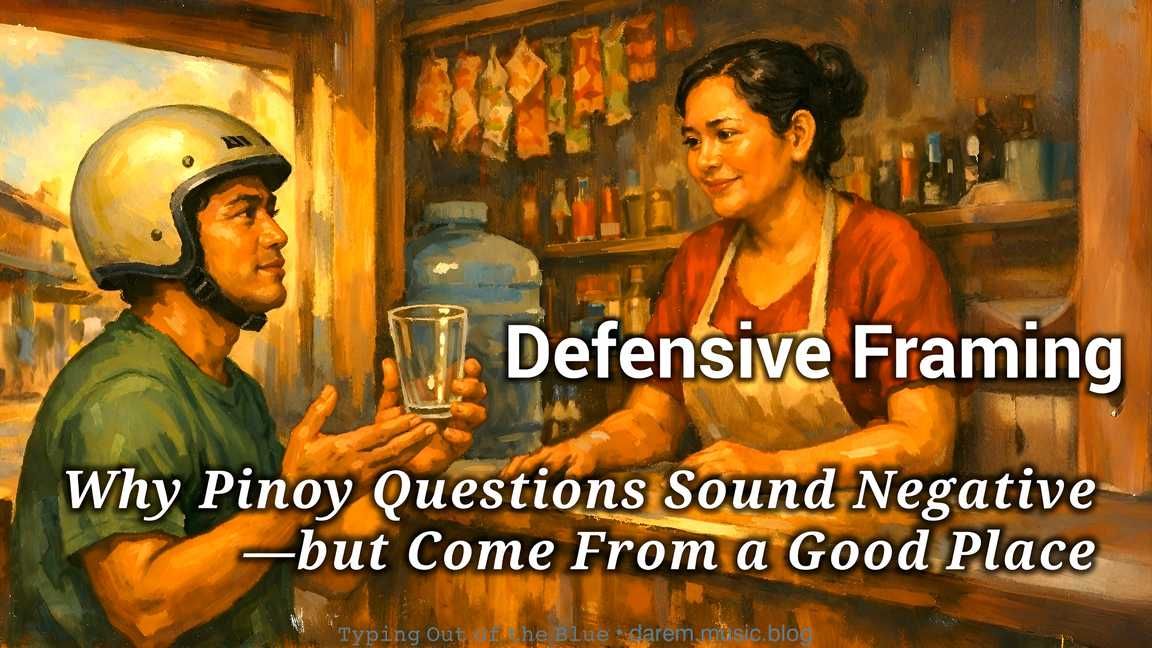
A simple example is asking for water. A direct version would be “Penge po ng tubig.” Clear and efficient, pero may pressure—even with “po.” So we soften it: “Pwede po bang humingi ng tubig?” Polite, may respeto, may consent. But the Pinoy instinct often goes one step further: “Hindi po ba pwedeng humingi ng tubig?”
On paper, negative. In real life, emotionally smart. That small shift lowers expectation, removes entitlement, and prepares the speaker for a no without embarrassment. If the answer is yes, thankful ka. If the answer is no, walang sama ng loob. That’s defensive framing at its purest—not insecurity, not pessimism, but courtesy with a safety net. It’s asking while already respecting the other person’s limits.
Of course, may trade-off. Defensive framing can blur clarity, slow decisions, or sound unsure. But it also prevents wounds that don’t heal easily. That’s the deal—clarity versus harmony. We leaned toward harmony.
The real power move is awareness. Once you understand defensive framing, you gain control. You can soften when needed, and you can go direct when growth demands it. You’re not trapped by the language. You’re fluent in it.
Defensive framing isn’t gloom-doom. It’s cultural wisdom wearing a helmet. And sometimes, that helmet saved more than we realize.
⌨ ᴛʸᵖⁱⁿᵍ ᴏᵘᵗ ᵒᶠ ᵗʰᵉ ʙˡᵘᵉ ᵈᵃʳᵉᵐ ᵐᵘˢⁱᶜ ᵇˡᵒᵍ