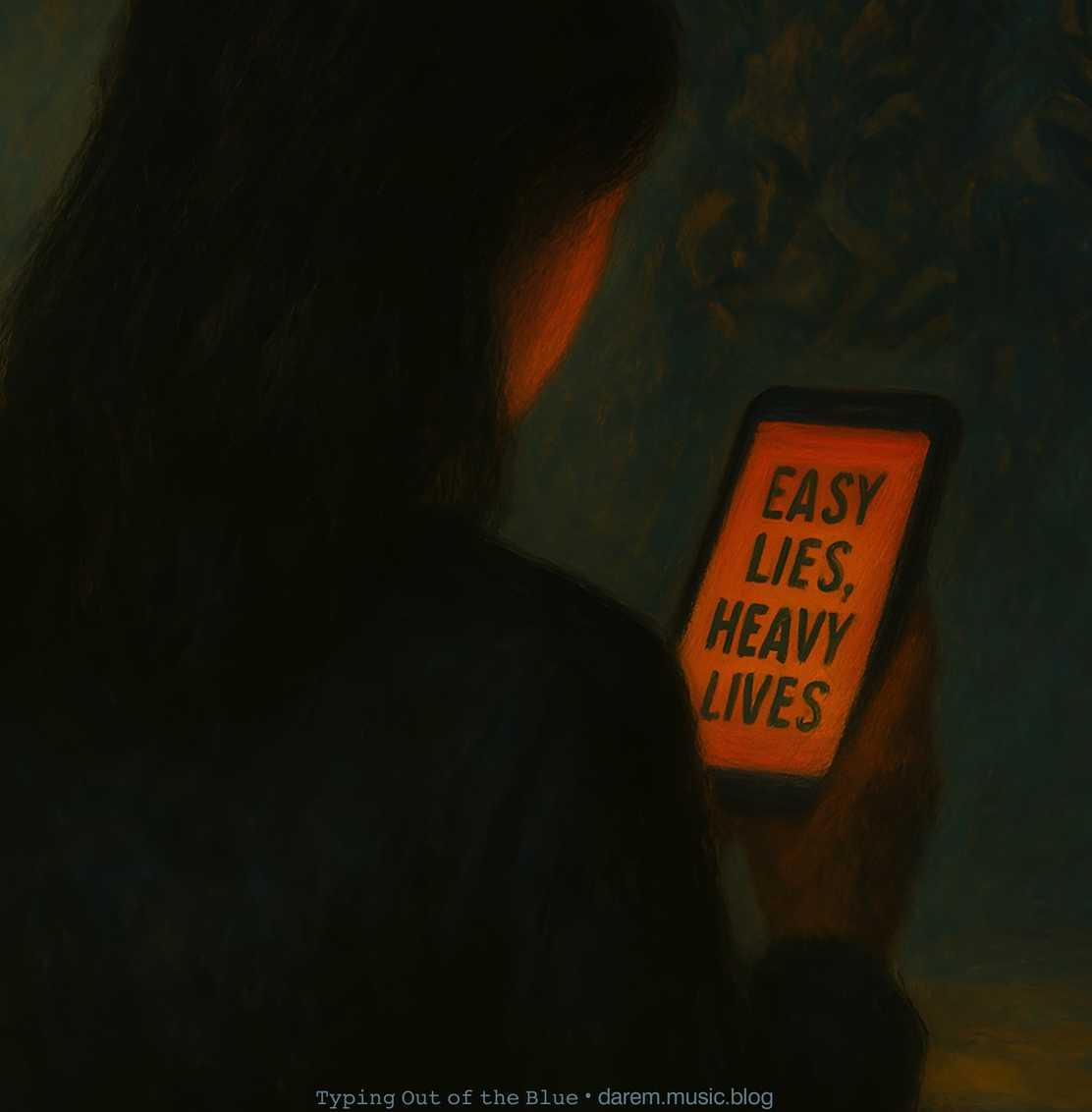
Easy Lies, Heavy Lives

Easy lies travel fast. Quiet truth doesn’t. This piece looks at why people follow noise and ignore the peace right in front of them.

It’s unbelievably easy to create fake news now. One quick tap and a lie travels faster than truth ever could. Many content creators aren’t chasing honesty anymore—they’re chasing monetization. The faker the post, the faster the reactions, shares, and comments. And that means income. The only real thing in all of it is their love for easy money.

And people today are treated as naturally gullible. Scroll, believe, share—repeat. No pause, no checking, no thinking.

But when the post is spiritual? When it’s something genuinely good? People see it as “nothing new.” Share a Bible passage and they say, “I already know that. Any twist? Anything different?” And if there’s none, they scroll away without a second look.

Yet bring out a page filled with dark, unsettling art—edgy, loud, almost satanic—and they follow instantly. It feels different. It feels louder than the world they’re trying to escape. But they don’t realize—it only adds more noise to their life.

Here’s the strange part: when we pray in the dark, or simply close our eyes, there’s peace. But when we do bad things, our life becomes dark—and we forget it’s the same darkness. The same blackness that frightens us is also the blackness of calm when our eyes are closed.

Same color. Different meaning.

So when those heavy moments come—pray.

Sometimes the darkness isn’t a threat—it’s a quiet doorway back to clarity, if we let it be.

And maybe that’s the real point: if content creators stopped feeding people with manufactured lies—and if people learned to pause, pray, and think before reacting—fake news wouldn’t spread this fast in the first place.

If noise begins with one bright lie, peace can also begin with a Nonpareil Drop of RGB.

Nonpareil Drop of RGB • Darem Placer
Piano Painting includes Nonpareil Drop of RGB. Soon on Bandcamp.

⌨ ᴛʸᵖⁱⁿᵍ ᴏᵘᵗ ᵒᶠ ᵗʰᵉ ʙˡᵘᵉ ᵈᵃʳᵉᵐ ᵐᵘˢⁱᶜ ᵇˡᵒᵍ
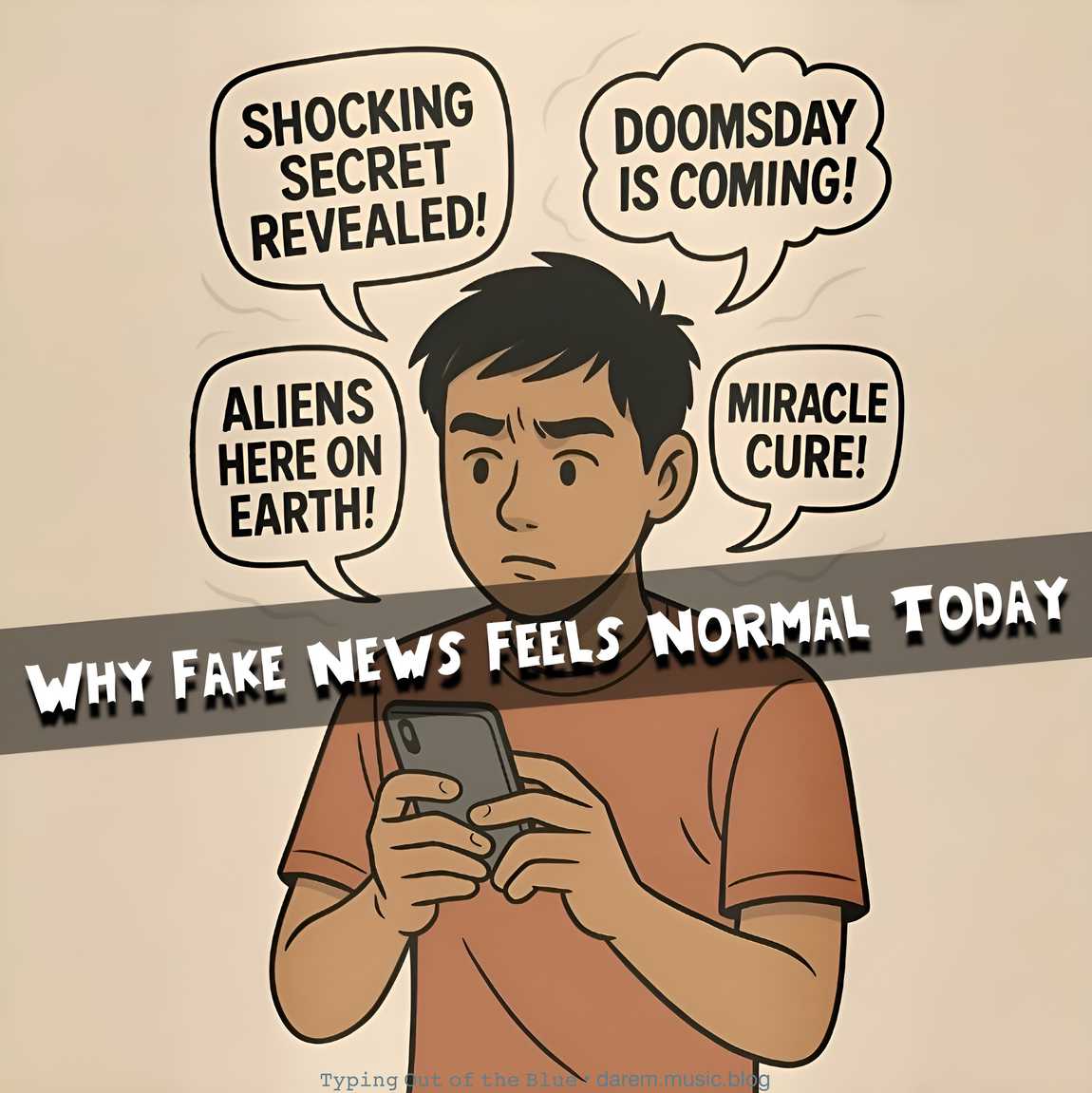
Why Fake News Feels Normal Today

A look at how our online habits slowly turned fake news into something many people barely notice.

There was a time when news was slow but reliable. Today, information moves so fast that people rarely stop to check if something is real. That’s why fake news now feels like the “new news.” Our habits changed, and fake news simply adapted faster.

• Speed beats accuracy.
People scroll quickly and react immediately. Fake news spreads first because it doesn’t wait for research or verification.

• Dramatic headlines win.
Calm stories don’t go far. But words like “Doomsday,” “Secret,” or “Warning” spread fast because platforms earn more from shocking content.

• Emotion over thinking.
If a story matches someone’s fear or belief, they accept it without checking. Fake news grows by triggering feelings, not logic.

• Algorithms love engagement.
Social media promotes whatever gets reactions—panic, anger, arguments, debates. All that is engagement, and engagement automatically boosts the post.

And because platforms earn from engagement, even hate comments and insults become profit. Bash the creator, defend the creator, argue with a stranger—it all pushes fake news higher and makes more money.

• Anyone can publish “news.”
A phone and a few minutes are enough to create something that looks official. No editors. No responsibility. And once it spreads, people assume it must be true.

• Instant answers feel easier.
Real information takes time to confirm. Fake news gives quick explanations, even if wrong, so people choose the simple version.

Fake news feels normal today because the online world rewards speed, drama, and emotion. Real news takes effort. Fake news takes only a headline. But truth doesn’t disappear. It just waits for people willing to pause and look carefully.

So What Can We Do?

People always ask, “So what now?” The answer doesn’t need to be dramatic. Just practical and human.

• Slow down before sharing.
If something feels too shocking or too convenient, hold for a second. Most fake news dies in that one moment of pause.

• Check the source, not the headline.
Real information usually comes from organizations known for accuracy. If the source is built on drama, the story probably is too.

• Avoid feeding the algorithm.
Arguing in the comments only makes the post more visible. If something is clearly fake, don’t boost it with reactions, shares, or debates. Walking away is a quiet win.

And if you think reporting it will automatically remove the fake news post, don’t expect too much. Social media earns from the attention it gets, so removing high-engagement posts isn’t always their priority.

• Look for consistency, not volume.
Real news stays steady. Fake news is loud. Trust the information that remains consistent even when the comment section explodes.

• Teach people around you.
A simple, calm “Check this first” can stop a whole group from spreading something false.

• Use your influence wisely.
Even small circles matter. When you share only verified information, you pull the internet slightly back to sanity.

Fake news survives because people feed it without thinking. It weakens the moment people choose patience and clarity. It doesn’t take an expert—just someone willing to think before tapping “share.”

⌨ ᴛʸᵖⁱⁿᵍ ᴏᵘᵗ ᵒᶠ ᵗʰᵉ ʙˡᵘᵉ ᵈᵃʳᵉᵐ ᵐᵘˢⁱᶜ ᵇˡᵒᵍ