
Saint Birinus: Facing a Different Story

One quiet decision shaped the early faith of England.

Birinus was a missionary from northern Italy around the year 634. Rome sent him to Britain thinking the job would be simpleโ€”just guide people who already knew something about Christianity and help clear up their beliefs. It sounded light and straightforward, but when he arrived, the situation looked very different from what he expected.

Pope Honorius had sent him with one plan: strengthen regions that had already been introduced to the Christian faith but still needed guidance. It was supposed to be familiar territory, nothing surprising.

But when he reached England, reality didnโ€™t match the assignment. The areas he thought were already Christianized werenโ€™t. Wessex was basically untouched. No structure, no churches, no base communityโ€”like going to a gig where you expected a full sound system but there isnโ€™t even electricity.

With a situation like that, he couldnโ€™t follow the original plan even if he tried. It simply didnโ€™t fit what he found. Instead of stepping back or waiting for new instructions, he stayed. He didnโ€™t run back to Rome to report the mismatch. He didnโ€™t wait for better logistics. He just said: All right. Then we start from zero.

That choiceโ€”moving forward even when the plan no longer appliedโ€”became the reason Wessex ever became Christian at all.

โŒจ แด›สธแต–โฑโฟแต แดแต˜แต— แต’แถ  แต—สฐแต‰ ส™หกแต˜แต‰ แตˆแตƒสณแต‰แต แตแต˜หขโฑแถœ แต‡หกแต’แต

Traces of courage, silence, and sacrificeโ€”this is Saints.

Listen on Apple Music, Apple Music Classical, and YouTube Music
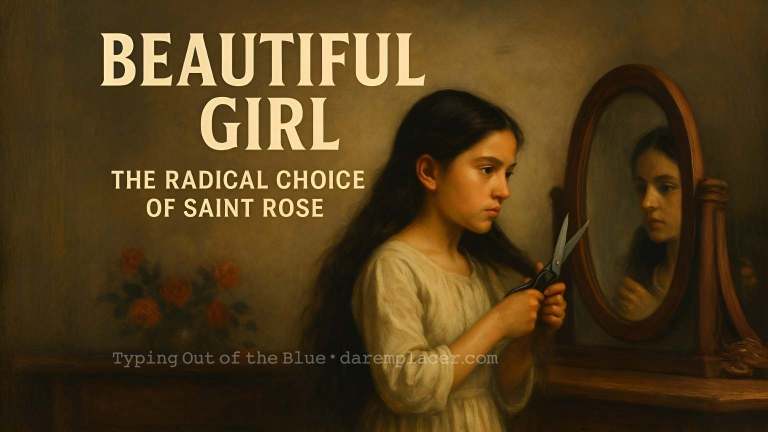
Beautiful Girl

At just twelve years old, a girl shocked everyone by cutting her hair and rejecting vanityโ€”choosing instead a life of prayer and sacrifice. Her name was Saint Rose of Lima, the first saint of the Americas.

The Radical Choice of Saint Rose

It was the year 1598. She was just twelve years oldโ€”and already everyone was saying the same thing: sheโ€™s so beautiful. Her long hair shimmered in the light, her face seemed to glow, and suitors lined up even though she was still so young. For many, that kind of attention would feel like a dream. But to her, it felt like a trap.

The more people admired her, the more she wanted to hide. Until one day, she made a choice that shocked everyone. She cut off her long hairโ€”snip, snip, the locks fell like a protest against vanity. Then she rubbed her face with pepper and lye, deliberately making herself less attractive. The sting burned, but she felt free. No longer chained to expectations, no longer boxed in by compliments.

And she went further. While other girls wore flower crowns for beauty, she made her own crownโ€”woven not with roses but with sharp thorns. She placed it on her head and hid it under her veil. Every prick, every drop of pain, became her silent prayer, her way of saying: I want to love like Christ loved.

At an age when most girls were preparing for dances and dreaming of romance, she was preparing herself for silence, for prayer, for a love that no earthly admirer could match. She turned her small home into a hospital, cared for the poor, fasted, and prayed for hours.

People couldnโ€™t understand. To them, she wasted her beauty. But to her, she offered itโ€”like a flower laid at the feet of Christ.

Her name? Rose. Saint Rose of Lima. The first saint of the Americas.

Her feast is celebrated on August 23 in the universal Church, and on August 30 in Peruโ€”reminding us that true beauty is not what fades on the outside, but the beauty inside that chooses love above all.

๐šƒ๐šข๐š™๐š’๐š—๐š ๐™พ๐šž๐š ๐š˜๐š ๐š๐š‘๐šŽ ๐™ฑ๐š•๐šž๐šŽ
๐š๐šŠ๐š›๐šŽ๐š–๐š™๐š•๐šŠ๐šŒ๐šŽ๐š›.๐šŒ๐š˜๐š–