Why World Contraception Day Feels Different for Catholics

World Contraception Day sparks real concern—but Catholic teaching points to a vision where love and life stay whole.

Every September 26, World Contraception Day pops up worldwide, reminding people of choices, planning, and awareness. For most, it’s about preventing unplanned pregnancies, promoting safe practices, and protecting women from health risks. Behind it is a desire to ease the burden of families, lessen the cycle of poverty, and keep both mothers and children safe.

The challenge of teen pregnancy and family hardship is real. For many, the solution is to cut off the possibility through contraception. From the Catholic perspective, however, the response lies in formation—teaching responsibility, self-control, and chastity before marriage, and offering natural family planning within marriage. The vision is not to block fertility, but to respect it, guiding choices in a way that safeguards dignity.

The Church teaches that love and life can never be split apart without losing something essential. Contraception interrupts the wholeness of God’s design. That’s why Humanae Vitae emphasizes that marital love is always meant to remain open to life.

The alternative offered is not a rejection of planning, but a call to discernment—a way of respecting the body’s rhythm and practicing responsible parenthood without closing the door on fertility.

World Contraception Day, then, becomes a moment to reflect. The concern for health and family is shared, yet Catholics hold to another vision: caring for life and planning for the future while staying rooted in God’s creative design.

Following Catholic teaching takes nothing away—ignoring it puts at risk everything that gives life its meaning.

ᴛʸᵖⁱⁿᵍ ᴏᵘᵗ ᵒᶠ ᵗʰᵉ ʙˡᵘᵉ ᵈᵃʳᵉᵐ ᵐᵘˢⁱᶜ ᵇˡᵒᵍ
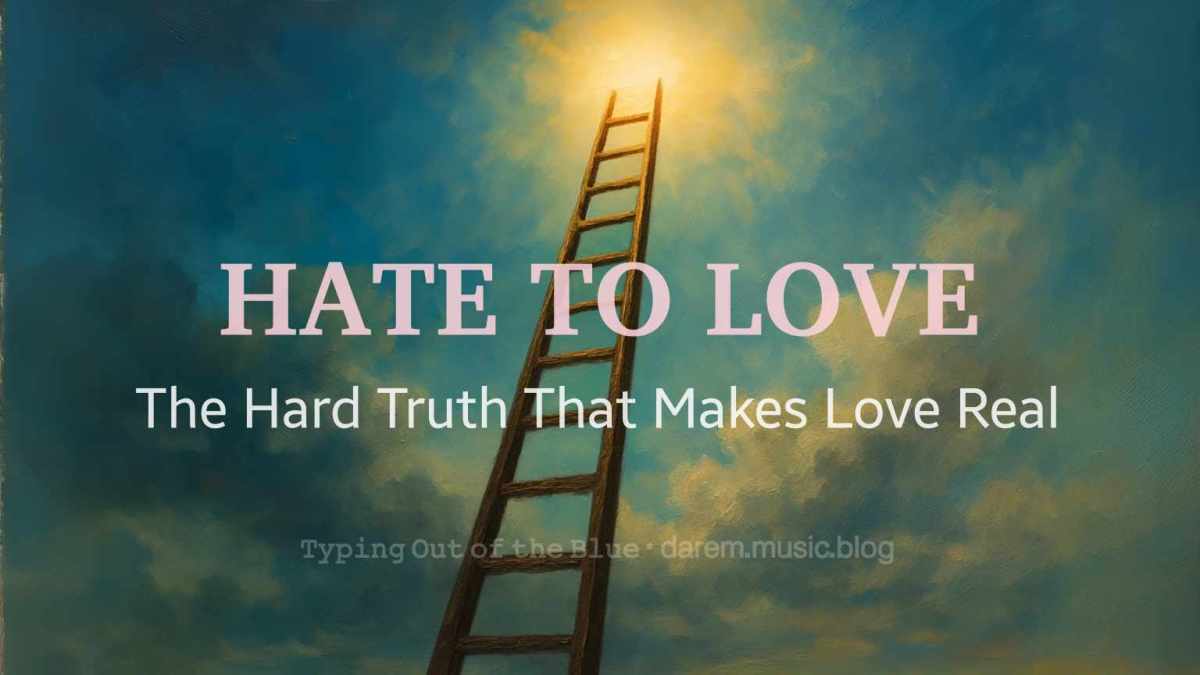
Hate to Love

Jesus says something that sounds impossible: “Hate your parents? Hate your own life?” It feels harsh, but behind those words is the hard truth that makes love real.

The Hard Truth That Makes Love Real

If you’ve read the Bible, you may have stumbled on this line: “If anyone comes to me and does not hate father and mother, wife and children, brothers and sisters—yes, even their own life—such a person cannot be my disciple” (Luke 14:26).

“Hate your parents? Hate your own life? That sounds crazy.”

So what did He really mean?

Jesus wasn’t attacking family. He was making a point: even the strongest love you know can’t take first place over Him.

At first, it feels impossible. But He wasn’t saying “hate” as in anger or disrespect. He was saying: don’t let even your closest ties pull you away from what’s most important.

Because love bends when it takes the wrong shape. It turns into control. Into jealousy. Into fear of losing. That’s not real love—it’s love gone heavy.

Picture it like a ladder. Family, friends, even yourself—those are the steps. But if God isn’t the top, you stop halfway. You think it’s enough. But it gets tiring. It doesn’t reach higher.

Take this example: a father who steals to feed his children. On the surface, it looks like love. His kids even defend him, saying, “He only did it so we could eat.” But that’s misdirected love. It breaks God’s truth for the sake of family. It feels justified, but it isn’t. That kind of love may solve hunger for a day, but it plants harm that lasts far longer.

When God isn’t the center, love becomes fragile. It may shine for a while, but it slips into possession, jealousy, or fear—and in the end, it chokes the very people it tries to hold.

Without God, love burns out. It clings. It demands too much. It asks people to fill a space only He can fill. And no one can carry that weight.

With God first, love breathes. You can hold without choking. Give without drowning. Care without turning anyone into a “god.”

That’s why Jesus used a hard word. Not to tear family apart. But to wake us up.

So what’s the takeaway? Real love only survives when God is above everything else. That’s the only way it stays pure, strong, and free.

𝚃𝚢𝚙𝚒𝚗𝚐 𝙾𝚞𝚝 𝚘𝚏 𝚝𝚑𝚎 𝙱𝚕𝚞𝚎 • 𝖽𝖺𝗋𝖾𝗆.𝗆𝗎𝗌𝗂𝖼.𝖻𝗅𝗈𝗀