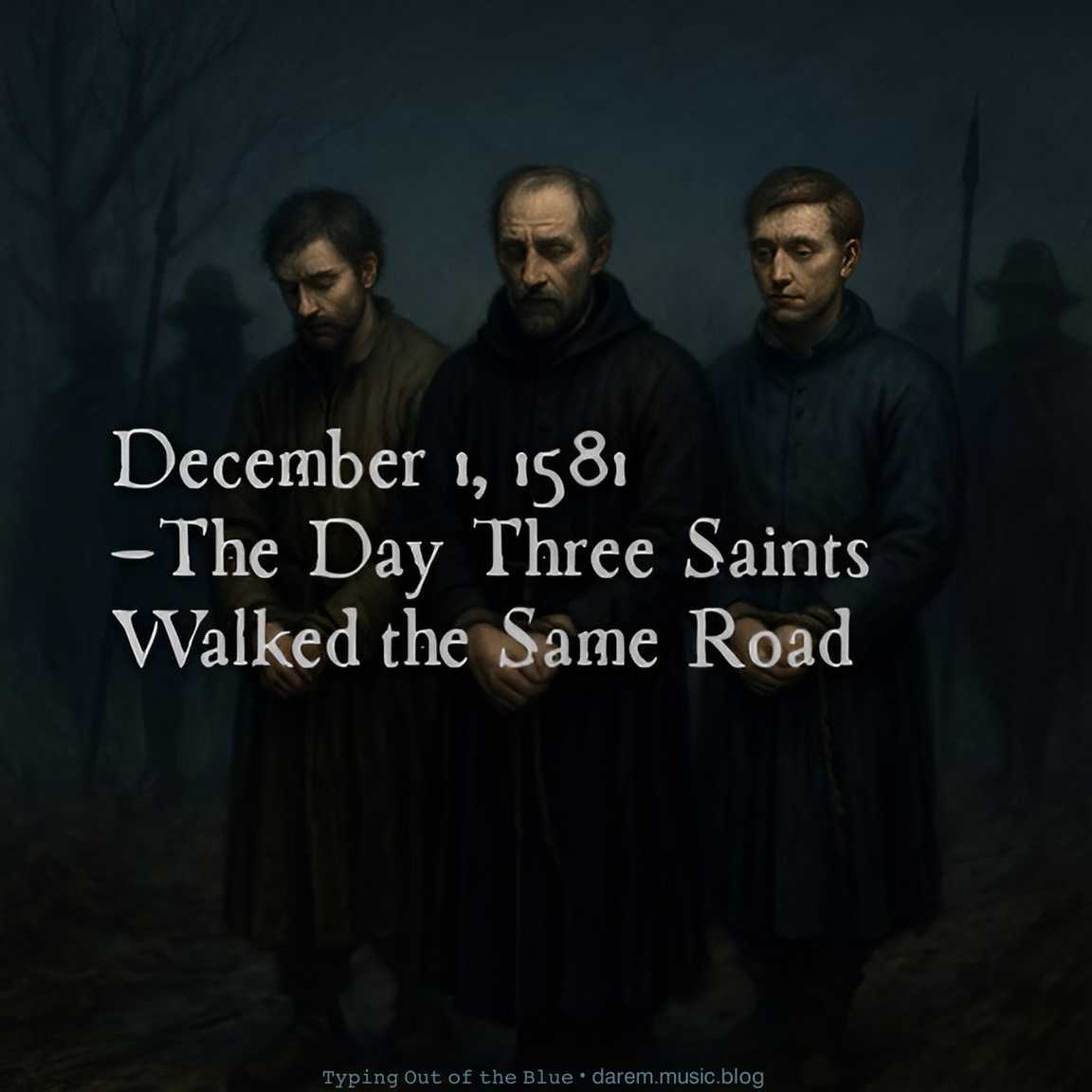
London was cold on December 1, 1581. Before sunrise, three young men were led out of the Tower of London and placed on the road to Tyburn. They came from different lives, but this morning brought them together. People recognized them; their names had been whispered for months. The government called them “traitors.” Many hidden Catholics saw them differently—men who entered quiet homes at night, prayed with frightened families, and kept the faith alive when it felt close to disappearing. They were not one team with one plan, but England’s laws placed them side by side and judged them as one.
Edmund Campion
Campion had once been a celebrated Oxford teacher. He could have lived safely abroad, but in 1580 he returned to England knowing he might not survive long. His calmness on this final morning showed a man who had already accepted the cost of his decision.
Ralph Sherwin
Sherwin was another Oxford scholar—cheerful, warm, and steady even under pressure. Months of torture did not darken his spirit. On this morning, witnesses noticed the same quiet peace still in his face.
Alexander Briant
Briant, the youngest of the three, was gentle and prayerful. He was known for praying even for the men who hurt him. He walked with a simple courage that came from trust, not from physical strength.
At Tyburn, the three stood close to one another. Only short lines from witnesses remain, not long speeches. But every account points to the same truth: they faced death calmly, and being together strengthened them.
The Paths That Led Them Together
Their shared ending began long before their arrest. Each man made choices that moved them, step by step, toward the same morning.
Campion’s Journey
He had been admired at Oxford and expected to have a secure future. But he left England, became a Jesuit, and returned in 1580 to help Catholics living in fear. From the moment he stepped back into England, his life carried serious risk.
Sherwin’s Journey
Sherwin left England to train as a priest and returned the same year as Campion. He was arrested after only a short time. Torture weakened his body, but witnesses said his inner strength only became clearer.
Briant’s Journey
Briant had less public attention but deep faith. He worked close to Campion and was taken during the search for Jesuit priests. Records describe the torture he suffered, but also the surprising gentleness he kept through it.
Separate lives, separate choices—but by 1581, England’s laws pushed them into one path: one prison, one judgment, one morning.
After the execution, when the crowd left Tyburn and the road became quiet again, their story did not disappear. It stayed in the memories of the families they helped and in the writings of those who saw their character up close. They left no monuments or victories. They left something smaller but stronger: the way they stayed calm, kind, and faithful even when the cost was heavy.
Campion kept his calm. Sherwin kept his gentle cheer. Briant kept his kindness. Together, they faced the end with the same trust in God.
History would later honor this witness, and the Church formally recognized all three as saints—young men whose courage outlasted the silence of Tyburn.
One cold morning.
One shared road.
A courage that did not fade.
⌨ ᴛʸᵖⁱⁿᵍ ᴏᵘᵗ ᵒᶠ ᵗʰᵉ ʙˡᵘᵉ ᵈᵃʳᵉᵐ ᵐᵘˢⁱᶜ ᵇˡᵒᵍ

Listen on Apple Music, Apple Music Classical, and YouTube Music

