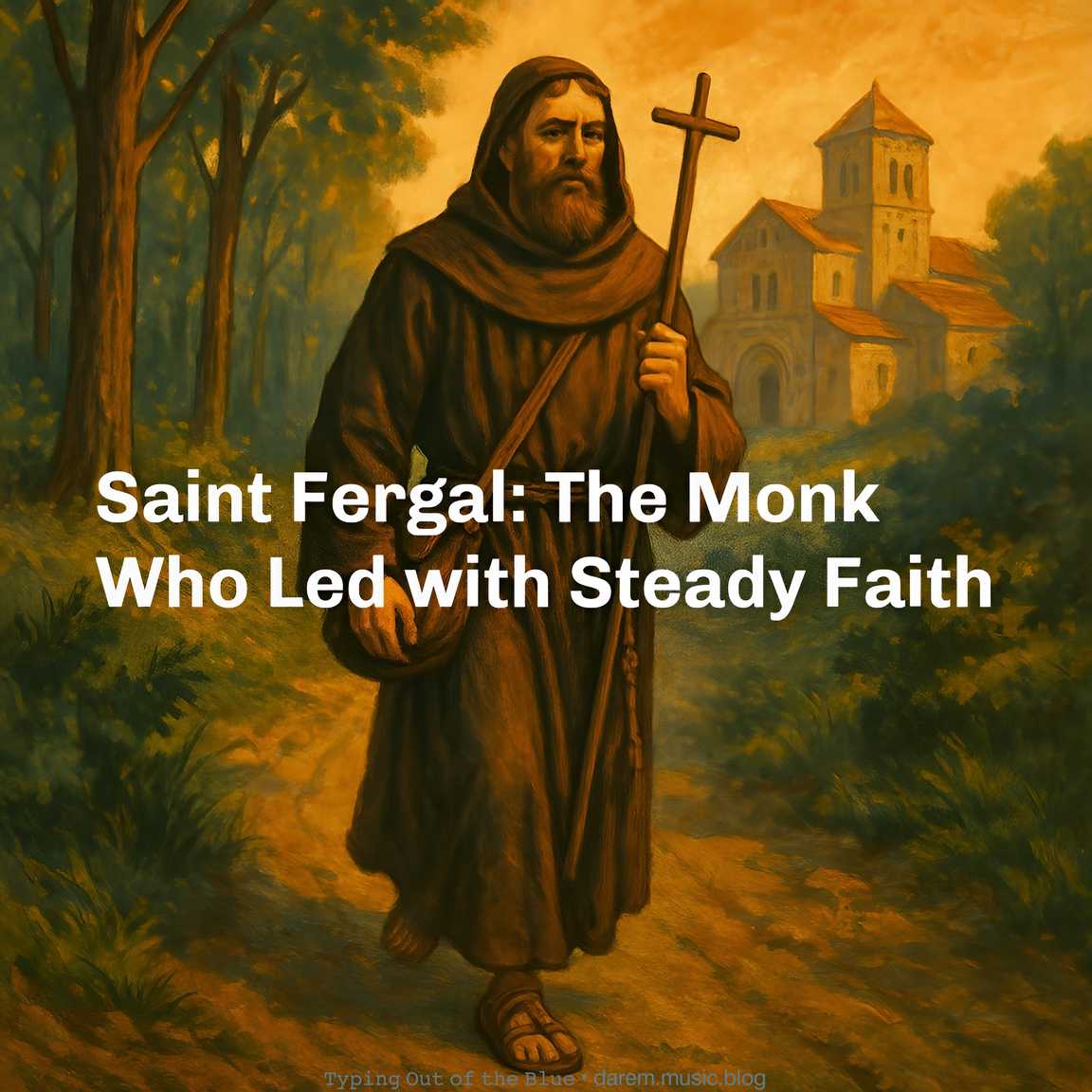
Fergal was born in Ireland in the 8th century, a time when monasteries shaped learning and guided much of daily life. He grew up in that world of prayer and study, known early on as a disciplined monk with a calm, searching mind.
He later left Ireland and traveled across Europe, eventually settling in Bavaria (in present-day Germany). As Father Fergal, he became known for his learning, especially his interest in the natural world. One of the ideas he taught was that the Earth was not flat—a view supported by earlier scholars but still questioned by some leaders of his time.
A local Church authority disagreed with him and brought the issue to Rome. Father Fergal faced the matter without anger or pride. He remained humble, patient, and obedient. After examining everything, Rome allowed him to continue his work, and the tension ended peacefully. This episode showed the quiet strength that marked his whole life.
Because of his wisdom and character, he was later appointed Bishop of Salzburg in what is now Austria. He guided communities, strengthened Christian life, supported missionaries, and led with gentleness rather than force. His holiness was seen in his steady service and the peace he brought to others.
He died in 784, remembered for his humility, learning, and faithful leadership.
He is remembered today as Saint Fergal.
⌨ ᴛʸᵖⁱⁿᵍ ᴏᵘᵗ ᵒᶠ ᵗʰᵉ ʙˡᵘᵉ ᵈᵃʳᵉᵐ ᵐᵘˢⁱᶜ ᵇˡᵒᵍ
Listen on Apple Music, Apple Music Classical, and YouTube Music