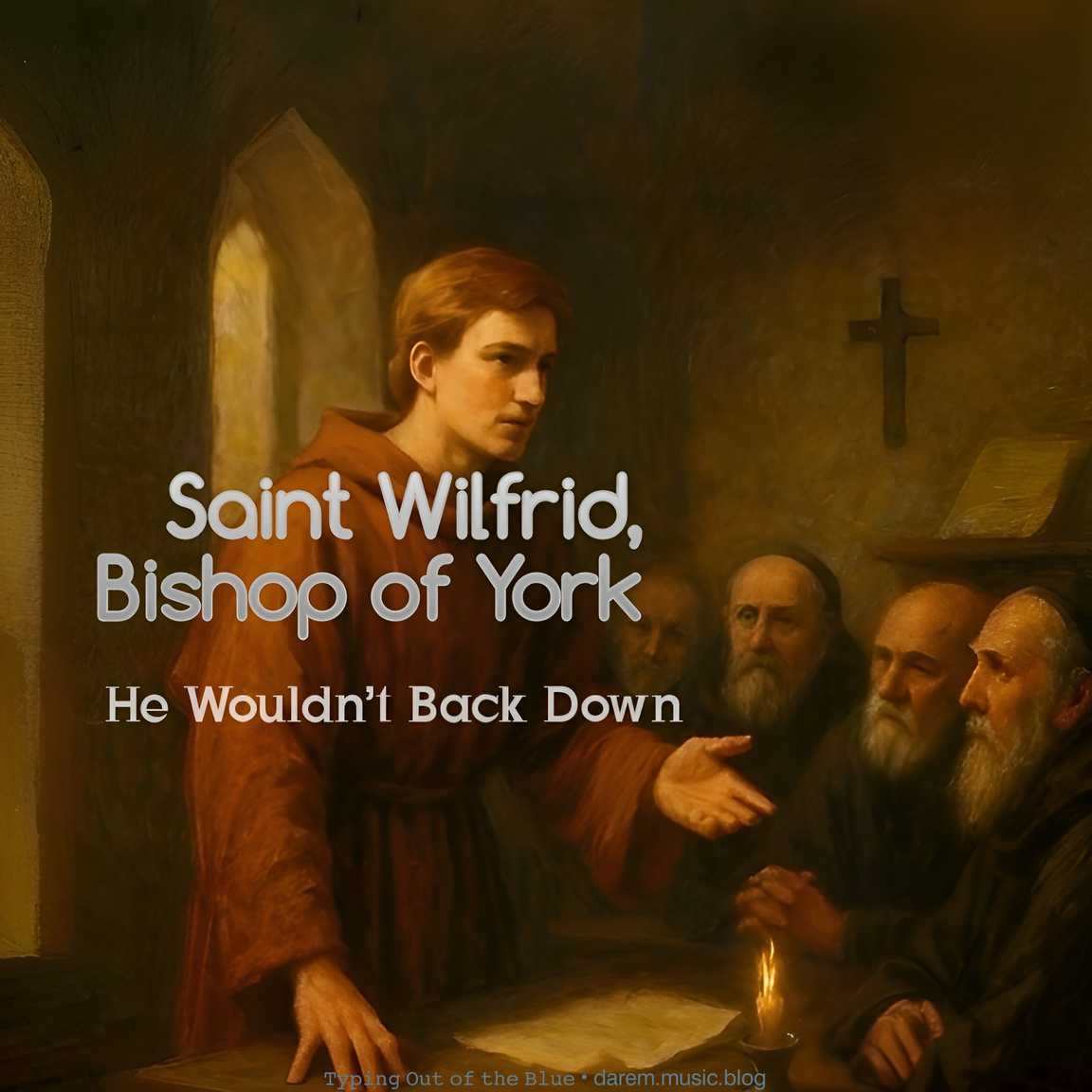
Saint Wilfrid, Bishop of York

Even a stubborn heart can become holy when it stands for truth, not pride.

He Wouldn’t Back Down

When a young Wilfrid, still training as a monk, was told to follow the old Celtic ways, he calmly crossed his arms, looked the elder monks in the eye, and said, “But Rome does it better.” That was his way—calm face, firm tone, no retreat. Even as a student, he was known for his fearless honesty.

Years passed. Wilfrid grew wiser but never softer. He studied deeply, traveled far, and went on pilgrimage to Rome, where he fell in love with its order, its chant, and its faith that spoke one language. When he returned to England, his heart burned to bring that same harmony home.

By the year 664, the English Church stood divided—different groups followed different traditions. A great council was called at Whitby, where leaders had to decide which way the whole country would follow. There, Father Wilfrid was no longer the young monk with folded arms but a bold priest with a steady voice. He spoke with fire and clarity, defending what he believed was the true order of God. His conviction turned the tide, uniting England under one faith.

Because of his wisdom and leadership, Father Wilfrid was soon chosen as Bishop of York. But his path was never peaceful. He clashed with rulers and church leaders alike, and was exiled more than once. Yet every exile became a mission—wherever he went, he built churches, cared for the poor, and brought the Gospel to those who had none.

Some people are born gentle; others are born strong so that gentleness can survive. Bishop Wilfrid was the second kind. His courage made way for peace. His stubborn faith became a bridge between the old and the new.

And maybe that’s the quiet lesson he left us: God can shape even a stubborn heart—not by breaking it, but by teaching it where to stand.

⌨ ᴛʸᵖⁱⁿᵍ ᴏᵘᵗ ᵒᶠ ᵗʰᵉ ʙˡᵘᵉ ᵈᵃʳᵉᵐ ᵐᵘˢⁱᶜ ᵇˡᵒᵍ
Traces of courage, silence, and sacrifice—this is Saints.

Listen on Apple Music, Apple Music Classical, and YouTube Music
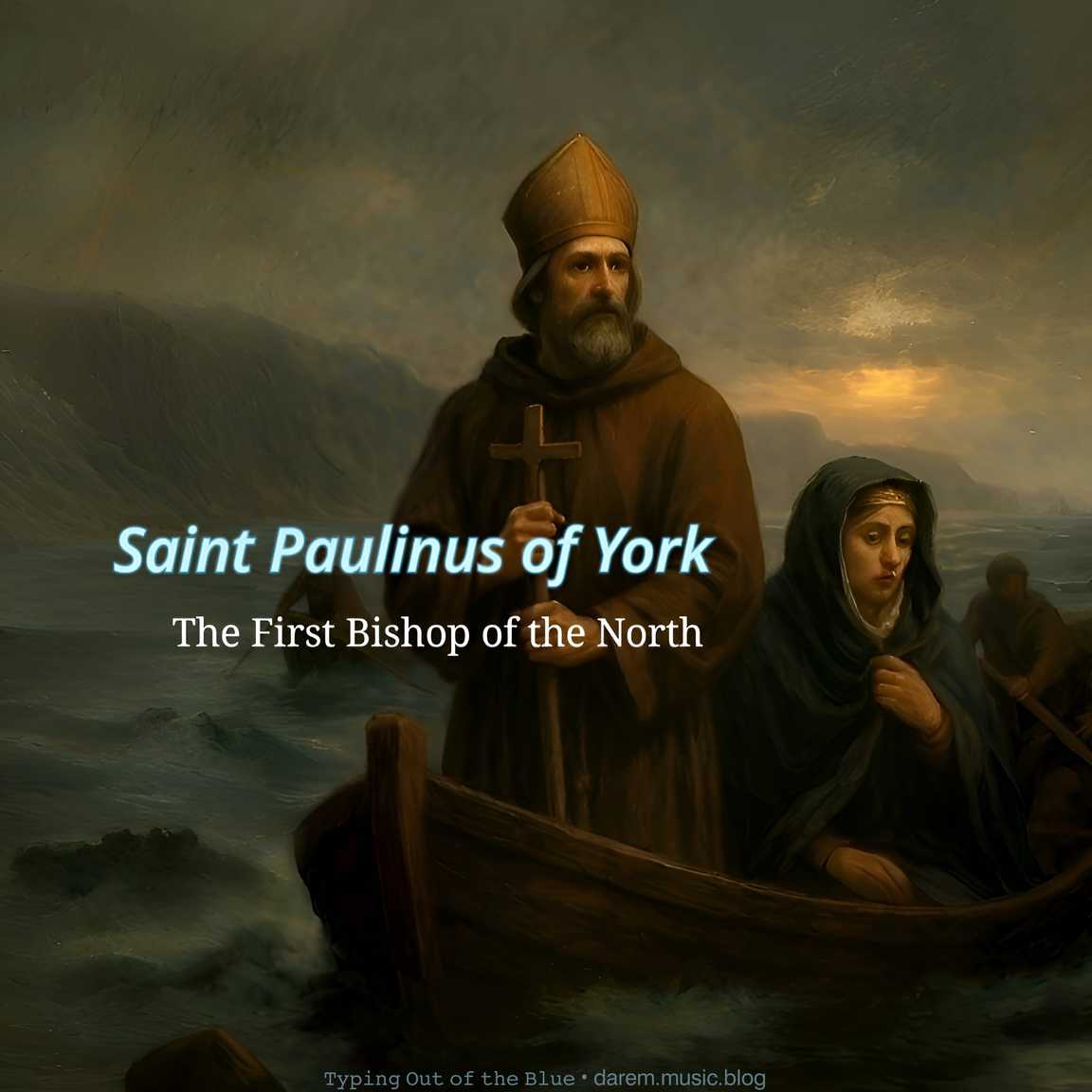
Saint Paulinus of York

England never forgot Saint Paulinus—the first Bishop of York who brought faith to the north and light to hearts.

The First Bishop of the North

In the early 600s, King Edwin of Northumbria was a pagan ruler—strong, proud, and searching for meaning. Power was in his hands, but peace was missing in his heart. When he wanted to marry Princess Ethelburga of Kent, a Christian, her people agreed only if she could bring a bishop with her to keep her faith. That bishop was Paulinus, a quiet Roman monk sent by Pope Gregory the Great to bring light to the north of England.

At first, King Edwin didn’t care about Christianity. The court was full of doubt, and the old gods still ruled people’s minds. But after he survived an assassination attempt, he began to question everything. Bishop Paulinus spoke with calm and patience, showing a better way built on peace and hope. Slowly, King Edwin opened his heart. On Easter Day, 627, he was baptized in a small wooden church that would later become York Minster.

Faith started to grow across the land. Bishop Paulinus traveled through towns and rivers, baptizing thousands in the cold waters of the Trent and Swale. The north had found its light. But when King Edwin was killed in battle in 633, the old religion came back. The new faith weakened, and fear spread again. Bishop Paulinus escaped south with Queen Ethelburga, carrying only faith and courage.

He later served as Bishop of Rochester, where he stayed until his death in 644. But England never forgot who Saint Paulinus truly was—the first Bishop of York, the man who brought the Gospel to its northern lands and planted a faith that would rise again long after he was gone.

⌨ ᴛʸᵖⁱⁿᵍ ᴏᵘᵗ ᵒᶠ ᵗʰᵉ ʙˡᵘᵉ ᵈᵃʳᵉᵐ ᵐᵘˢⁱᶜ ᵇˡᵒᵍ

Traces of courage, silence, and sacrifice—this is Saints.

Listen on Apple Music, Apple Music Classical, and YouTube Music