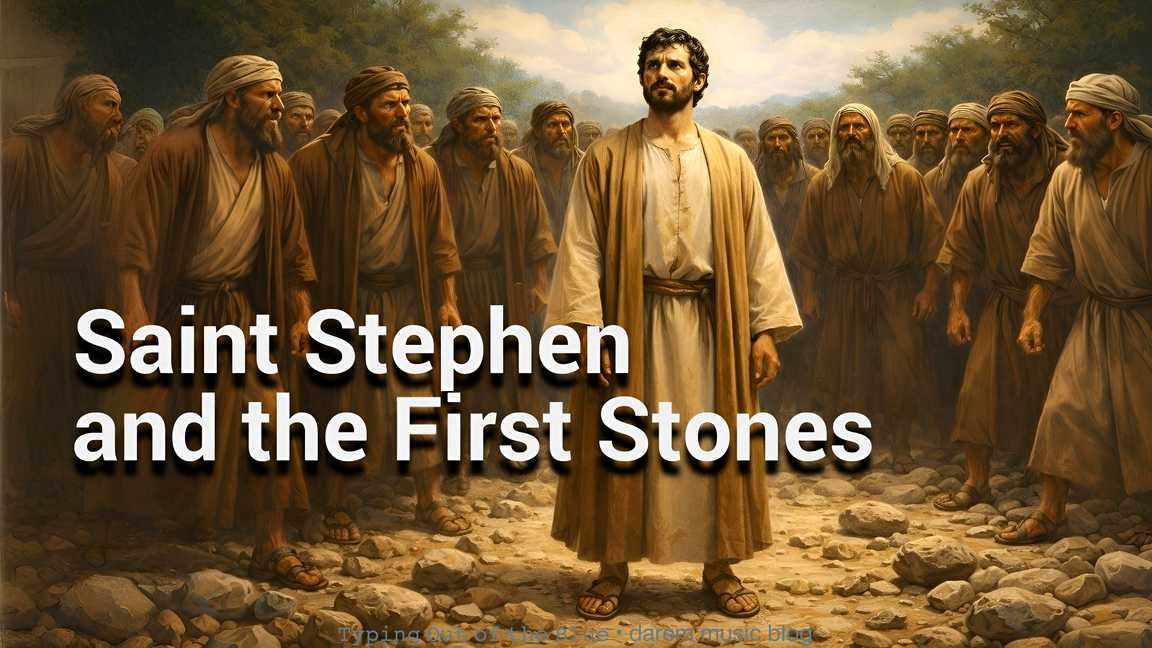
Stephen lived in the earliest years of Christianity, around AD 34–36, in Jerusalem. He was one of the seven deacons chosen to serve the growing Christian community. He was not an apostle, not a priest, and not a political figure. He was a servant who spoke clearly and lived what he believed.
He is remembered as the first Christian martyr.
Stephen was stoned to death. This was not a crime committed in secret, and it was not done by people who did not know God. He was killed in public by religious leaders and their supporters—people who studied Scripture, knew the Law, and memorized the commandment, “You shall not kill.”
So why did they still do it?
First, Stephen said that God cannot be confined to the Temple or controlled by a system. For leaders whose authority depended on the Temple, this sounded like a threat to their relevance and power.
Second, he said they were resisting God, repeating the same mistakes their ancestors made when they rejected the prophets. This was not casual criticism. It exposed an uncomfortable pattern they did not want to face.
Third, and this was the breaking point, Stephen said Jesus is alive and glorified by God. That meant their judgment was wrong, their authority was questioned, and God had sided with the One they rejected.
Instead of reflecting, they reacted. They convinced themselves this was not murder but defending God. Violence became righteousness in their minds. Once Stephen was labeled a blasphemer, the commandment no longer applied. Faith remained, but obedience disappeared. That is how belief turns plastic—certainty without humility, conviction without conscience.
Stephen died forgiving them.
Today, it looks different. We no longer throw stones by hand, but the impulse remains. The stone just changed. Comments, labels, cancel culture, and silent exclusion now do the work. There may be no blood on the ground, but the damage is real. Voices are buried, reputations collapse, and people are erased quietly.
There is a song from the 1970s, first sung by Lori Lieberman and later made famous by Roberta Flack, Killing Me Softly with His Song. That line feels unsettlingly accurate now, because today, “killing” is often done softly—not with stones you can hold, but with stones you can type.
Saint Stephen was killed by stones they could throw. Today, people are killed softly by stones they can post. Same anger, same certainty, same need to silence. And just like then, those stones are often thrown by people who think they’re right.
⌨ ᴛʸᵖⁱⁿᵍ ᴏᵘᵗ ᵒᶠ ᵗʰᵉ ʙˡᵘᵉ ᵈᵃʳᵉᵐ ᵐᵘˢⁱᶜ ᵇˡᵒᵍ