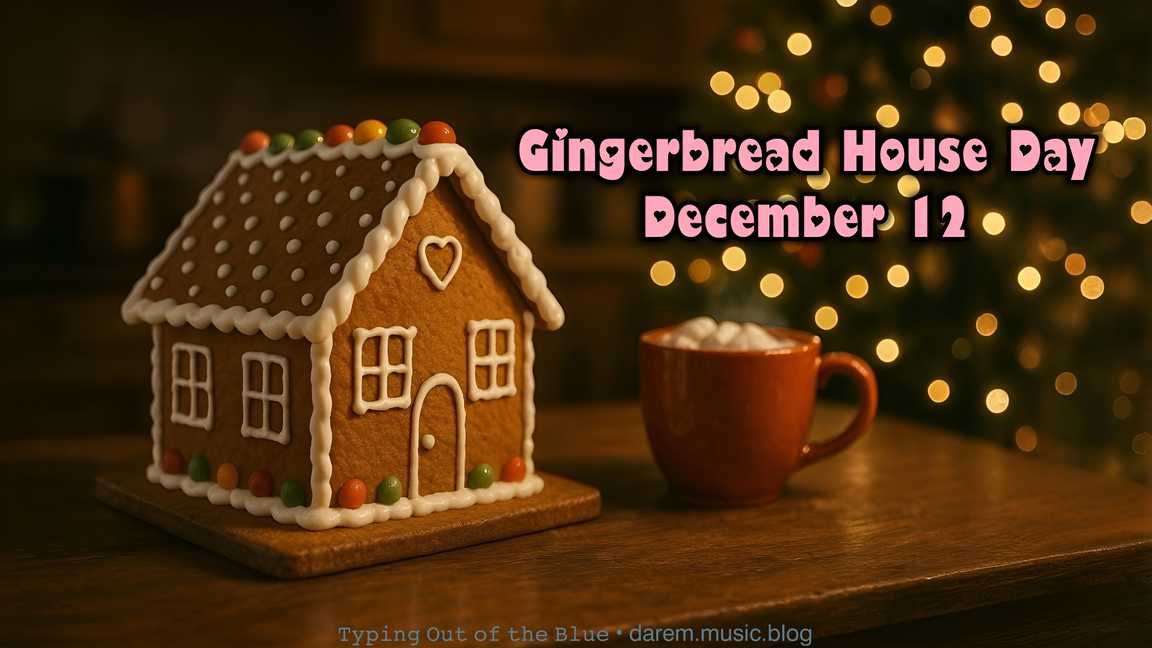
A quick look at how gingerbread houses began in Europe and grew into a well-loved Christmas tradition.
December 12
A gingerbread house began as part of old European baking traditions. Gingerbread was already popular in the Middle Ages because spices were expensive, so serving it felt special. People shaped it into animals, hearts, and simple figures for festivals.
By the 1500s in Germany, bakers started making decorated gingerbread panels for Christmas markets. Later, when the story of Hansel and Gretel became famous, the idea of a candy-covered gingerbread house spread quickly. Children loved the thought of a magical house made of sweets, and families began copying the idea at home.
From there, the gingerbread house became a Christmas tradition—something people build together for fun, using icing as “glue” and candies as decoration. Today, it’s a mix of food, art, and holiday memory-building, still tied to those early European roots.
Shepherds hear heaven singing and rush to see the Child bringing peace to the world.
The shepherds were gathered on the hillside, keeping watch as the night settled quietly over the fields. They talked in low voices, listening to the soft sounds of their flock moving in the grass.
Then the calm broke. Angels appeared above the hills, their voices rising through the night with a sound the shepherds had never heard before—strong, bright, and filling the whole valley. The shepherds looked up, stunned, the echo of Gloria in excelsis Deo rolling across the sky like a wave of light.
The angels sang with a joy that felt larger than the night itself. Their voices came from high above, as if heaven had opened its doors and let the sound pour straight onto the fields.
The shepherds stood there, unsure what to do at first. But curiosity pushed them forward. They gathered themselves and decided to go—leaving the hillside to find the place the angels were rejoicing about.
They went down into the village and moved quickly through the streets, searching until they reached a simple place where a Child lay. They saw Him resting there, watched over by His parents. The shepherds’ faces softened as they knelt close, realizing this was the One the angels had been singing about.
They stayed only for a moment, taking in the quiet scene before stepping back into the cold night. On their way home, they couldn’t stop talking about what they had seen—still hearing the echo of the angels’ song in their minds as they crossed the fields again.
Angels We Have Heard on High
A traditional French carol known as “Les Anges dans nos campagnes.” Its authorship is unknown. It was first published in North America in the Nouveau recueil de cantiques in 1819.
Merely Christmas • Darem Placer Out this season on Bandcamp.