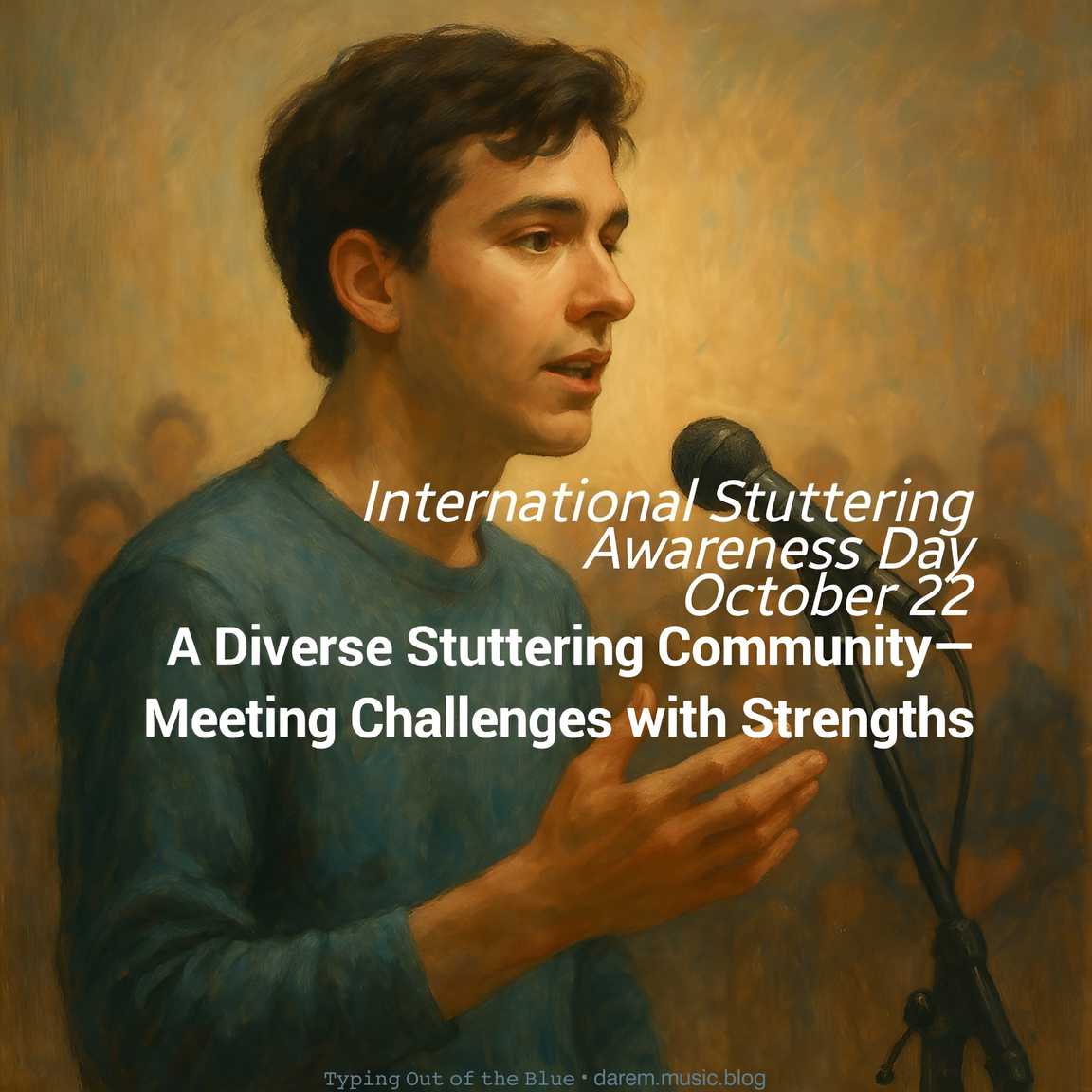
Their words may tremble, but their spirit never does. Strutting through every pause, they speak with quiet power.
Some people speak like waves—rising, breaking, pausing before the next word. Some might call it weakness, but they don’t see the courage behind each breath.
About 80 million people in the world stutter. Some learned to live with teasing, some turned it into rhythm. They carry patience where others rush. Every sound they make is a quiet act of strength.
They face the day like anyone else—ordering food, answering calls, singing songs, teaching kids. Sometimes the words take longer, but they always arrive. And when they do, they hit deeper.
For those who stutter: take your time. Breathe between words. Your voice has its own rhythm—follow it, don’t fight it.
For everyone else:wait. Listen. Don’t finish their sentence for them. The pause you give is the respect they deserve.
October 22 honors not just voices that speak—but voices that keep trying.
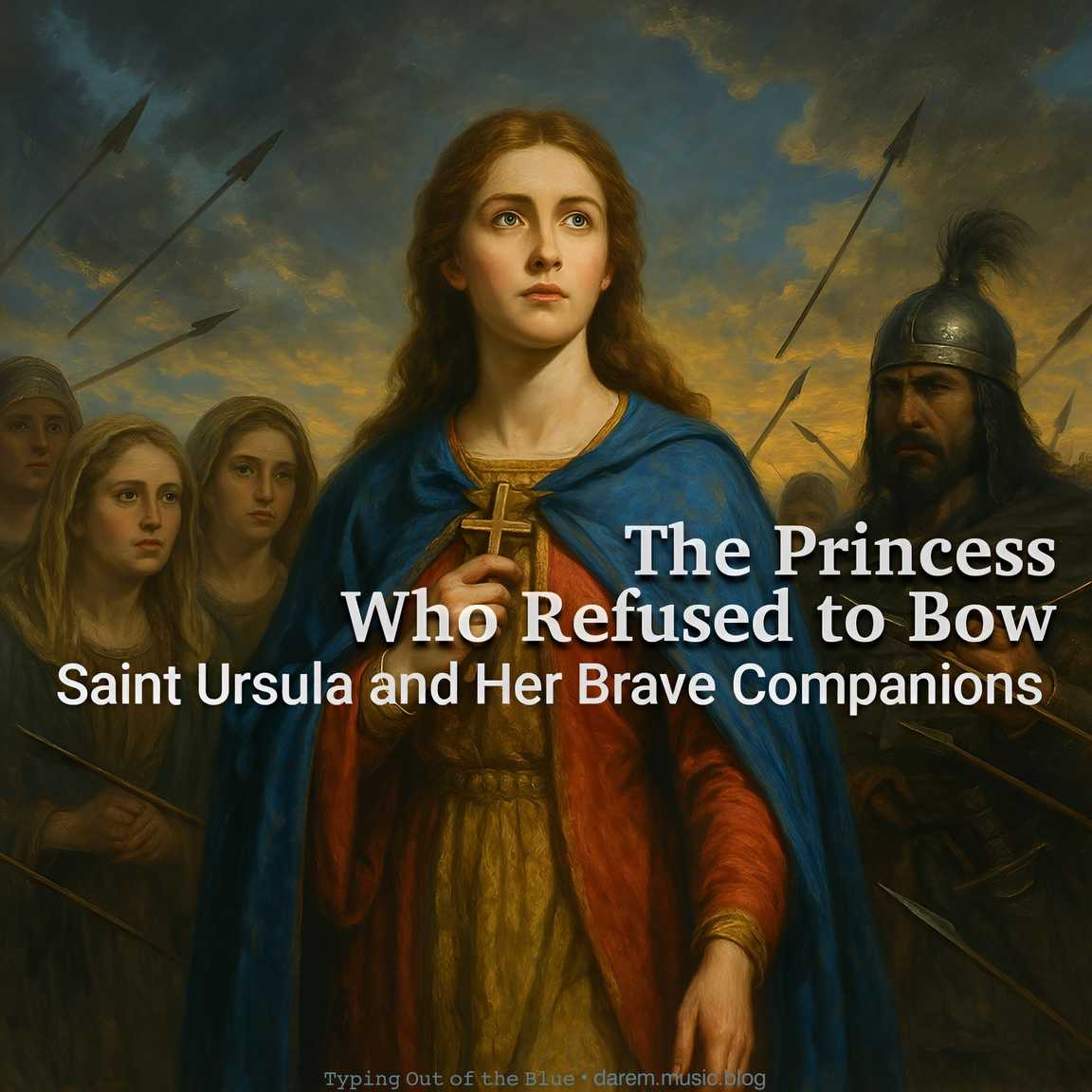
A royal promise meets a test of faith as she sails toward a choice that will change her fate—and history itself.
Saint Ursula and Her Brave Companions
Around the 4th or 5th century, when the Western Roman Empire was collapsing, a British princess named Ursula was promised in marriage to a pagan prince from across the sea. The union was meant to bring peace between their peoples—but Ursula’s heart already belonged to Christ.
She asked for three years to prepare, not for a wedding, but for a vow. With her father’s blessing, she gathered eleven thousand maidens who wished to consecrate their lives to God. Together they set sail from Britain toward Cologne, Germany, then onward to Rome, where they hoped to seal their devotion with the Pope’s blessing.
But in Cologne, the voyage met its storm. The city had fallen to the Huns—a nomadic people from Central Asia, feared for their ruthless invasions and hatred of Christians. When Princess Ursula and her companions arrived, they were seized. The Hun leader, struck by her grace, offered her a crown and safety if she would be his queen.
Princess Ursula stood calm. “My Lord is greater than any king,” she said. The warlord’s pride turned to rage. An arrow pierced her heart. Her maidens followed her in martyrdom, singing even as the blades fell.
She was slain for refusing to betray her faith, and from her blood grew devotion that swept through Europe. Cologne built a basilica over the place of their martyrdom, and her name became a beacon for those who choose conviction over comfort, eternity over fear.
They called her Saint Ursula—the princess who conquered not by sword or throne, but by surrender.
Based on legend and early Christian tradition surrounding Saint Ursula and her companions.