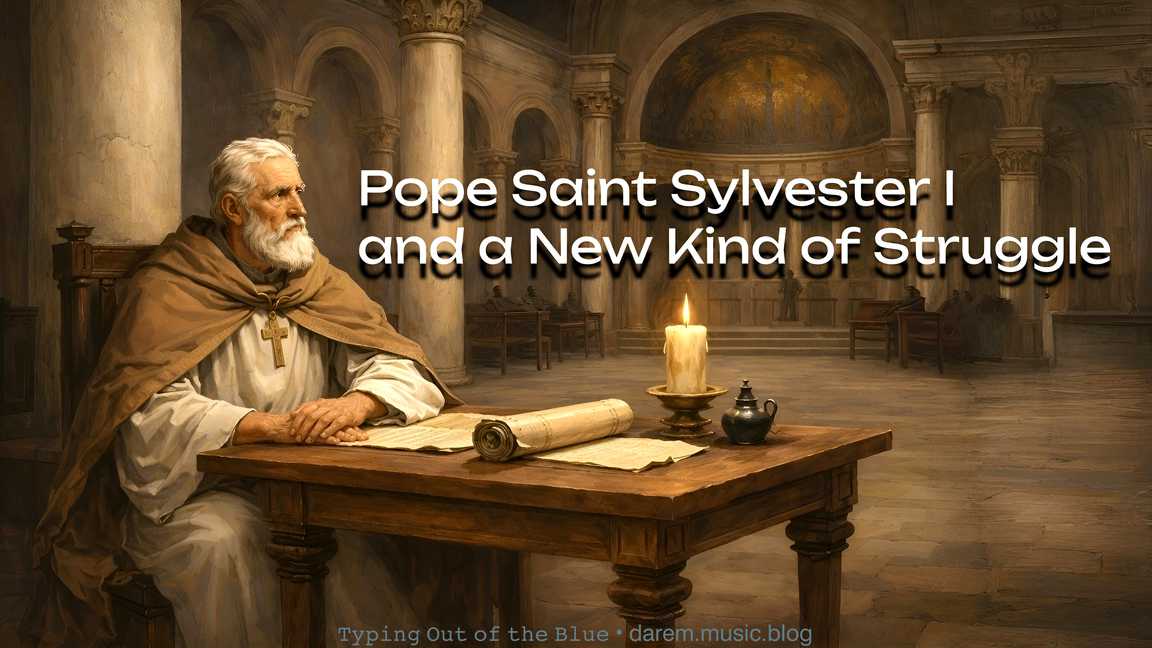
Christianity was finally accepted.
And that is when the real struggle began.
When Sylvester became Pope in the 4th century, Christians were no longer hunted. Worship was public. Churches could be built. Fear was no longer the main problem.
But acceptance created a different challenge.
Now that Christianity was out in the open, it had to be clearly defined. Beliefs that were once shared quietly were now argued publicly. People disagreed about who Jesus Christ is, what it means to call Him God, and which teachings truly belonged to the faith. These disagreements divided communities and Church leaders.
This led to the Council of Nicaea in 325.
It was a large meeting of Church leaders called to settle these disputes and protect unity. Its main goal was to clearly state what Christians believe about Christ, so the Church would not split. Pope Sylvester did not attend in person, but he sent representatives, showing that Rome still played an important role.
Another problem also appeared. With freedom came influence. Some joined the Church for political reasons. Power and money entered a faith that once survived without them. The Church was no longer in danger of disappearing, but it was in danger of losing focus.
Large churches, like the Lateran Basilica in Rome, reflected this change. Christianity was visible and respected, but visibility brought new pressure.
Pope Saint Sylvester I was not remembered for dramatic sacrifice. His struggle was quieter. He had to guide a Church that was safe, influential, and still learning how to stay faithful.
Christianity survived persecution.
Now it had to survive success.
⌨ ᴛʸᵖⁱⁿᵍ ᴏᵘᵗ ᵒᶠ ᵗʰᵉ ʙˡᵘᵉ ᵈᵃʳᵉᵐ ᵐᵘˢⁱᶜ ᵇˡᵒᵍ