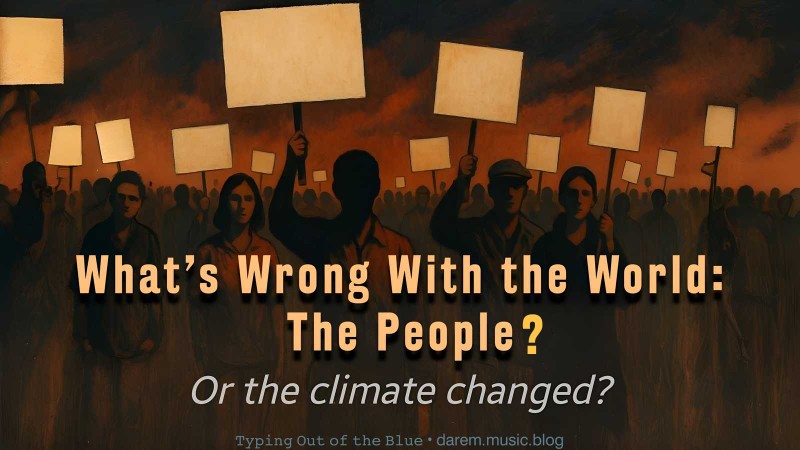
What’s Wrong With the World: The People?

Some lies are easy to spot. The hardest ones are the ones we choose to believe.

Or the climate changed?

The Earth is burning, the seas are rising, and storms scream louder every year—yet people still argue if climate change is real. That’s what’s wrong with the world. Not the science, not the data, but us. The people.

We crave drama more than truth. We cheer for leaders who call climate change a “con job” while ignoring the floods that wash away homes. We believe insults over evidence, slogans over science. Critical thinking? Missing in action.

And at the root, it’s about control. We want to control the story, protect our comfort, cling to the illusion that everything is fine. Leaders feed that hunger, giving us easy lies instead of hard truths. We surrender our judgment and call it freedom—but really, it’s chains.

Money doesn’t just blind us—it closes our eyes.

Power doesn’t just deafen us—it covers our ears.

Comfort doesn’t just numb us—it makes us forget, until we can’t feel the fire at our feet.

What’s wrong with the world is not that we lack proof, but that we lack the courage to face it. We keep handing the microphone to those who shout the loudest, even when they’re wrong. And the ordinary voices, the ones that matter most, get drowned out.

We are the problem—but also the solution. The same people who deny can choose to believe. The same ones who consume can choose to care. The same world we’ve broken, we can still fight for.

The question is not whether climate change is real. The question is: will we keep acting like fools, clinging to control, until the world proves it in fire and flood?

ᴛʸᵖⁱⁿᵍ ᴏᵘᵗ ᵒᶠ ᵗʰᵉ ʙˡᵘᵉ ᵈᵃʳᵉᵐ ᵐᵘˢⁱᶜ ᵇˡᵒᵍ

👉 Download Sky-Low on Bandcamp

💿 Just type 0 if you want to download the album for free.

Sky-Low
“Sky-Low” is not just an album—it’s an awareness campaign about climate change and a challenge to protect our planet.

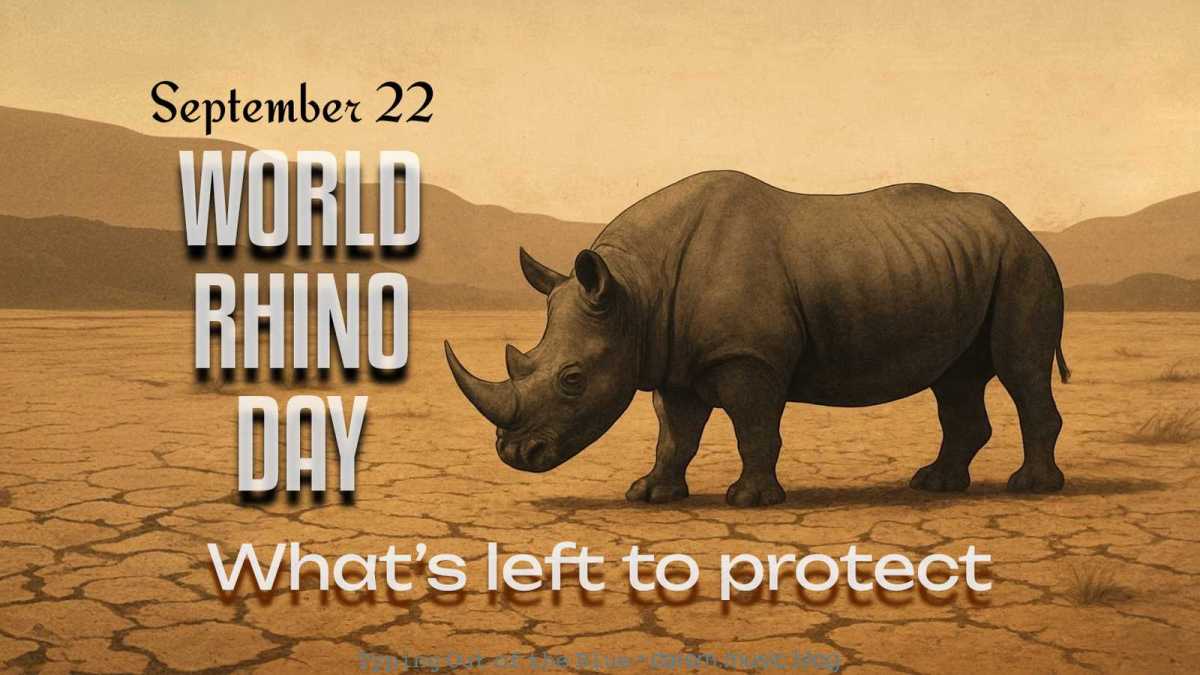
World Rhino Day 🦏

They’ve stood for millions of years—but now, their future hangs by a thread.

What’s left to protect

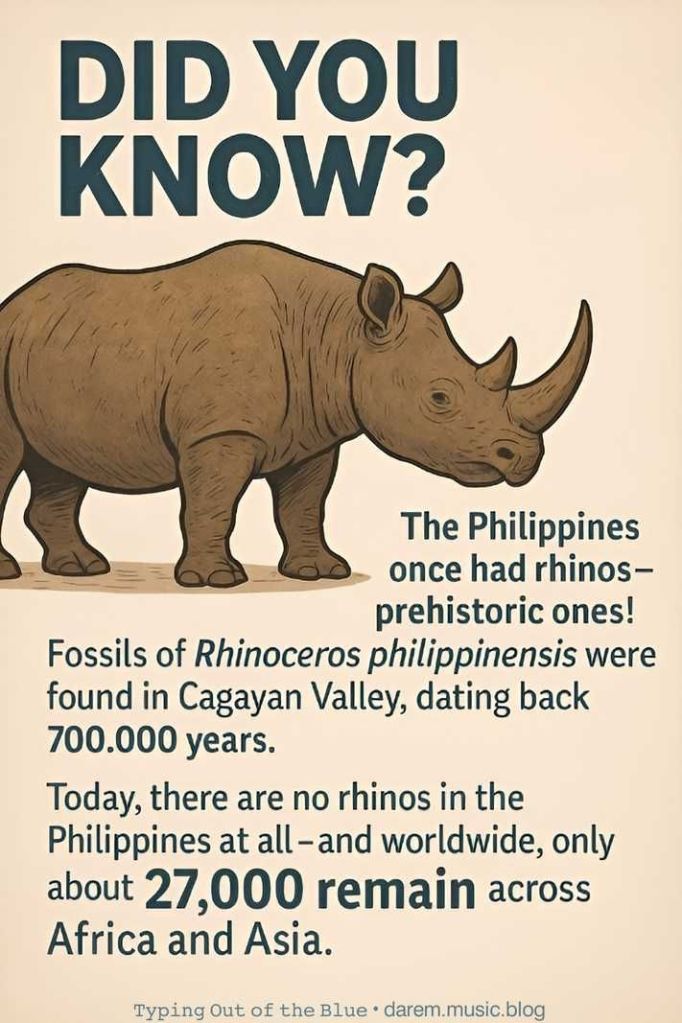
In the early 1900s, there were about 500,000 rhinos in Africa and Asia. Today, barely 27,000 remain.

Why the decline?

Illegal hunting for horns – the biggest driver of decline

Habitat loss – due to farming, logging, and expanding human settlements

Illegal wildlife trade – horns treated as luxury items or used in traditional medicine

Climate change factor

Shifts in rainfall – make it difficult for rhinos to find steady water and grazing areas

Droughts & floods – add stress to their habitats, especially in Asia where wetlands and forests are vital

Forest changes – critical for Sumatran and Javan rhinos, which depend on dense tropical forests sensitive to climate shifts

Climate change may not have caused the massive drop from 500,000 to 27,000, but it makes survival even harder for the remaining few.

World Rhino Day, marked every September 22, is a reminder of how close these giants are to disappearing. Four of the five species are threatened, with the Javan and Sumatran rhinos down to fewer than 150 combined.

Saving rhinos means saving their habitats—and countless other species with them. Awareness, protection, and action are the only reasons some rhino populations have survived this long.

If half a million could fall to 27,000 in just over a century, the fight to protect what’s left can’t wait.

ᴛʸᵖⁱⁿᵍ ᴏᵘᵗ ᵒᶠ ᵗʰᵉ ʙˡᵘᵉ ᵈᵃʳᵉᵐ ᵐᵘˢⁱᶜ ᵇˡᵒᵍ