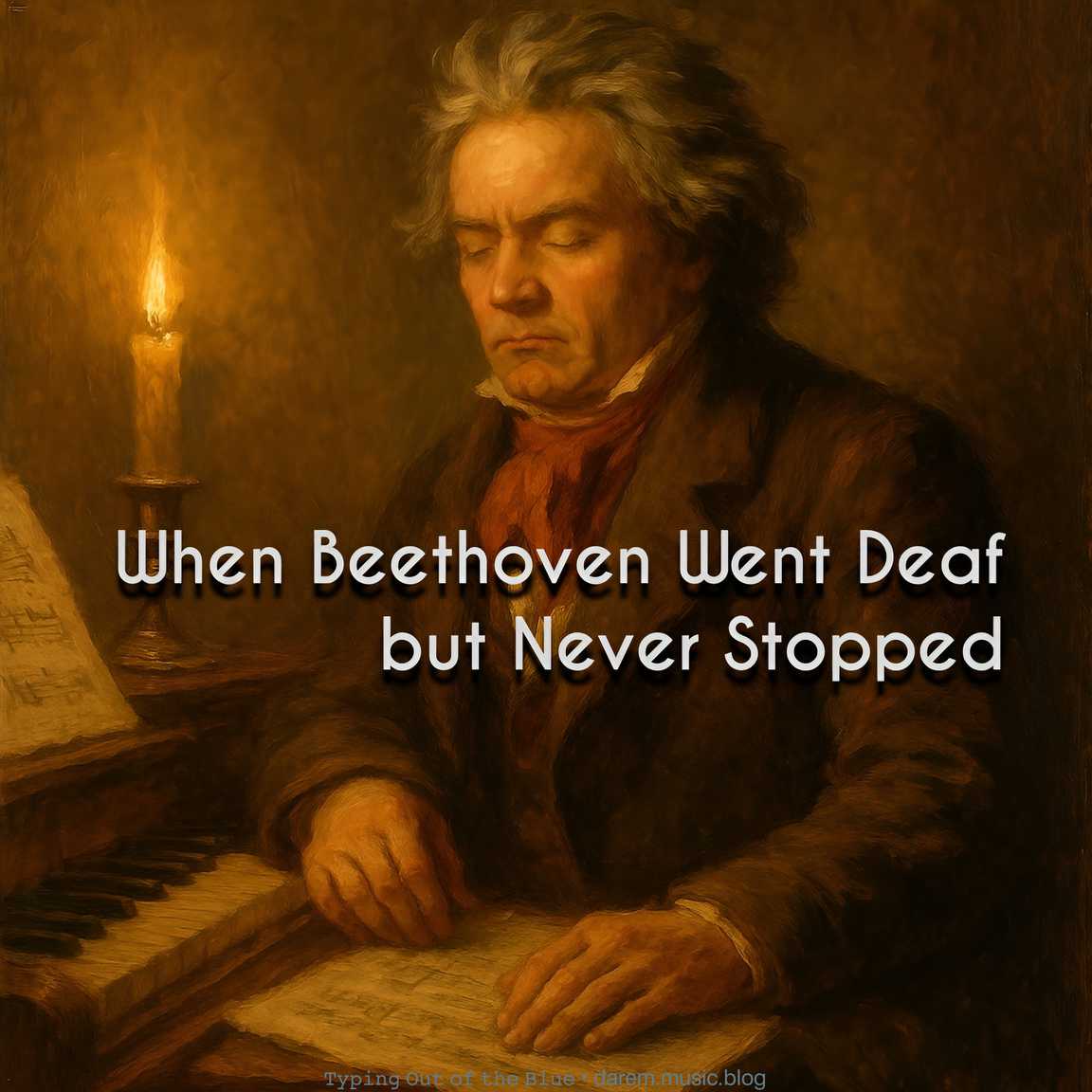
When Beethoven Went Deaf but Never Stopped

Beethoven went deaf but never gave up. His silence became the sound that changed how the world hears music forever.

Fifth Symphony (Beethoven) • Darem Placer

People often call Beethoven’s story a tragedy—but it’s really a story of courage. Born in Bonn, Germany, in 1770, he began losing his hearing in his late 20s while living in Vienna. By his 40s, he was almost completely deaf. For a musician, that sounds like the end. But for him, it was the start of something greater.

He couldn’t hear the piano, yet he kept composing. He would hold a stick between his teeth and press it to the piano to feel the vibration of each note. He no longer heard with his ears—but with his memory, his mind, and his heart.

That’s how he wrote Ode to Joy (An die Freude), the final movement of his Symphony No. 9 in D minor, Op. 12—one of the most powerful and emotional pieces in history. Completed in 1824, it was performed for the first time in Vienna, where Beethoven stood on stage unable to hear the applause.

You can even feel it live in this breathtaking performance.

Ode to Joy – London Symphony Orchestra & Sir Antonio Pappano

Beethoven proved that silence can’t stop real passion. Even when the world goes quiet, true art finds a way to speak. And maybe that’s a lesson for us too—whatever struggles we face, we can still create, still move, still function. Beethoven showed that greatness isn’t about what we lose, but how we rise beyond it.
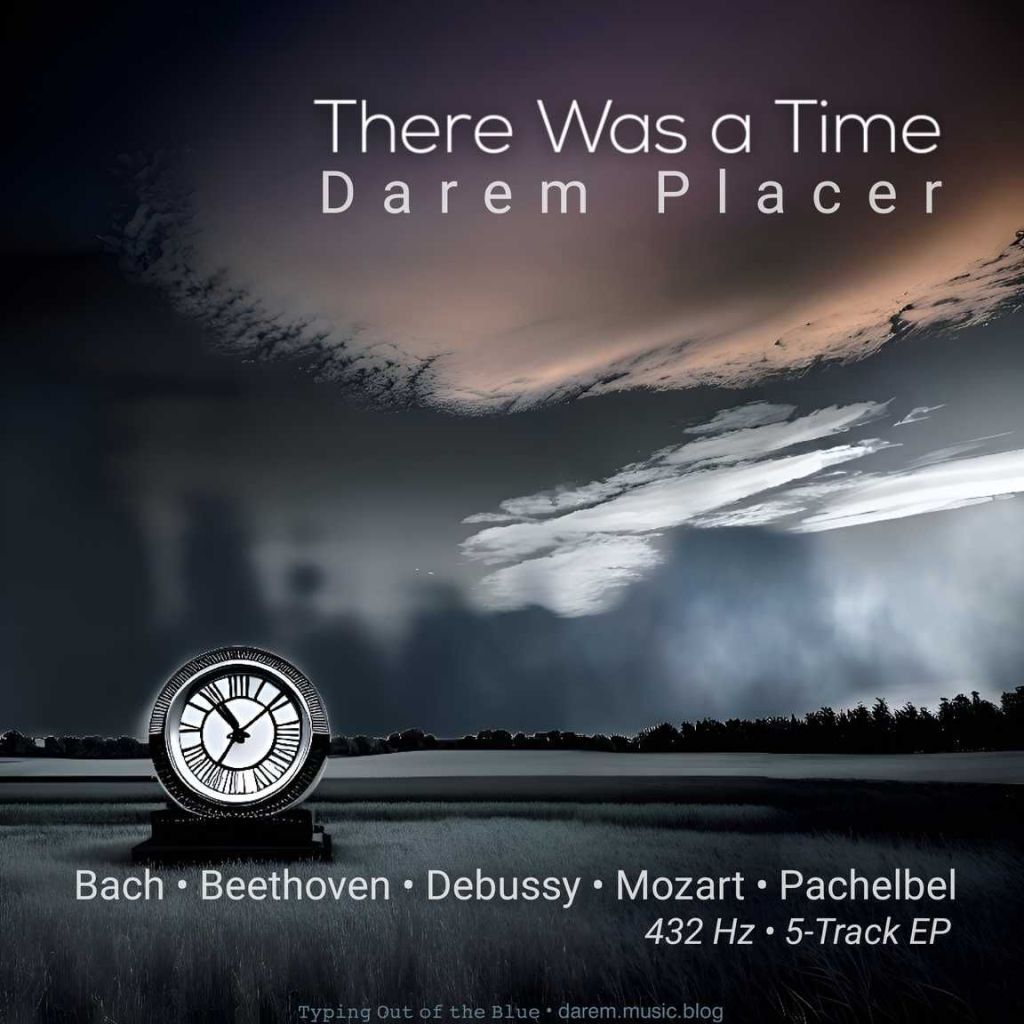
There Was a Time includes Fifth Symphony. Soon on Bandcamp.

⌨ ᴛʸᵖⁱⁿᵍ ᴏᵘᵗ ᵒᶠ ᵗʰᵉ ʙˡᵘᵉ ᵈᵃʳᵉᵐ ᵐᵘˢⁱᶜ ᵇˡᵒᵍ
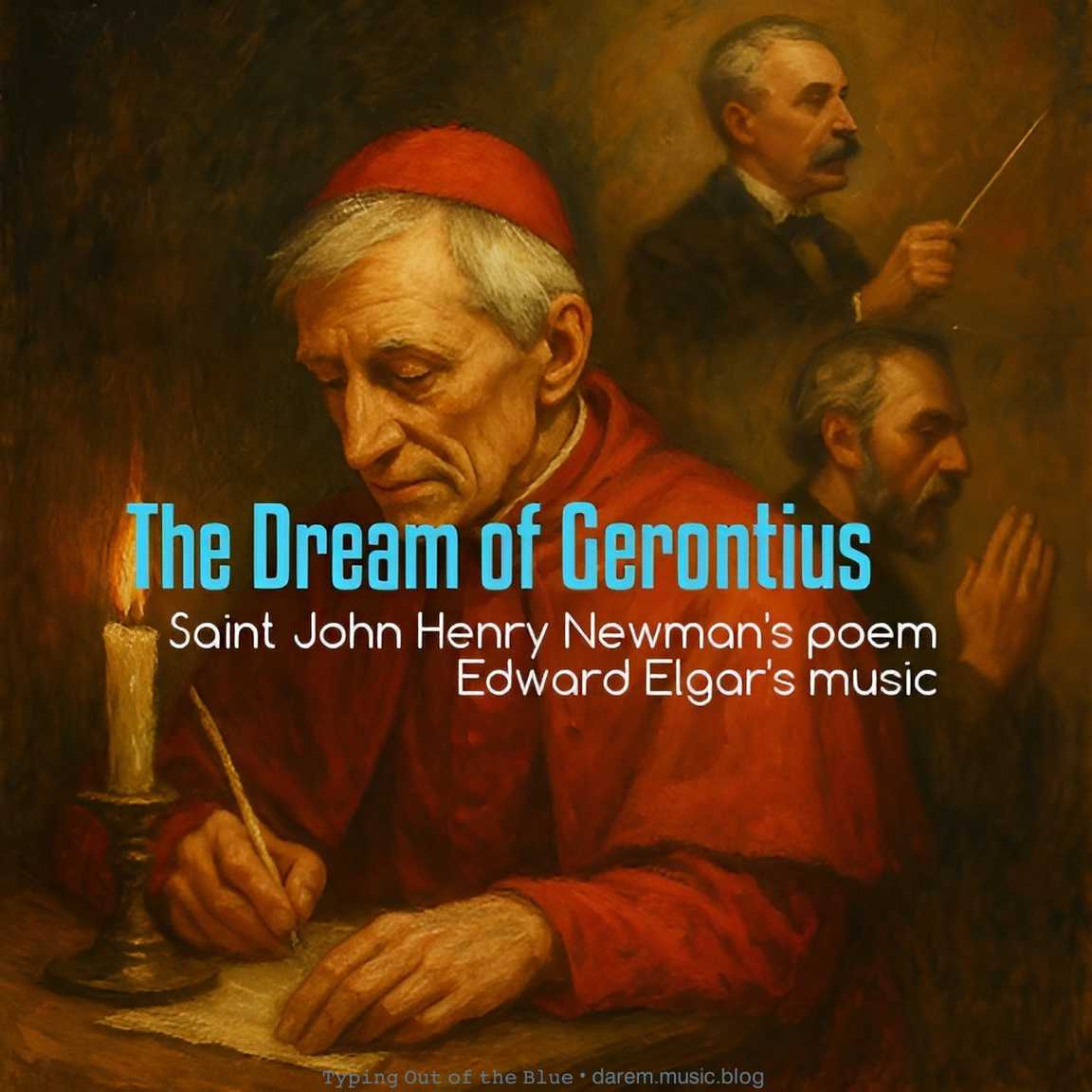
The Dream of Gerontius

A dying man’s dream becomes a journey of light—Newman’s vision of the soul reborn through Elgar’s music.

Saint John Henry Newman wrote The Dream of Gerontius in 1865—after years of searching for truth that led him from the Church of England to the Catholic faith. He wasn’t trying to impress scholars. He was trying to understand what happens when the soul lets go.

This poem became his answer. It tells the journey of one dying man, Gerontius, whose dream reveals what every heart quietly fears yet secretly longs for—the moment we meet God.

🕯 Part 1 – The Last Breath

Gerontius is dying. His friends pray. The priest whispers the old words of faith. Fear mixes with peace.

He knows he’s small before eternity, but still he trusts. The angels begin to move. Heaven is already near.

🌌 Part 2 – The Soul’s First Light

He opens his eyes again—but now as a soul. No pain, no weight, just wonder.

His Guardian Angel is there, calm and strong, guiding him past mocking voices and into waves of angelic song. Each sound brings him closer to the Light that no one can fully describe.

☀️ Part 3 – The Gaze of God

Then silence. One glimpse of God—and it’s too much beauty to bear. Gerontius cries out in love and awe.
He asks to be purified before he can stay in that Presence. The Angel holds him and whispers rest, carrying him into Purgatory where healing begins.

🎶 From Poem to Symphony

Decades later, Edward Elgar gave Newman’s vision a voice. His oratorio The Dream of Gerontius turned the poem into living sound—music that trembles, soars, and finally falls into peace.

Newman imagined it. Elgar let the world hear it.

The Dream of Gerontius by Sir Edward Elgar
Live from the BBC Proms, 24th July 2005.
Halle Orchestra conducted by Mark Elder
Allice Coote (Mezzo-soprano)
Paul Groves (Tenor)
Matthew Best (Bass)
Halle Choir
London Philharmonic Choir
Halle Youth Choir

⌨ ᴛʸᵖⁱⁿᵍ ᴏᵘᵗ ᵒᶠ ᵗʰᵉ ʙˡᵘᵉ ᵈᵃʳᵉᵐ ᵐᵘˢⁱᶜ ᵇˡᵒᵍ