
The Greatest Rags-to-Riches Story

A quiet Christmas reflection on how the greatest rags-to-riches story was never about money, but about what lasts.

When people talk about rags-to-riches stories, they usually mean money. Someone starts with nothing, works hard, and ends up with a lot. That’s the usual pattern. But the greatest rags-to-riches story doesn’t go that way.

It begins with Jesus Christ, born in a cave. No house, no wealth, no comfort. Just hay, animals, and cold air. That’s not poetic poverty. That’s real poverty.

He didn’t grow up to own land or collect gold. He didn’t build power or protect status. Instead, His life moved in a different direction. His words stayed with people. His way of living spread quietly. His actions kept changing lives, long after He was gone.

Most rags-to-riches stories end with success. This one ends with giving. He gave time, care, forgiveness, and finally His life. And strangely, that giving made the world richer.

Christmas points to this simple idea. Richness is not always about what you gain. Sometimes it’s about what you give away. The world measures success by what people own. This story measures it by what remains after everything is given.

He was born with nothing. He lived simply. And yet He left something that never ran out. That’s why this is still the greatest rags-to-riches story ever told.

⌨ ᴛʸᵖⁱⁿᵍ ᴏᵘᵗ ᵒᶠ ᵗʰᵉ ʙˡᵘᵉ ᵈᵃʳᵉᵐ ᵐᵘˢⁱᶜ ᵇˡᵒᵍ

Digital Albums by Darem Placer on Bandcamp
Listen. Buy. Download.

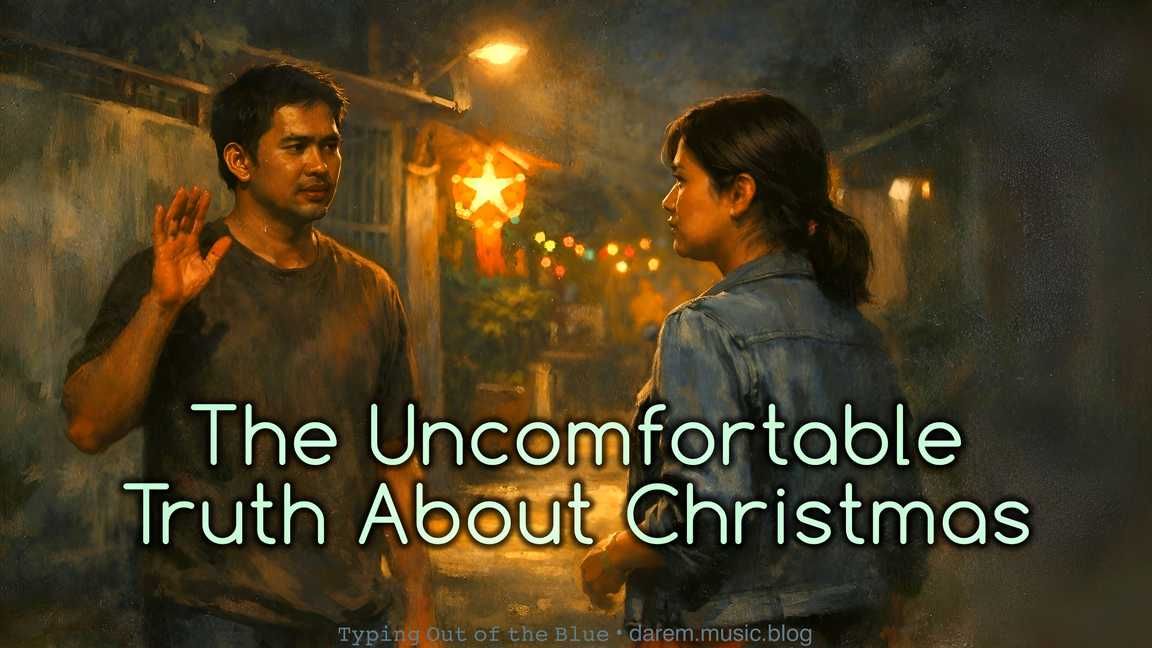
The Uncomfortable Truth About Christmas

Why greeting God feels easy, but greeting people at Christmas often costs more than we expect.

It is easy to say, “Happy birthday, Jesus.” Safe. Clean. No risk. God will not ignore you. He will not judge your face, your clothes, or your past. In our minds, His reaction is already good.

But saying “Merry Christmas” to people is different.

People say Merry Christmas almost automatically—out of habit, politeness, or routine—but when it comes to real people, they become selective.

Beggar to beggar? Rare. It’s like asking a fellow beggar for coins. 

Taong grasa greeting another poor-looking dude? Halos alaws.

Busy businessman? Safe lang—partners, clients, same level. 

Neighbors with dispute? Dead air. 

Kid greeting a stranger? Parents will pull the kid back. “Delikado.”

So yeah—choosy ang tao, kahit Christmas.

Because people react. Christmas greetings to humans are risky. May pride, may hiya, may history, may ego, may fear. One “Merry Christmas” can open wounds or expose walls.

And that’s the point we miss.

If Christmas is really about Jesus, then greeting people is part of greeting Him. Pero doon tayo umatras. Kasi doon may cost.

So yes—mas madali talagang bumati kay God than bumati sa kapwa. Because God’s reaction is already settled in our minds as good. Sa tao, dehins.

But Christmas is not only about remembering that Jesus came. It is about where He chose to be found. Not in comfort. Not in safe circles. Not only among people who think like us.

He is present in each and everyone—including the ones we avoid, the ones we judge, and the ones we are afraid to face. That is the uncomfortable truth about Christmas.

We love celebrating His presence, but we hesitate when that presence looks like a person who might react.

But Christmas gives us another chance. Not to be perfect. Not to be heroic. Just to be a little braver.

Sometimes, Christmas is not about saying the right words to God. It is about daring to say Merry Christmas where it feels hardest. And that small courage? That might be the real gift.

⌨ ᴛʸᵖⁱⁿᵍ ᴏᵘᵗ ᵒᶠ ᵗʰᵉ ʙˡᵘᵉ ᵈᵃʳᵉᵐ ᵐᵘˢⁱᶜ ᵇˡᵒᵍ
Digital Albums by Darem Placer on Bandcamp
Listen. Buy. Download.