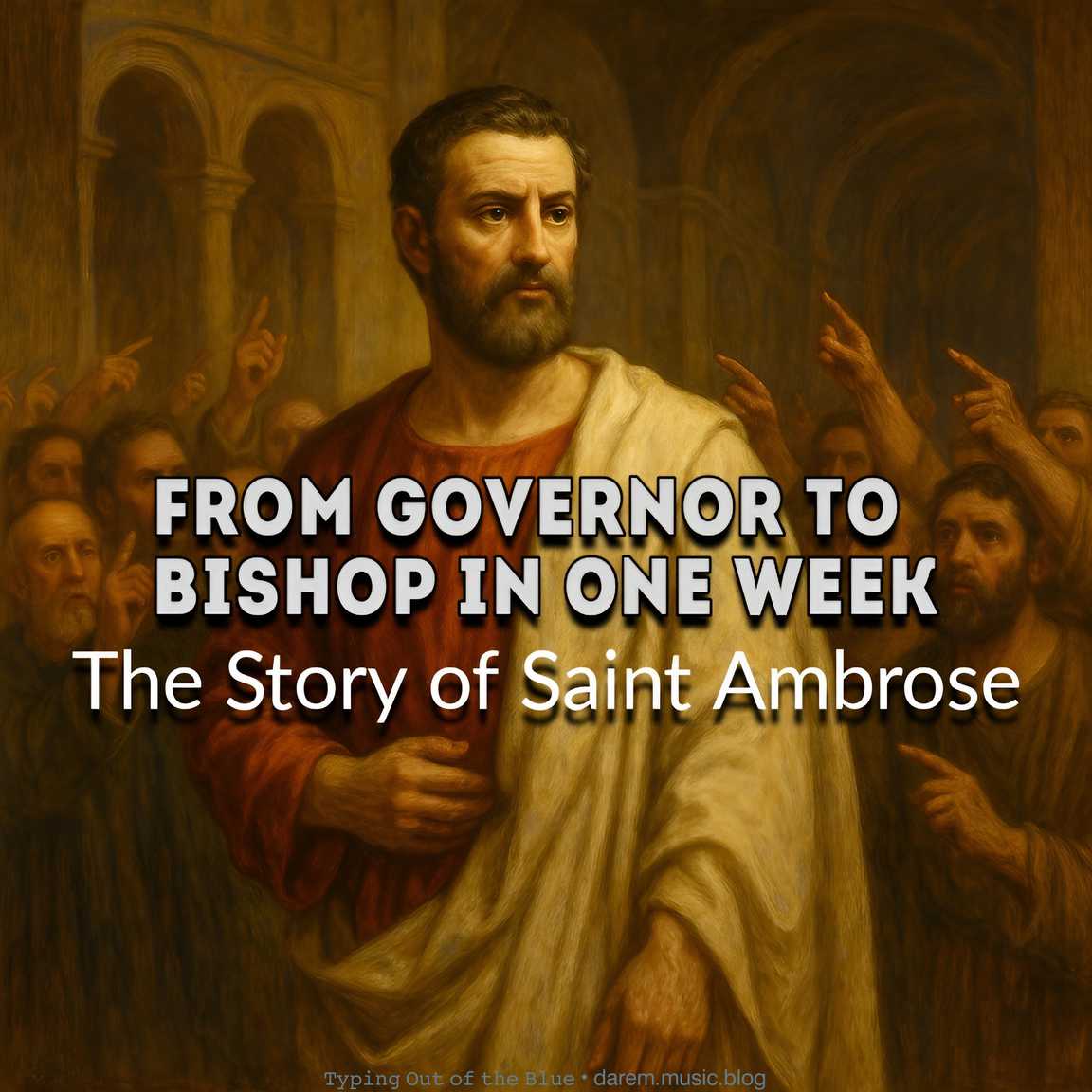
From Governor to Bishop in One Week

A trusted governor unexpectedly stepped into a role that shaped early Church history.

The Story of Saint Ambrose

In 374, the city of Milan was deeply divided. Two Christian groups were fighting over who should become the next bishop. There were many priests available, but the people could not agree on anyone. Every choice created more tension.

Ambrose was the Roman governor at that time. He came only to calm the crowd. He was not a priest. He was not even baptized. He simply wanted peace in the city.

But while he was speaking, the entire crowd suddenly called for him. Both sides trusted him because he was not part of any group. They wanted Ambrose to become bishop.

He resisted at first. He knew he had no proper training for Church leadership. But the people insisted, and even the emperor supported the choice. Ambrose finally accepted.

Everything then moved very fast.

He was baptized.
He was ordained a priest.
He was ordained a bishop.
All within one week.

It became the fastest recorded rise to becoming a bishop in Church history. No one else went from unbaptized civilian to bishop at that pace.

Once in office, Ambrose studied seriously, lived with discipline, and guided Milan through difficult years. He defended the Church when political pressure became strong and later guided Augustine, who would become one of Christianity’s most important thinkers.

This unexpected week in Milan changed the direction of the early Church. And the man at the center of it—who never planned to be bishop—is honored today as a saint.

⌨ ᴛʸᵖⁱⁿᵍ ᴏᵘᵗ ᵒᶠ ᵗʰᵉ ʙˡᵘᵉ ᵈᵃʳᵉᵐ ᵐᵘˢⁱᶜ ᵇˡᵒᵍ

Merely Christmas • Darem Placer
Out this season on Bandcamp.

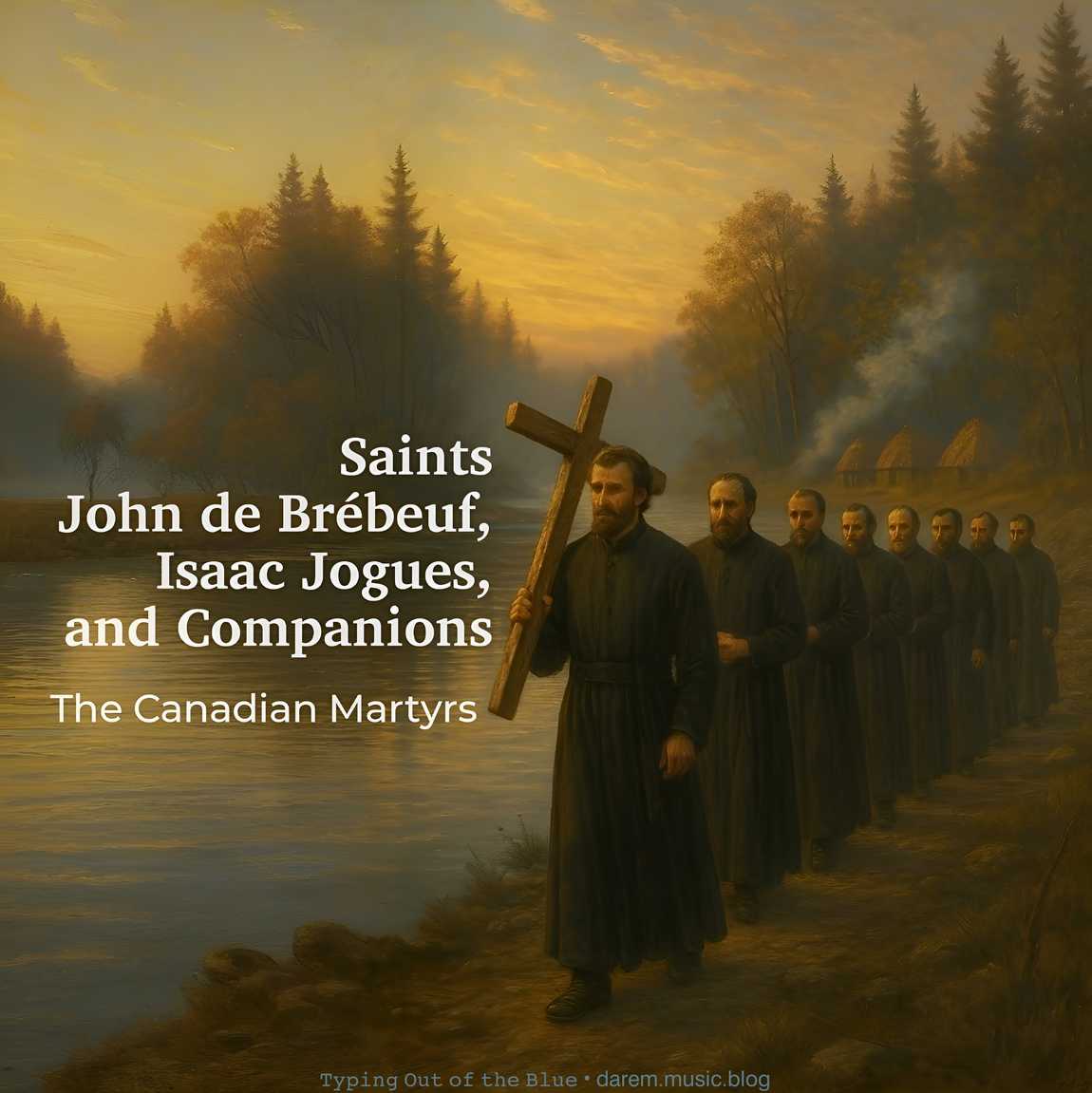
Saints John de Brébeuf, Isaac Jogues, and Companions—The Canadian Martyrs

Eight Jesuits crossed an ocean for love and faith—and found Heaven through fire in the wild lands of early Canada.

In the early 1600s, eight Jesuit missionaries left France for a land of cold rivers and endless forests—with only courage and the Cross. John de Brébeuf, Isaac Jogues, Gabriel Lalemant, Charles Garnier, Noël Chabanel, Antoine Daniel, René Goupil, and John de Lalande.

They lived among the Huron people, peaceful farmers who welcomed them as friends. The missionaries learned their language, helped the sick, and shared their food. Because of their long black cassocks, the people called them “black robes.”

But nearby lived the Iroquois tribes, strong warriors and old enemies of the Hurons. When war broke out, the Iroquois thought the black robes were spies. Then disease spread through villages, and some blamed the missionaries, thinking their prayers and crosses brought bad luck.

Isaac Jogues and René Goupil were captured by the Mohawk, part of the Iroquois. Goupil was killed for making the Sign of the Cross. Jogues escaped to France but returned—knowing he might die. When he came back with John de Lalande, both were killed, accused again of bringing sickness.

In the north, John de Brébeuf and Gabriel Lalemant were tortured and burned but never denied their faith. Antoine Daniel died protecting his people at the altar. Charles Garnier was shot while helping the wounded, and Noël Chabanel was murdered by a man he once trusted.

They never fought back. They forgave. Between 1642 and 1649, all eight gave their lives for love that refused to hate.

Now they are called the North American Martyrs, men who entered a land of fear and left it shining with peace.

⌨ ᴛʸᵖⁱⁿᵍ ᴏᵘᵗ ᵒᶠ ᵗʰᵉ ʙˡᵘᵉ ᵈᵃʳᵉᵐ ᵐᵘˢⁱᶜ ᵇˡᵒᵍ

Traces of courage, silence, and sacrifice—this is Saints.

Listen on Apple Music, Apple Music Classical, and YouTube Music