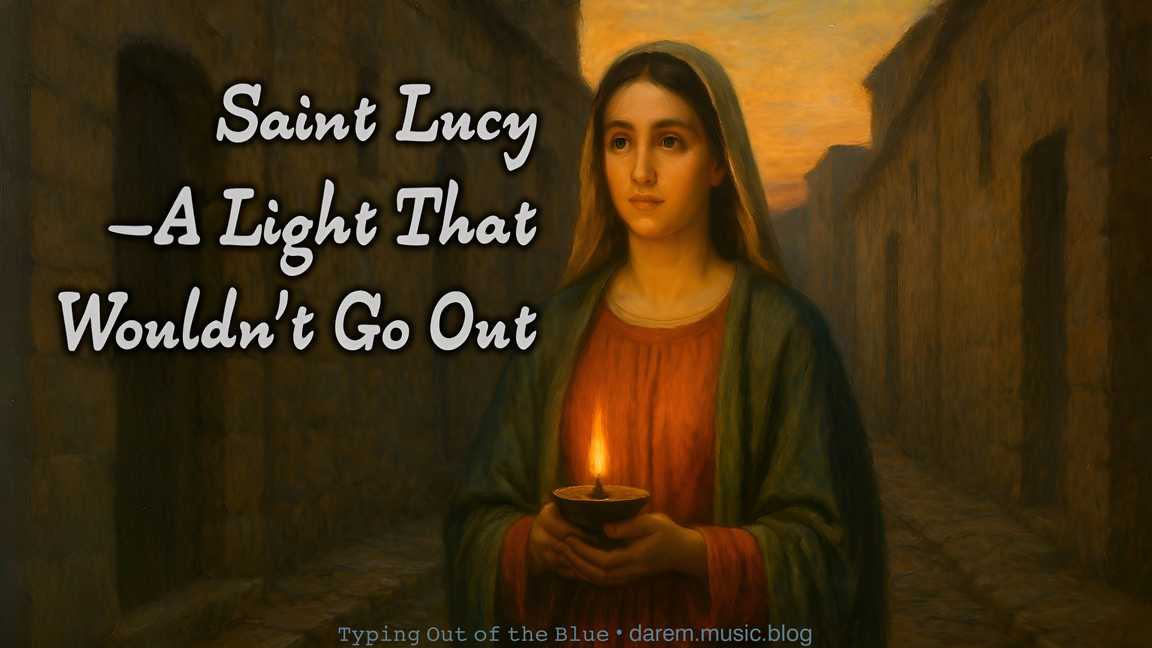
Saint Lucy—A Light That Wouldn’t Go Out

She chose courage over fear and offered her whole life to God.

There’s this story about a young woman in Sicily whose name meant “light.” She lived in the early 300s, at a time when being Christian could put your life at risk. Lucy grew up with a deep sense of compassion, especially for people who were poor or hurting. She would quietly bring them food, help them in the dark hours, and try to make their days a little easier.

Her father died when she was still young, and she stayed close to her mother, who struggled with illness for years. Lucy prayed constantly for her healing. When her mother finally recovered, Lucy took it as a sign to give her life fully to God—no half steps, no second thoughts. She decided she would stay unmarried and offer everything she had to the One she believed in.

But not everyone understood her choice. A wealthy suitor felt rejected and angry, and he accused her of being a Christian. That single accusation pushed her into the conflict she knew might come one day.

Lucy faced it with a steady heart. When they tried to force her to change her mind, she didn’t. When they tried to break her spirit, she stayed calm. The accounts of her final moments are filled with courage—a young woman holding her faith without bitterness or fear.

People remembered her as someone who cared for the vulnerable and carried a quiet light in a dark time. That’s why she’s honored as the patron saint of the blind, of those who struggle to see clearly, and of anyone trying to stay faithful when pressure gets heavy.

Her name still suggests the same thing it did back then—light that does not fade.

⌨ ᴛʸᵖⁱⁿᵍ ᴏᵘᵗ ᵒᶠ ᵗʰᵉ ʙˡᵘᵉ ᵈᵃʳᵉᵐ ᵐᵘˢⁱᶜ ᵇˡᵒᵍ

Merely Christmas • Darem Placer
Out this season on Bandcamp.

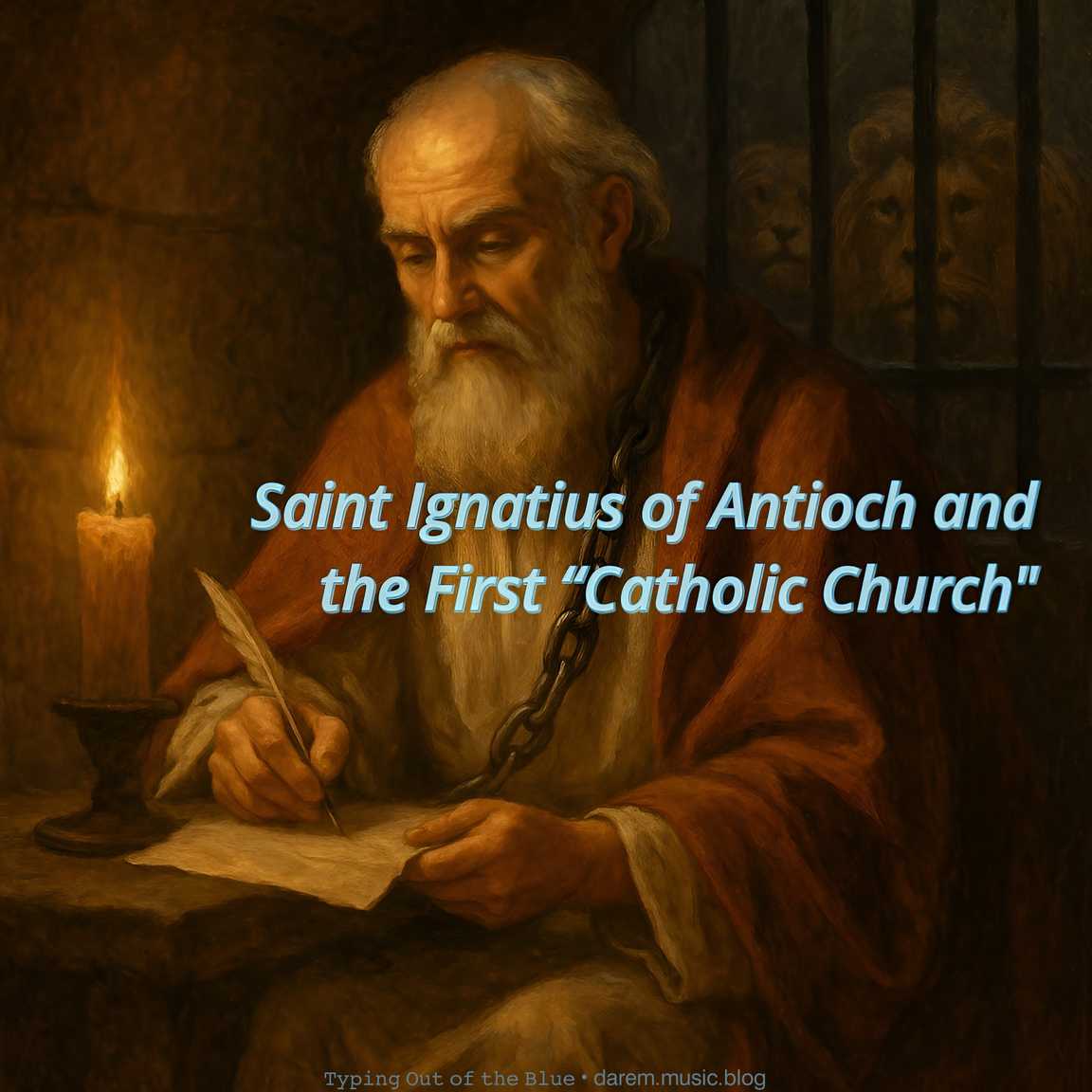
Saint Ignatius of Antioch and the First “Catholic Church”

He walked with an Apostle, led a Church, and died for a truth that never broke.

Bishop Ignatius of Antioch wasn’t just an early bishop—he was a disciple of Saint John the Apostle and later became the third bishop of Antioch, one of the earliest and strongest centers of Christian faith. He carried the teachings he heard straight from one who walked with Christ. When Ignatius later wrote the words “Wherever Jesus Christ is, there is the Catholic Church,” he wasn’t quoting Scripture—he was writing history.

That line came from his Letter to the Smyrnaeans, one of seven letters he wrote while being led in chains from Antioch to Rome around 107 AD. These weren’t Bible verses but real letters to the early Christian communities, filled with guidance, correction, and love.

Catholic” came from the Greek katholikos, meaning universal or according to the whole. For Bishop Ignatius, it meant the Church wasn’t just local—it was one living body under Christ. To be Catholic was to be connected: one faith, one Eucharist, one bishop, one love. He reminded believers not to follow breakaway teachers or private versions of truth. Faith, he said, stays whole only when it stays united.

Even as a prisoner, Bishop Ignatius kept teaching. He called the Eucharistthe medicine of immortality” and begged the Christians in Rome not to stop his martyrdom: “Let me be the wheat of God, ground by the teeth of wild beasts, that I may be found the pure bread of Christ.”

He faced death with peace, thrown to the lions in the Colosseum. His last echo—both in life and in faith—was that same truth he wrote from his chains: wherever Christ is truly present, there lives the Catholic Church.

⌨ ᴛʸᵖⁱⁿᵍ ᴏᵘᵗ ᵒᶠ ᵗʰᵉ ʙˡᵘᵉ ᵈᵃʳᵉᵐ ᵐᵘˢⁱᶜ ᵇˡᵒᵍ

Traces of courage, silence, and sacrifice—this is Saints.

Listen on Apple Music, Apple Music Classical, and YouTube Music