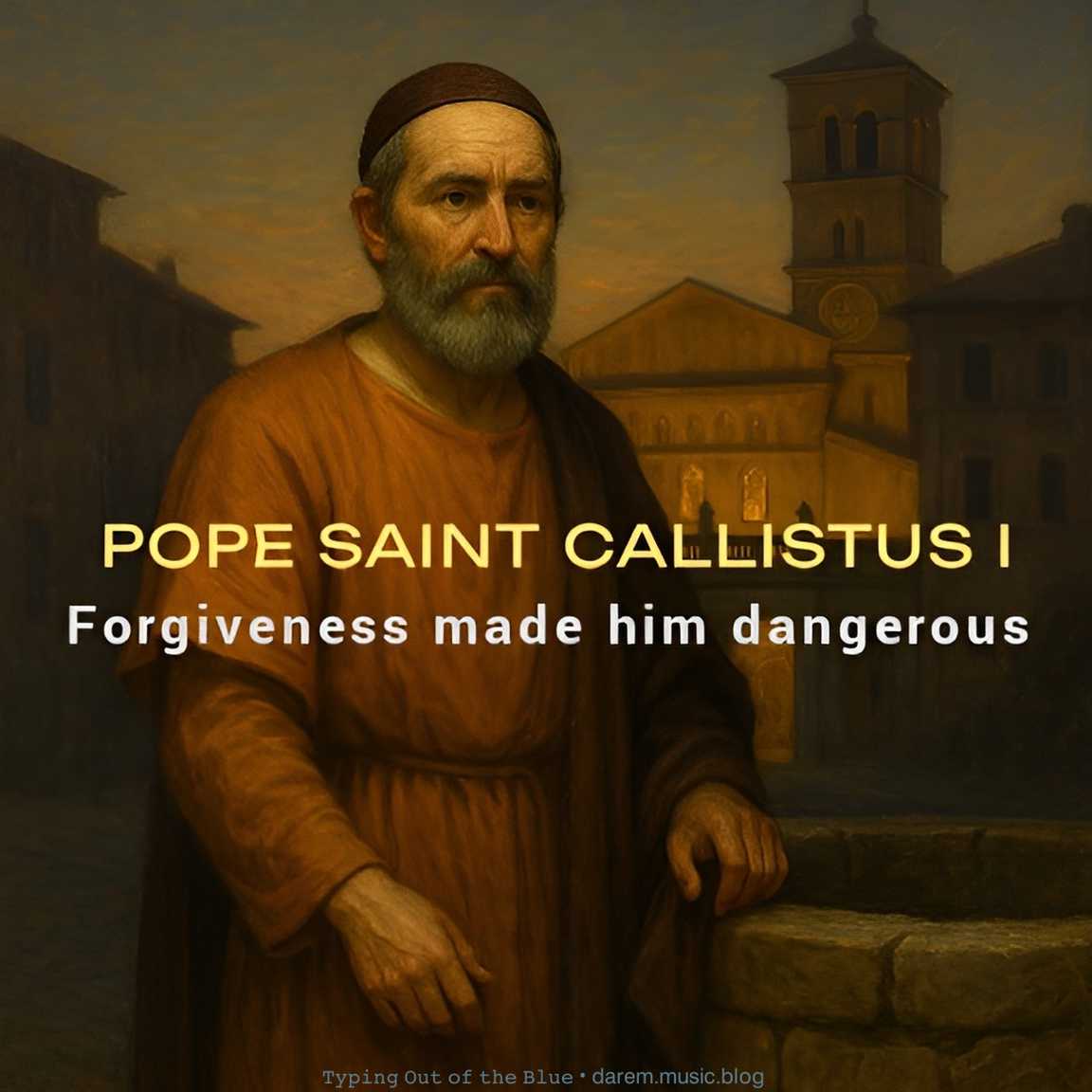
Pope Saint Callistus I

From the mines to the papacy, Pope Saint Callistus I showed that mercy, not fear, is the strongest power of all.

Forgiveness made him dangerous

In the early 200s, when the Roman Empire still ruled with iron and fear, Pope Callistus began as a slave—one of those stories you wouldn’t expect to end with a crown. He once worked with money meant for Christians, lost it, got punished, and ended up working hard in the mines. From the pit to the Pope’s chair—yeah, life has a wild sense of irony.

When freedom finally found him, he didn’t seek revenge; he built tombs. The Catacombs of St. Callistus became his mission, a quiet place for souls. That’s where mercy started to breathe again.

As Pope, he fought not with swords but with scandal—the scandal of forgiveness. A wise priest named Hippolytus stood against him, saying he was too soft for letting even murderers and adulterers return to the Church. But Pope Callistus stood firm: the Church wasn’t a museum of saints—it was a hospital for sinners. That truth divided many, but it shaped mercy forever.

He died a martyr around 222 AD—thrown into a well, fitting for a man who once rose from the depths. His name now lives in Santa Maria in Trastevere, one of the oldest churches in Rome, found in a quiet old street where the story of mercy still lives.

Some saints ruled by fear. Pope Saint Callistus I ruled by forgiveness. And that made him dangerous—in the holiest way possible.

⌨ ᴛʸᵖⁱⁿᵍ ᴏᵘᵗ ᵒᶠ ᵗʰᵉ ʙˡᵘᵉ ᵈᵃʳᵉᵐ ᵐᵘˢⁱᶜ ᵇˡᵒᵍ
Traces of courage, silence, and sacrifice—this is Saints.

Listen on Apple Music, Apple Music Classical, and YouTube Music
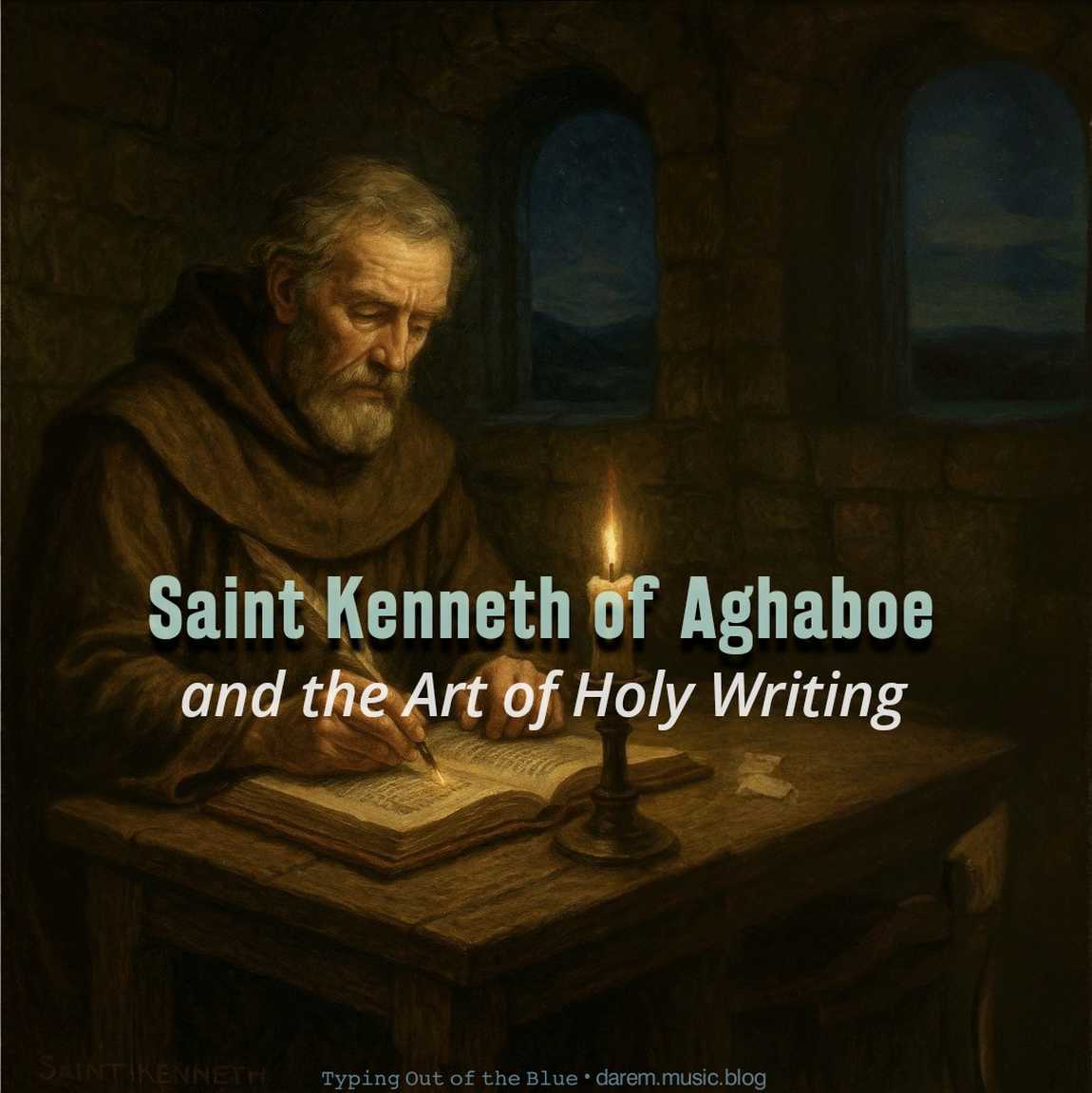
Saint Kenneth of Aghaboe and the Art of Holy Writing

In candlelight and silence, a monk’s pen kept faith alive—each word a prayer, each page a light that never faded.

In the quiet light of old monasteries, words were not just read—they were born again through hands like those of Saint Kenneth of Aghaboe.

He lived in the 6th century, when books were rare and paper was precious. Each page was made of parchment, and every letter was written by candlelight. Father Kenneth was one of the few who mastered the art of copying sacred texts—not for fame, but for faith.

To him, writing was prayer in motion.

Each stroke of ink was a whisper to God.

Each page was a bridge between heaven and earth.

He and his fellow monks would spend long hours bent over Scripture—repeating the same holy words until they lived inside their hearts. They copied the Gospels, psalms, and teachings of the saints. And when a book was finished, it was not sold. It was shared—sent to another monastery, another place of silence and hope.

As a priest, Father Kenneth also preached to those who could not read, bringing the Word alive not through pages but through presence. He carried light both in ink and in voice.

Through his steady hands, the Word of God reached new lands.

Through his calm patience, wisdom was preserved when the world outside was full of wars and forgetting.

That’s how Saint Kenneth became more than a monk—he became a keeper of light, ensuring that even one small candle of knowledge would never die out.

⌨ ᴛʸᵖⁱⁿᵍ ᴏᵘᵗ ᵒᶠ ᵗʰᵉ ʙˡᵘᵉ ᵈᵃʳᵉᵐ ᵐᵘˢⁱᶜ ᵇˡᵒᵍ

Traces of courage, silence, and sacrifice—this is Saints.

Listen on Apple Music, Apple Music Classical, and YouTube Music