
Saint Winefride: The Legend That Flowed Like a Spring

A Welsh legend of faith and healing that still flows through time—Saint Winefride, the woman who chose purity over pride.

In 7th-century Wales lived a young woman named Winefride—known in Welsh as Gwenfrewi. Born to a noble family, she chose a quiet and devoted life, turning away from wealth to live for faith. History remembers her as a woman of purity and prayer, guided by Saint Beuno, a respected priest of her time.

But around her life grew a story so powerful that it outlived the centuries.

According to legend, a man named Caradoc, angered by her refusal to marry him, struck her down and severed her head. The head rolled down the hill, and where it came to rest, a spring burst from the ground. Saint Beuno found her lifeless body, took her head, placed it back on her neck, and prayed with deep faith. The story says she opened her eyes—and lived again.

From that moment, the spring was said to carry healing power—a gift that drew pilgrims from across Britain.

Whether this miracle truly happened or simply became part of the faith’s poetry, no one can say for sure. But the place remains: Holywell, in Flintshire, Wales. For more than a thousand years, it has been called the “Lourdes of Wales,” a well where people still come to pray, hoping to find healing for the body and peace for the soul.

Legend or truth, Saint Winefride’s story endures because it speaks of something timeless—the rise of faith after violence, purity stronger than pride, and grace flowing even from pain.

⌨ ᴛʸᵖⁱⁿᵍ ᴏᵘᵗ ᵒᶠ ᵗʰᵉ ʙˡᵘᵉ ᵈᵃʳᵉᵐ ᵐᵘˢⁱᶜ ᵇˡᵒᵍ

Traces of courage, silence, and sacrifice—this is Saints.

Listen on Apple Music, Apple Music Classical, and YouTube Music
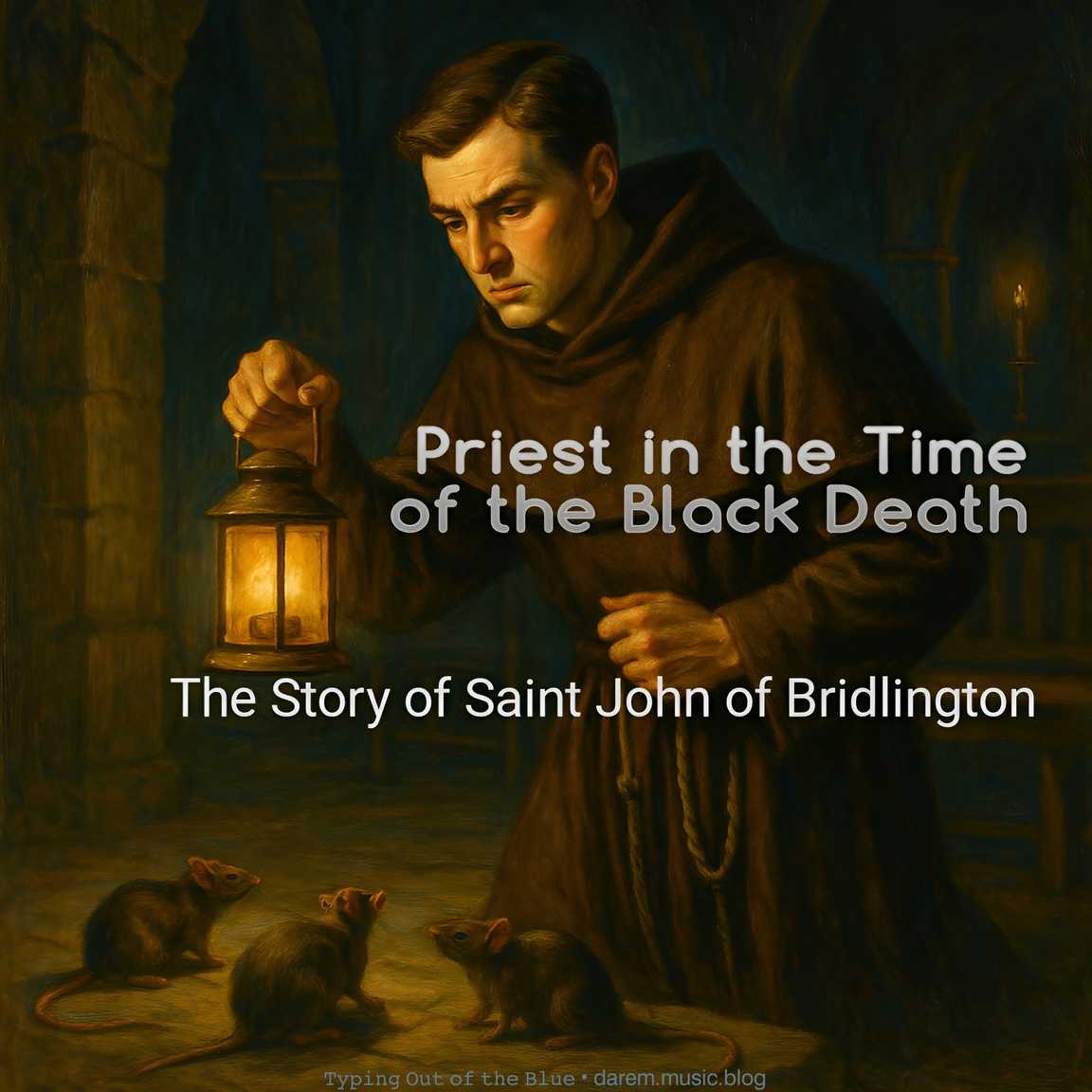
Priest in the Time of the Black Death

A young priest enters the Church during the Black Death, risking his life to serve the sick when many priests have already died.

The Story of Saint John of Bridlington

In 1348, rats lived even inside churches in England. They ran under pews, hid in cellars, and slipped through cracks in old stone floors. I guess those “religious rats” were the most faithful ones—they were always there, day or night. But no one knew that these same rats carried fleas, and the fleas carried the Black Death.

Soon, people began dying very fast. Families disappeared. Streets went silent. Funeral bells kept ringing. And because priests stayed close to the sick—blessing them, praying beside them, and touching the dying—many priests were the first to fall. Some churches lost all their clergy. A few priests ran away. Others stayed and died in service.

During this fearful time, a young man named John chose to enter the priesthood. He knew the danger. He knew the church was filled with rats, and that serving the sick meant risking his life. But still, he stepped forward and became Father John.

Not long after, when others refused to go near the sick, Father John visited the dying, prayed with abandoned families, and brought food to homes no one else would touch. In a time when people tried only to save themselves, Father John gave himself to others—quietly, humbly, and without fear.

This is how the story of Saint John of Bridlington began.

⌨ ᴛʸᵖⁱⁿᵍ ᴏᵘᵗ ᵒᶠ ᵗʰᵉ ʙˡᵘᵉ ᵈᵃʳᵉᵐ ᵐᵘˢⁱᶜ ᵇˡᵒᵍ

Traces of courage, silence, and sacrifice—this is Saints.

Listen on Apple Music, Apple Music Classical, and YouTube Music