
Saint Andrew—The First Disciple

He followed truth the moment he saw it—guiding others with steady steps and shaping a mission that began quietly.

Andrew lived by the shore in Bethsaida, where days began with the sound of water and the weight of fishing nets. He worked alongside his brother Simon, later known as Peter. Their life was simple, steady, and honest—built on effort and patience.

He listened to John the Baptist with genuine interest. Something in John’s voice carried a clear direction. When John pointed to Jesus with full certainty, Andrew understood the moment immediately. He followed Jesus, becoming the first disciple, guided by a heart ready for truth.

Andrew had a natural way of leading others toward what he discovered. He brought Peter to Jesus. He introduced the boy with the loaves and fish. He guided people who felt a quiet pull toward something higher. His influence moved through personal connections, one life at a time.

After Jesus’ Ascension, Andrew traveled across distant lands—Scythia, Greece, and regions far from his home by the sea. Each place was different, yet he carried the same calm mission everywhere he went. He shared the Gospel with steady courage, meeting people with openness and sincerity.

His final chapter unfolded in Patras, where he was sentenced to crucifixion for his preaching. Out of deep humility, he chose an X-shaped cross. They tied him to it, and even in those final hours, he continued speaking with strength, offering encouragement to the people gathered around him.

Today he is honored as Saint Andrew, patron of Scotland, Russia, Greece, and all who make their living by the water. His life shows how faith can move quietly but powerfully—through clear steps, honest intentions, and a heart that keeps guiding others toward hope.

Andrew leaves a simple truth behind him. Being the first disciple wasn’t about being ahead—it was about carrying the mission with a steady heart. He showed how real change often starts quietly—through sincere steps, through guiding one person at a time and through letting light move through ordinary moments. That kind of beginning shapes everything that follows.

⌨ ᴛʸᵖⁱⁿᵍ ᴏᵘᵗ ᵒᶠ ᵗʰᵉ ʙˡᵘᵉ ᵈᵃʳᵉᵐ ᵐᵘˢⁱᶜ ᵇˡᵒᵍ
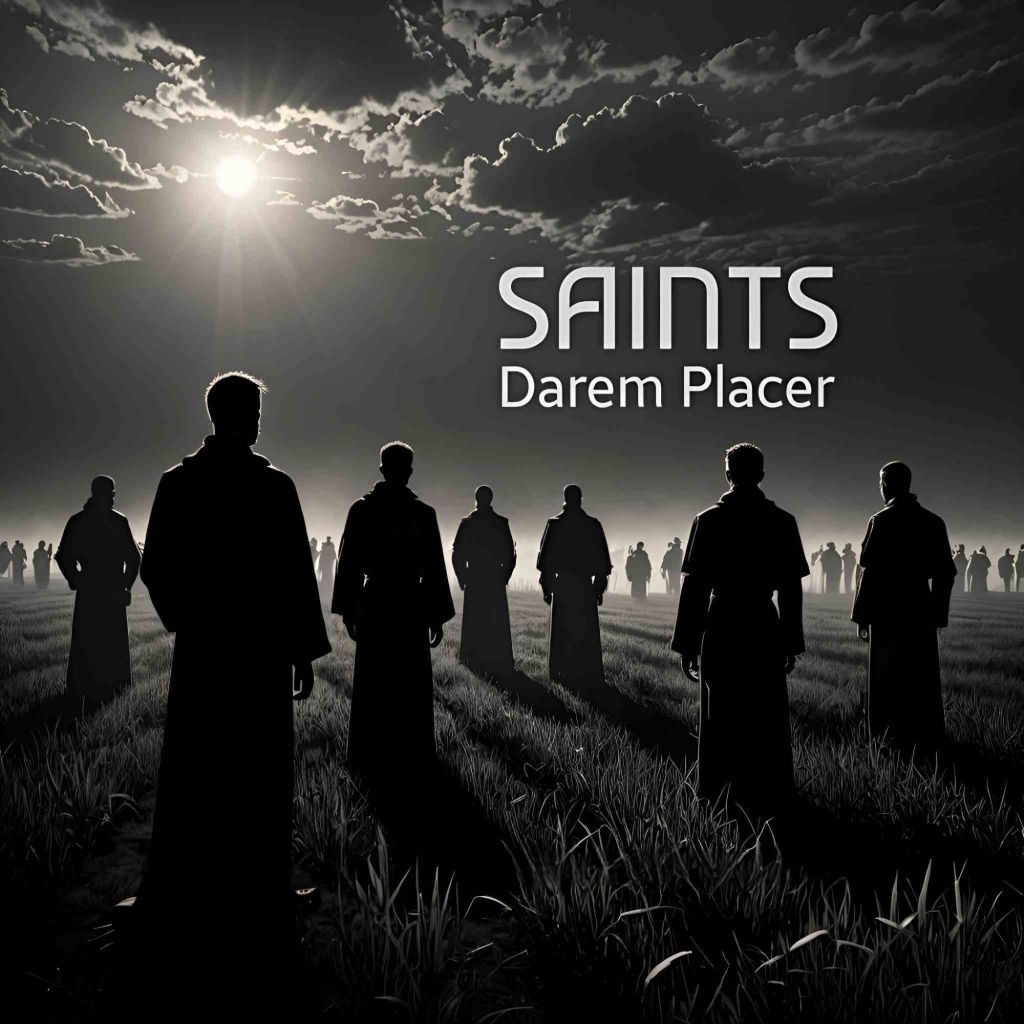
Traces of courage, silence, and sacrifice—this is Saints.

Listen on Apple Music, Apple Music Classical, and YouTube Music
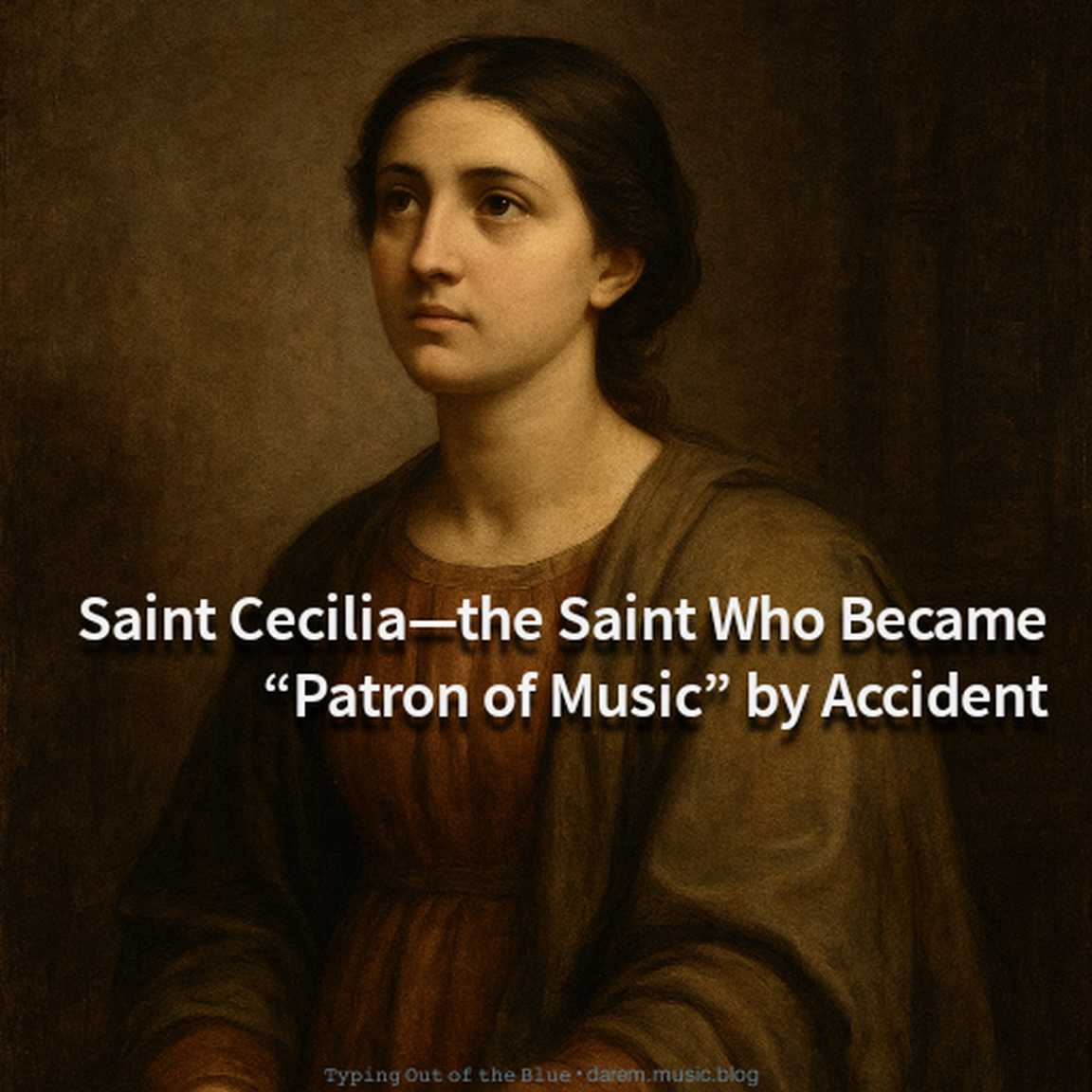
Saint Cecilia—the Saint Who Became “Patron of Music” by Accident

A Roman martyr later gained a musical title after a misunderstood medieval line reshaped her story.

Saint Cecilia lived in third-century Rome, a time when Christians practiced their faith quietly—always aware that the Empire could turn against them without warning. She wasn’t known for singing in public or composing hymns. No records say she played any instrument. Her life was about courage, not concerts. So how did she end up holding a giant organ in almost every painting?

The shift happened centuries after her death. During the Middle Ages—long after Rome had fallen and Europe had changed—a devotional text called Passio Sanctae Caeciliae reshaped how people saw her. It included one line about her wedding day: “Cantantibus organis illa in corde suo soli Domino decantabat.” Meaning: “While the instruments played, she sang in her heart to the Lord.”

But the word organis didn’t mean “pipe organ.” In early Roman life, it simply meant instruments—the usual banquet music at a wedding. Cecilia wasn’t performing. She was praying silently while musicians played in the background.

Medieval artists misunderstood the phrase. By their time—roughly the 12th to 15th centuries—the pipe organ was rising as the main church instrument. So when they read organis, they imagined Cecilia playing one. Painters repeated the scene. Churches adopted it. And over time, the quiet Roman martyr from the 200s became the “patron of music” in the 1400s and beyond.

History says she wasn’t a musician. Tradition says she inspired music.
And somewhere between those two worlds—ancient Rome and medieval Europe—a symbol was born.

Saint Cecilia reminds us that the deepest songs aren’t always heard. Some remain in the heart—steady and faithful—even when the world around you plays a different tune.

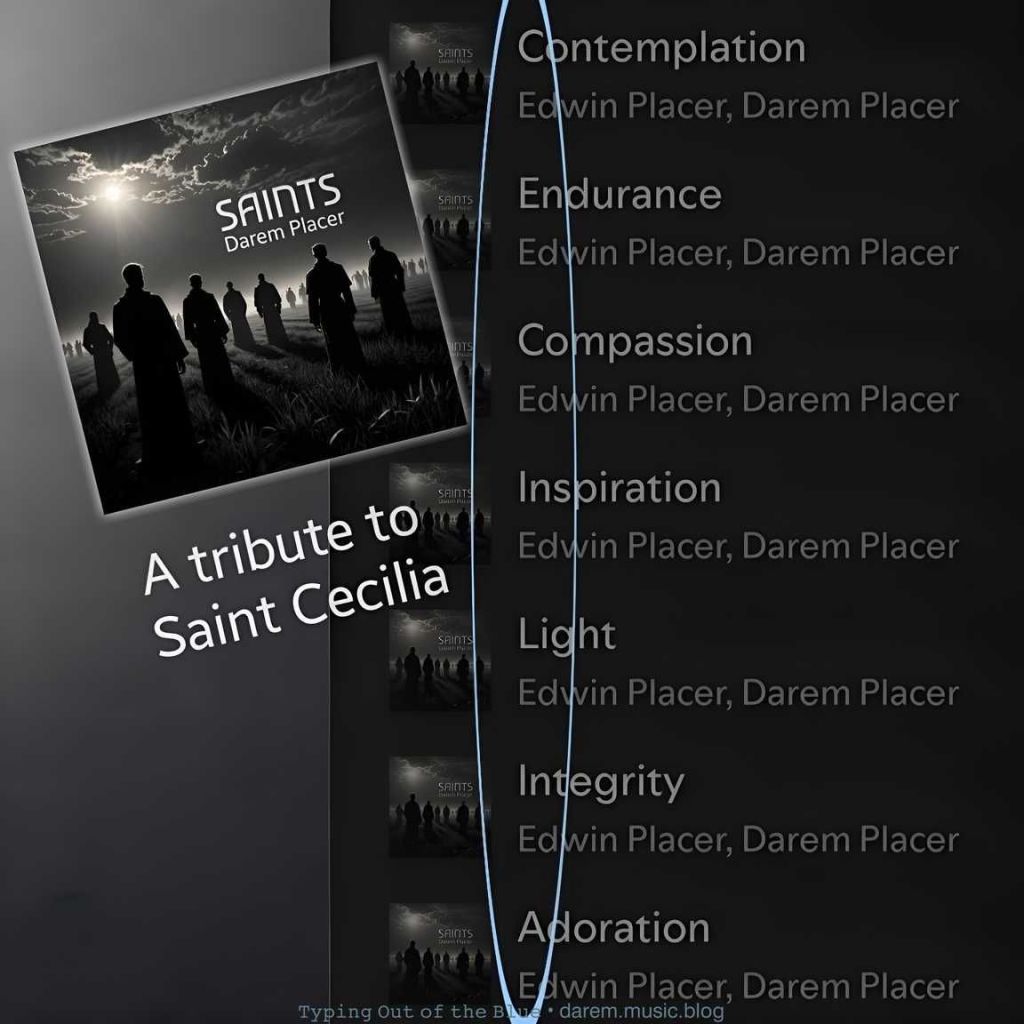
I wrote this album as a tribute to Saint Cecilia. I planned every track title so the first letters would quietly spell her name—CECILIA. It wasn’t random. It wasn’t subconscious. It was intentional, a small creative nod to the saint I believed stood with musicians.

Only later did I learn that her title as “patron of music” came from a medieval mistranslation, not from her actual life. For a moment, it felt strange, almost disappointing, to discover that the role I admired wasn’t historically accurate.

But the tribute still stands, just on a different ground.

Because even if the music title came later, Cecilia’s story is still shaped by quiet strength, steady faith, and the kind of courage that doesn’t need applause. And those virtues—Contemplation, Endurance, Compassion, Inspiration, Light, Integrity, Adoration—still carry her name with meaning.

The music didn’t honor a mistake.
It honored the symbol she became.

And sometimes that’s enough.

A tribute album to Saint Cecilia.

Listen on Apple Music, Apple Music Classical, and YouTube Music
⌨ ᴛʸᵖⁱⁿᵍ ᴏᵘᵗ ᵒᶠ ᵗʰᵉ ʙˡᵘᵉ ᵈᵃʳᵉᵐ ᵐᵘˢⁱᶜ ᵇˡᵒᵍ