The Lost Child

Wealth and poverty clashed in Paris, but a cry on the street forced action that turned pity into lasting mercy.

Saint Vincent de Paul’s Compassion

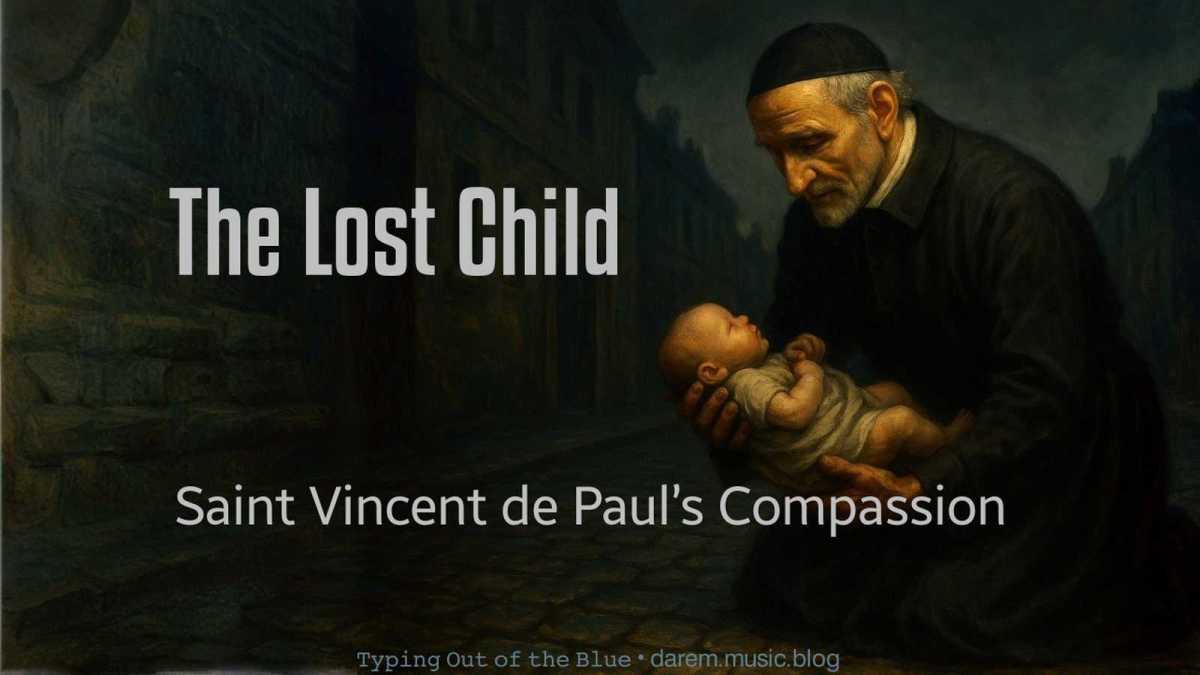
In the early 1630s, Paris was a city of contrasts—lavish wealth on one side, and on the other, desperate poverty that left many infants abandoned on the streets.

Father Vincent de Paul, already a Catholic priest known for his work among the poor, came across a baby left to die. People walked past with pity but no action. Father Vincent could not. He bent down, lifted the fragile child, and carried not only its body but also the weight of society’s failure.

He stormed into the homes of the wealthy. His words were sharp: “If this child dies, we are responsible.” The statement struck hearts. Moved by his urgency, noble women and men gave their support. With their help, Father Vincent organized care for abandoned children, creating the Hospital of Foundlings (Enfants-Trouvés)—a place where little ones once thrown away could now survive and grow.

This was Father Vincent’s way: turning compassion into structures that lasted, making mercy not just a feeling but a system.

Father Vincent lived a long life of service. After decades of caring for the poor, the sick, prisoners, and abandoned children, he died in 1660 in Paris at the age of 79. His body was later found incorrupt, a sign to many of his holiness.

He is remembered as Saint Vincent de Paul, the Apostle of Charity, a man who saw Christ in the weakest and made the world face its responsibility.

ᴛʸᵖⁱⁿᵍ ᴏᵘᵗ ᵒᶠ ᵗʰᵉ ʙˡᵘᵉ ᵈᵃʳᵉᵐ ᵐᵘˢⁱᶜ ᵇˡᵒᵍ

Traces of courage, silence, and sacrifice—this is Saints.

Listen on Apple Music, Apple Music Classical, and YouTube Music
The Life of Agnes

She began as Agnes, a young girl shaped by her mother’s quiet lessons of love. Years later, the world would know her as Saint Teresa of Calcutta—her life now remembered every September 5 on the International Day of Charity, a reminder that even the smallest act of kindness can change countless lives.

Saint Teresa of Calcutta’s Journey of Love and Charity

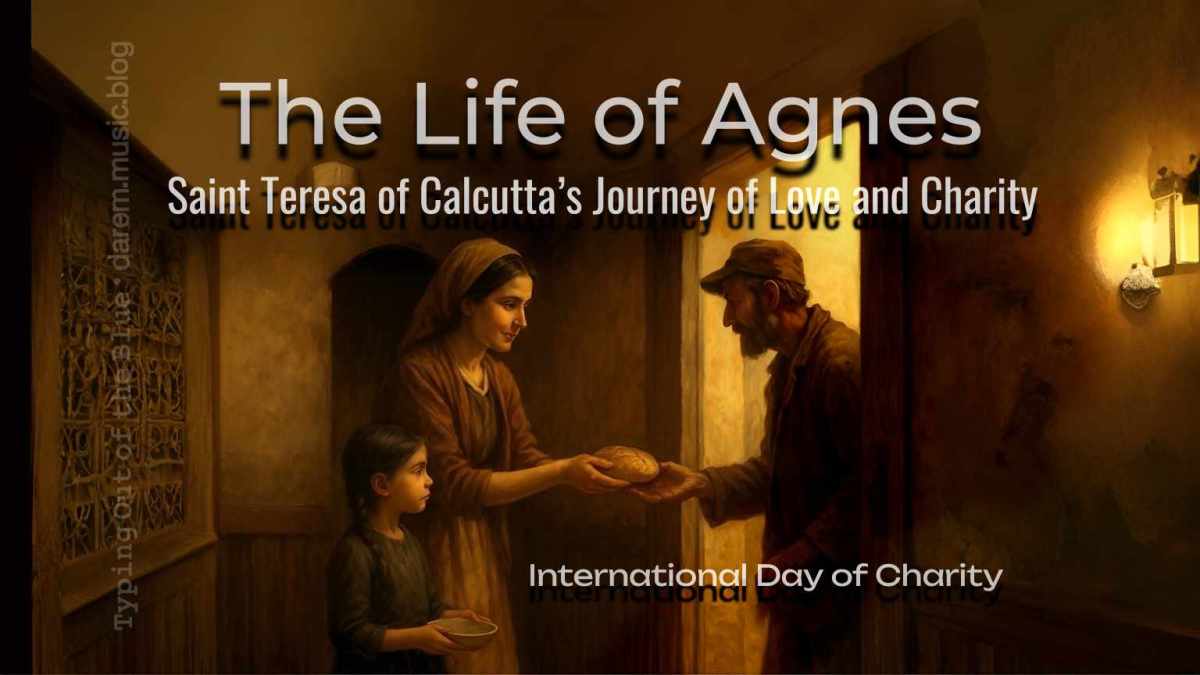
Before she was called Mother Teresa, she was Agnes Gonxha Bojaxhiu—born on August 26, 1910, in Skopje, a small city in what is now North Macedonia. She grew up in a Catholic family where generosity was a way of life. Her mother, Drana, often welcomed the poor into their home. Agnes once recalled her words: “My child, never eat a single mouthful unless you are sharing it with others.” That simple rule of love shaped her forever.

As a teenager, Agnes joined the Sodality of the Blessed Virgin Mary in her parish, visiting the sick and helping the poor. By age 12, she already felt a call to serve God as a missionary. At 18, she left home to join the Sisters of Loreto. First, she went to Ireland to learn English. Then she traveled to India, where she taught at St. Mary’s School in Calcutta. Her students loved her, but her heart was drawn to the people outside the classroom walls.

In 1946, during a train ride, she experienced what she later called her “call within a call”: God asking her to serve the poorest of the poor. Two years later, in 1948, she stepped out wearing a simple white sari with a blue border. That sari became her lifelong uniform of love.

In 1950, she founded the Missionaries of Charity, an order dedicated to serving the sick, the dying, and the abandoned. What began with a handful of sisters grew into thousands working in over a hundred countries.

Her work did not go unnoticed. She received the Nobel Peace Prize in 1979, but accepted it “in the name of the poor.” She often said, “Not all of us can do great things. But we can do small things with great love.”

Even as her health declined in the 1980s and 1990s—with heart problems, pneumonia, and broken bones—she never stopped serving. On September 5, 1997, at age 87, she passed away in Calcutta. Nineteen years later, on September 4, 2016, Pope Francis canonized her as Saint Teresa of Calcutta, fixing her feast day on September 5.

The girl named Agnes, who once shared meals with strangers at her family table, had become a mother to the world’s forgotten. That’s why the International Day of Charity, observed every September 5, does more than honor her memory. It calls us to live the truth she carried from childhood to sainthood: charity begins with a single act of love, and grows when we choose to share it.

𝚃𝚢𝚙𝚒𝚗𝚐 𝙾𝚞𝚝 𝚘𝚏 𝚝𝚑𝚎 𝙱𝚕𝚞𝚎 • 𝖽𝖺𝗋𝖾𝗆.𝗆𝗎𝗌𝗂𝖼.𝖻𝗅𝗈𝗀

In a world drowning in noise and division, they embraced silence and unity. No fear. No turning back. Just love…

Saints • Darem Placer

Listen on Apple Music, Apple Music Classical, and YouTube Music