The Lost Child

Wealth and poverty clashed in Paris, but a cry on the street forced action that turned pity into lasting mercy.

Saint Vincent de Paul’s Compassion

In the early 1630s, Paris was a city of contrasts—lavish wealth on one side, and on the other, desperate poverty that left many infants abandoned on the streets.

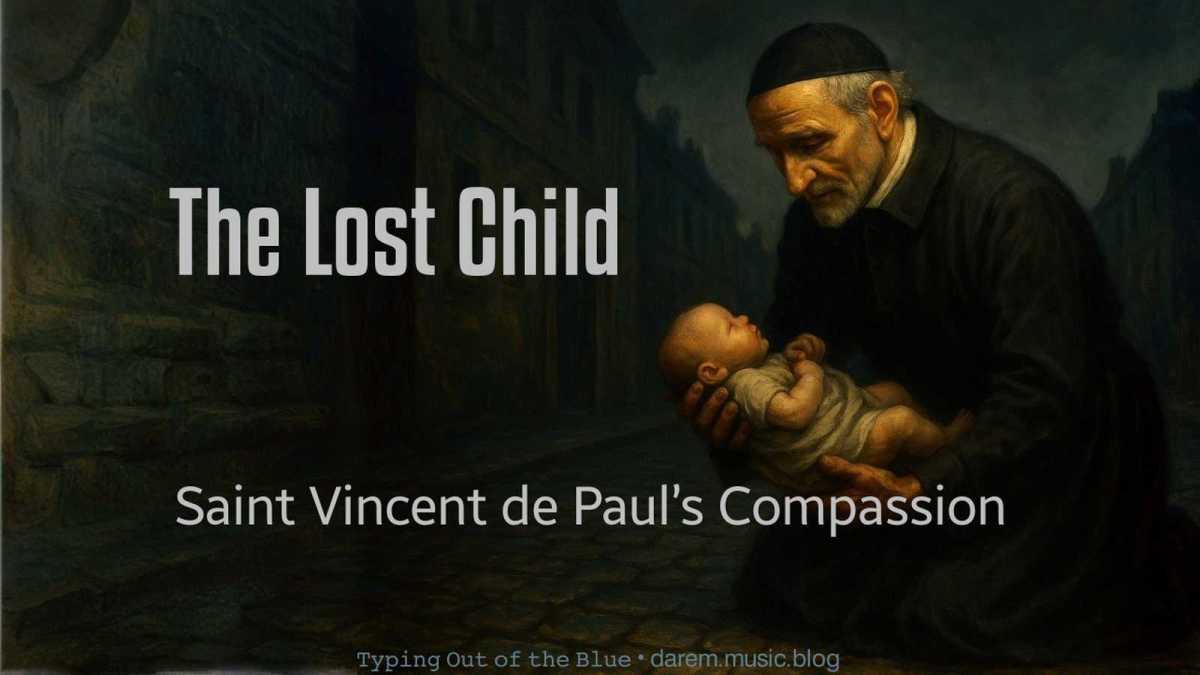
Father Vincent de Paul, already a Catholic priest known for his work among the poor, came across a baby left to die. People walked past with pity but no action. Father Vincent could not. He bent down, lifted the fragile child, and carried not only its body but also the weight of society’s failure.

He stormed into the homes of the wealthy. His words were sharp: “If this child dies, we are responsible.” The statement struck hearts. Moved by his urgency, noble women and men gave their support. With their help, Father Vincent organized care for abandoned children, creating the Hospital of Foundlings (Enfants-Trouvés)—a place where little ones once thrown away could now survive and grow.

This was Father Vincent’s way: turning compassion into structures that lasted, making mercy not just a feeling but a system.

Father Vincent lived a long life of service. After decades of caring for the poor, the sick, prisoners, and abandoned children, he died in 1660 in Paris at the age of 79. His body was later found incorrupt, a sign to many of his holiness.

He is remembered as Saint Vincent de Paul, the Apostle of Charity, a man who saw Christ in the weakest and made the world face its responsibility.

ᴛʸᵖⁱⁿᵍ ᴏᵘᵗ ᵒᶠ ᵗʰᵉ ʙˡᵘᵉ ᵈᵃʳᵉᵐ ᵐᵘˢⁱᶜ ᵇˡᵒᵍ
Traces of courage, silence, and sacrifice—this is Saints.

Listen on Apple Music, Apple Music Classical, and YouTube Music
The Friar Who Stopped the Bombs

A US pilot tried to bomb San Giovanni Rotondo in 1943. What he saw in the sky stopped him—and saved the town forever.

Padre Pio in the Sky

It was 1943, the height of World War II. Italy was still tied to the Axis powers, and American planes flew across the skies with orders to bomb key sites. During one mission over San Giovanni Rotondo, a US pilot lined up his target. But as he prepared to release his load, something impossible happened.

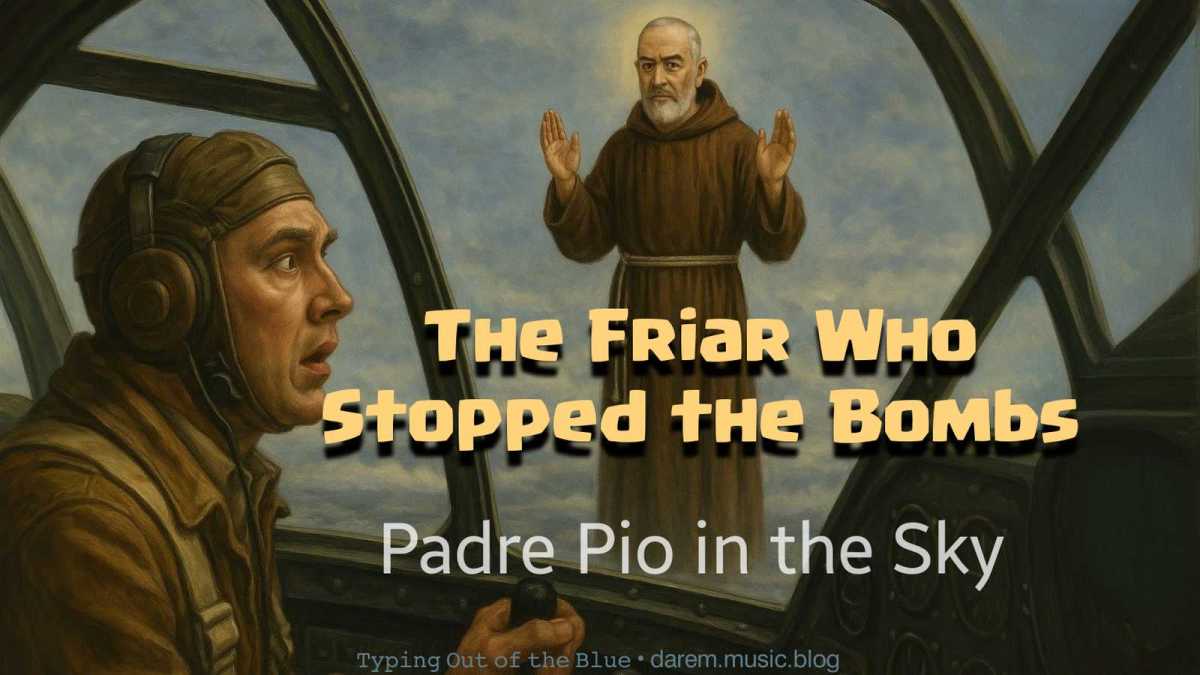
A figure appeared in the air. It was a friar—floating as if standing on solid ground, hands raised in a gesture that stopped the pilot cold. He wore a simple brown Capuchin robe, his beard framing a calm but steady face. No wings, no halo, no glowing lights. Just a friar, ordinary in appearance yet blocking the path. The pilot pressed the controls, but nothing happened. Shaken, he turned his plane back.

The Pilot’s Return

When the fighting in Italy ended in 1944 and the country had switched sides, American soldiers were stationed there. Many heard locals talk about a friar who had saved their town. Curious, that same US pilot visited the monastery at San Giovanni Rotondo. The moment he saw Padre Pio, he stopped in his tracks. It was the same friar he had seen in the sky.

The Face of Padre Pio

Padre Pio, born Francesco Forgione, was a Capuchin friar and Catholic priest, known for his prayer, the stigmata he carried for fifty years, and countless miracle stories. Thin and bearded, in the simple brown robe of his order, he looked nothing like a soldier. Yet to those pilots, he was stronger than their bombs.

(Today he is venerated as Saint Pius of Pietrelcina, canonized in 2002, though the world still remembers him simply as Padre Pio.)

The Mystery of Bilocation

The story became one of the most famous accounts of bilocation—a person appearing in two places at the same time. Padre Pio never left his monastery, yet pilots swore they saw him above their planes. And the fact remains: San Giovanni Rotondo was never bombed during the war.

Testimonies That Spread

That pilot was not the only one. Other airmen gave similar reports of a friar blocking their missions. Friars in the monastery recalled visits from soldiers who confirmed what they had seen. For the townspeople, there was no doubt: Padre Pio’s prayers had protected them.

Belief and the Church

The Catholic Church does not demand anyone to believe this story. Unlike Padre Pio’s stigmata—well documented and studied—these events remain testimony passed on in faith. Still, the Church has never dismissed them as nonsense. They remain part of his legacy, open for reflection.

For some, it’s only a legend. For others, it’s a miracle. Either way, Padre Pio’s life shows how prayer can protect and how faith can be stronger than war.

ᴛʸᵖⁱⁿᵍ ᴏᵘᵗ ᵒᶠ ᵗʰᵉ ʙˡᵘᵉ ᵈᵃʳᵉᵐ ᵐᵘˢⁱᶜ ᵇˡᵒᵍ

Traces of courage, silence, and sacrifice—this is Saints.

Listen on Apple Music, Apple Music Classical, and YouTube Music