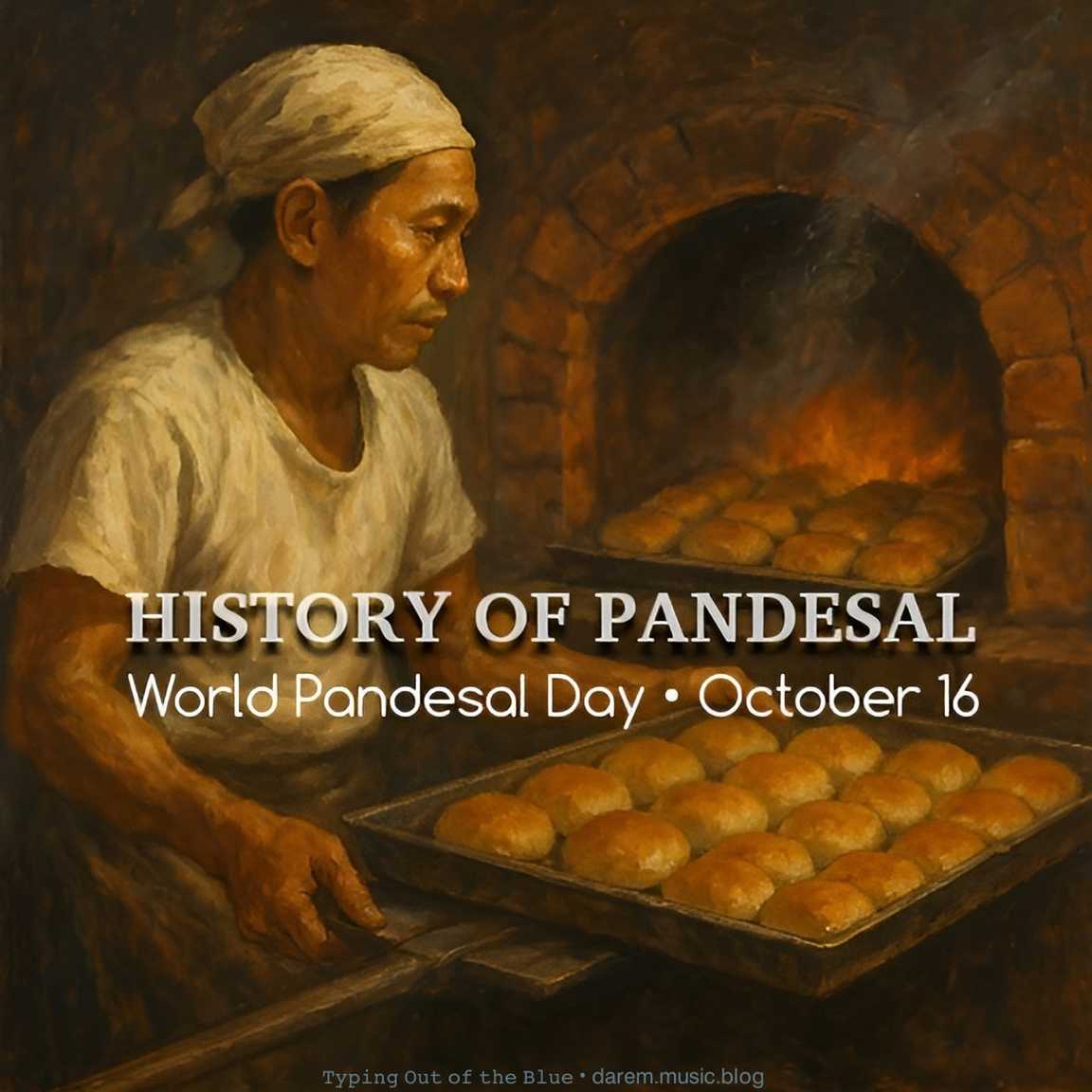
World Pandesal Day • October 16
The Bread That Rose with the Filipino Spirit
Before sunrise, the smell of pandesal already fills quiet streets. It’s not just bread—it’s a sign that morning has come. But this humble roll has a long story, baked into the life of the Filipino people.
When the Spaniards arrived in the 1600s, they brought wheat and the skill of making bread. Locals learned to bake pan de suelo—which means “floor bread”—because it was baked right on the oven floor of the pugón, a traditional wood-fired brick oven. Over time, cheaper flour replaced the fine wheat, turning what was once hard and crusty into the soft, slightly sweet pandesal we know today.
Its name means “bread of salt,” but it’s not really salty anymore. Maybe that fits—Filipinos have always turned hardship into sweetness.
By the early 1900s, panaderías (bakeries) were everywhere. Vendors carried baskets of warm pandesal at dawn, calling out to workers, students, and sleepy dreamers. Even when rice was scarce, pandesal kept the nation fed—simple, filling, and meant for sharing.
Through wars, power cuts, and hard times, the bread never disappeared. It adjusted. It rose again. It became a symbol of quiet strength—the kind that doesn’t shout, just shows up every morning.
Today, every bite of pandesal still holds history: Spanish ovens, Filipino hands, and generations of shared mornings.
Because in this bread, there’s something more than taste—there’s memory.
⌨ ᴛʸᵖⁱⁿᵍ ᴏᵘᵗ ᵒᶠ ᵗʰᵉ ʙˡᵘᵉ ᵈᵃʳᵉᵐ ᵐᵘˢⁱᶜ ᵇˡᵒᵍ
