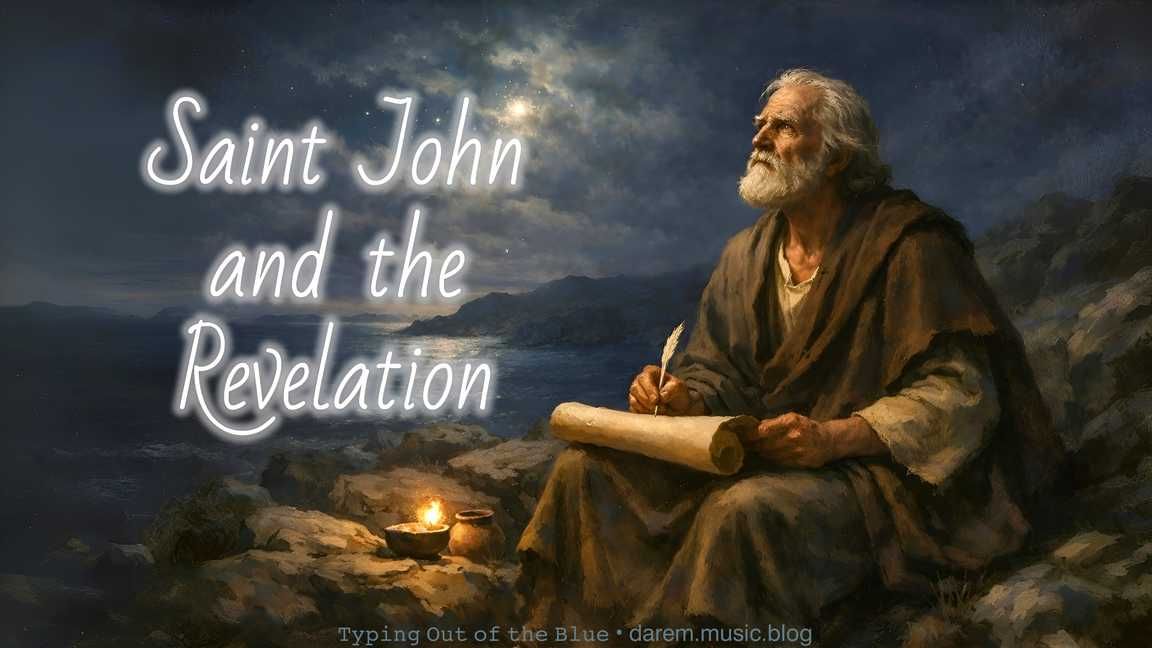
Saint John and the Revelation

He was told to write what he saw—but what is the Revelation really trying to tell us?

Around AD 95, during the rule of the Roman emperor Domitian, John was the last of the Twelve Apostles.

Christian groups had spread across the Roman Empire. Many believers refused to worship the emperor and spoke openly about Jesus as Lord. This was seen as a threat to Roman order. John was known for that message, and he did not stop teaching it.

Instead of killing him, the authorities chose exile. John was sent to Patmos, a small rocky island used to keep people away from cities and public life. He could not leave. He was cut off from churches, friends, and normal routines.

That is where the Book of Revelation begins.

While living on Patmos, John spent his days in prayer and quiet endurance. On one Lord’s day, while fully awake and praying, he experienced visions. He heard a voice, saw scenes, and was shown things beyond his own time. He was told to write what he saw.

John did not write explanations. He wrote descriptions. Again and again, he uses phrases like “I saw something like…” or “it appeared as…”. This shows that he was trying to describe things he did not have clear names for. John lived in the first century, and his language came from that world.

When someone sees something unfamiliar, the human response is to compare it to what is already known. So when John saw future realities, he described them using images from his own time. This is why Revelation is filled with symbols.

Over the centuries, people have tried to read Revelation in a literal way. Timelines were created. Predictions were made. Each generation believed it had found exact meanings, and each generation reached different conclusions. What remains steady is not the speculation, but the message.

Revelation was written for believers living under pressure. It reminded them that history is not random, that faithfulness matters, and that evil does not have the final word. John was not asked to explain the future. He was asked to witness and to write.

Whatever the images point to in detail, the direction is clear. Be ready. Stay faithful. Live awake.

That is the heart of the Revelation.

⌨ ᴛʸᵖⁱⁿᵍ ᴏᵘᵗ ᵒᶠ ᵗʰᵉ ʙˡᵘᵉ ᵈᵃʳᵉᵐ ᵐᵘˢⁱᶜ ᵇˡᵒᵍ
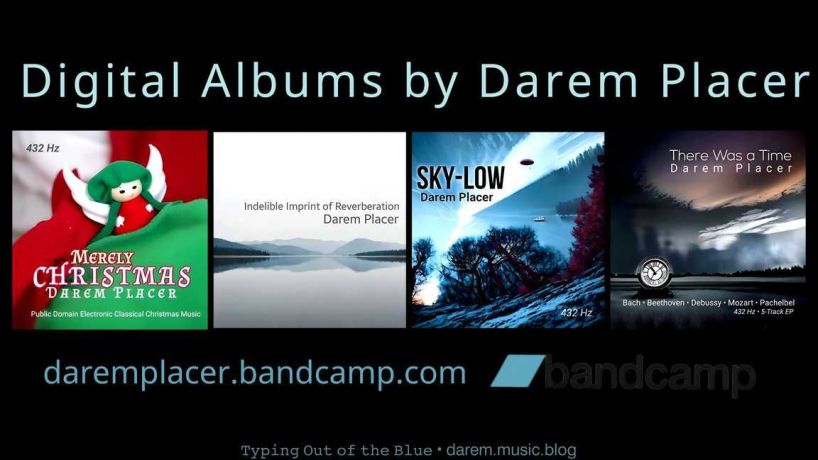
Digital Albums by Darem Placer on Bandcamp
Listen. Buy. Download.

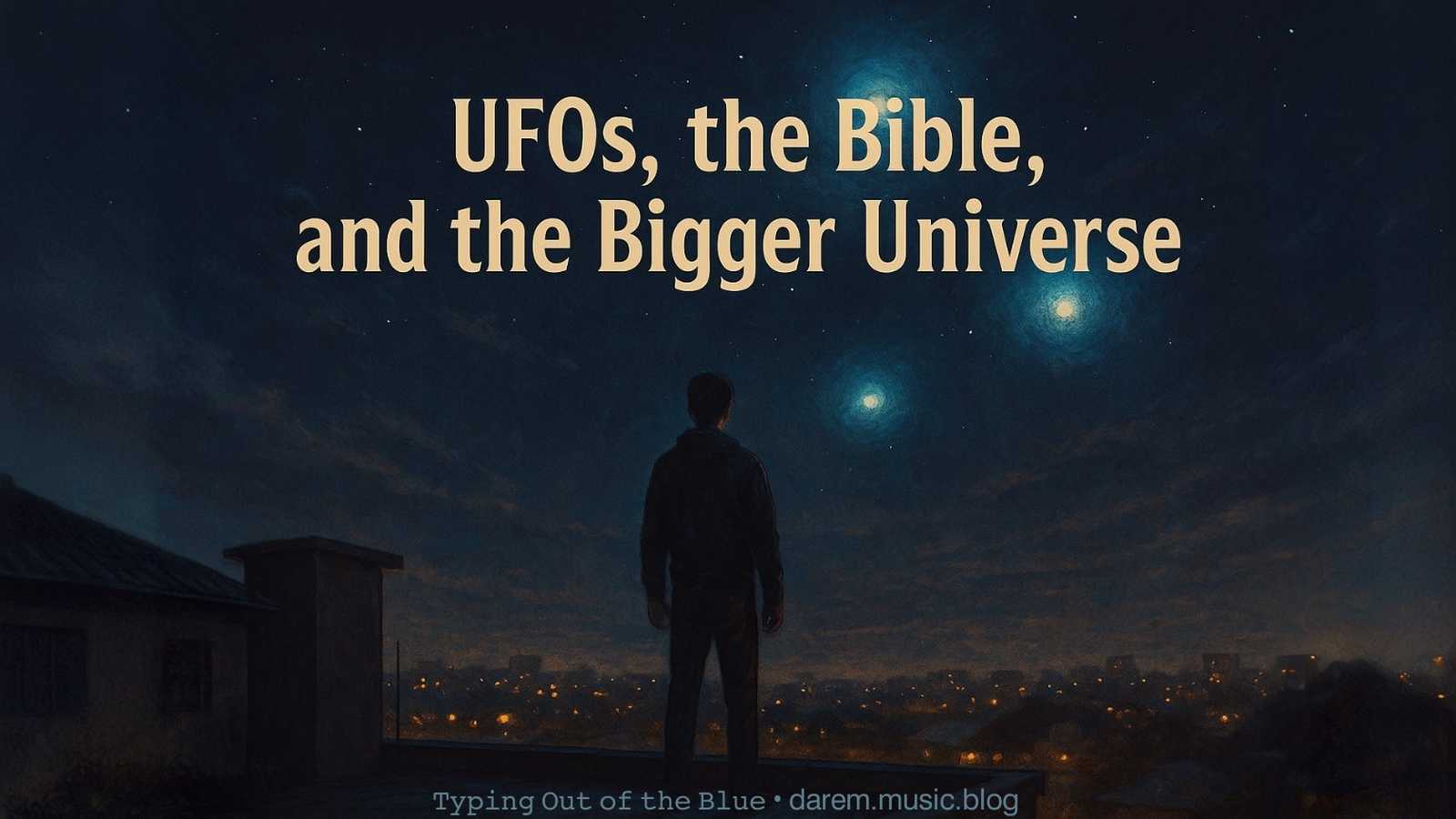
UAPs (UFOs), the Bible, and the Bigger Universe

The heavens are vast, and faith leaves room for mystery—could life beyond Earth be part of God’s creation too?

I’ve seen something strange three times in the sky—in Las Piñas, Philippines—UAP (Unidentified Anomalous Phenomena) or traditionally called UFO (Unidentified Flying Object).

First: a steady aircraft blinking different colors, unlike any normal plane.

Second: mysterious “balls of light” gliding and shifting silently above the city.

And third—the most vivid—around 1 PM, a shiny orb in broad daylight, moving like someone pressing fast-forward then pause, again and again.

These all happened back when there were no smartphones to capture them, only my own eyes and memory.

Each time, I’m left with the same question: are we really alone?

The Bible doesn’t say “we’re alone”

If you actually read Scripture, there’s no verse declaring “Earth is the only home of life.” Instead, you find verses like:

• Psalm 19:1 — “The heavens declare the glory of God; the skies proclaim the work of His hands.”

• Colossians 1:16 — “For in Him all things were created: things in heaven and on earth, visible and invisible.”

The Bible is clear about who created everything, but silent on whether other beings exist. Even angels are non-human, intelligent creations of God—already proof that humanity isn’t alone in His design.

Theology’s open door

The Vatican Observatory’s former director, Fr. José Gabriel Funes, once said that if extraterrestrials exist, they too are God’s creatures. Pope Francis even joked that if aliens came asking for baptism, “Who are we to close the door?”

So faith isn’t threatened by the possibility. It simply affirms that whatever exists—seen or unseen, near or far—belongs to the same Creator.

A bigger, wider faith

Maybe those strange objects I saw were drones, balloons, or tricks of light. Or maybe they weren’t. Either way, the universe is so vast it reminds us we’re not the center of everything.

• Isaiah 55:9 — “As the heavens are higher than the earth, so are My ways higher than your ways and My thoughts than your thoughts.”

And now comes World Space Week 2025 (October 4–10), with its theme “Living in Space.” For the rich, maybe it’s an exciting playground. But for the poor, survival on Earth is already the daily mission. Living in space only makes sense if what we learn up there helps life be better down here.

And if aliens do exist, I can only hope they’ll help us fulfill last year’s theme—“Space and Climate Action”—because saving Earth still feels like the most important mission of all. 🌍✨

ᴛʸᵖⁱⁿᵍ ᴏᵘᵗ ᵒᶠ ᵗʰᵉ ʙˡᵘᵉ ᵈᵃʳᵉᵐ ᵐᵘˢⁱᶜ ᵇˡᵒᵍ
Listen on Apple Music, Apple Music Classical, and YouTube Music