Balance

What if balance isn’t what you think it is?

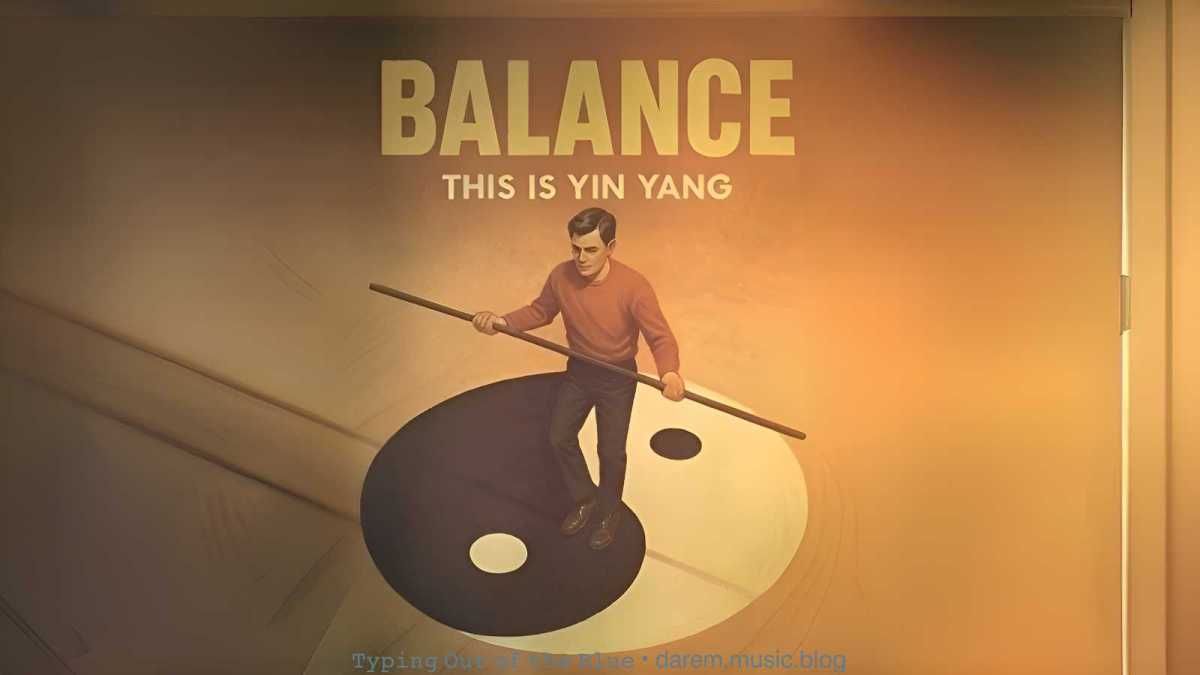
This is Yin Yang

The Yin Yang symbol comes from ancient Chinese philosophy, especially Taoism, which teaches about living in harmony with the natural flow of life. But over time, a lot of people misunderstood it.

A lot of people think Yin Yang means balancing good and evil. But that’s not it. Yin Yang isn’t about morals—it’s about rhythm.

Yin and Yang are opposites, but not enemies. Yin is calm, dark, quiet, cool—like night or rest. Yang is loud, bright, active, warm—like day or motion. Neither one is better. Neither one is bad. They both need each other to work.

When life gets too quiet or too still, Yang shows up to bring movement and energy. But when things get too loud or chaotic, Yin steps in to calm things down. It’s not about canceling anything—it’s about knowing what’s missing and adjusting.

The black and white dots in the symbol mean that each side holds a bit of the other. Even in peace, there’s movement. Even in action, there’s calm.

Nothing in life is 100% one thing.
The magic is in the mix.

Yin Yang isn’t about good vs evil. Darkness doesn’t mean evil. Light doesn’t always mean good. It’s not a battle—it’s the natural flow of life.

Sometimes you rest.
Sometimes you run.
Sometimes you listen.
Sometimes you lead.

Balance isn’t about being neutral—it’s knowing what’s needed now.

Yin Yang is knowing when to speak and when to stay quiet.

When to rise and when to let go.

It’s not about being perfect—just in tune.

Note: Yin Yang is a philosophical concept from ancient Chinese thought. This article explores its idea of balance as a metaphor for rhythm in life. As Christians, we reflect on such ideas with care, always grounding ourselves in Christ, who brings true harmony and truth.

ᴛʸᵖⁱⁿᵍ ᴏᵘᵗ ᵒᶠ ᵗʰᵉ ʙˡᵘᵉ ᵈᵃʳᵉᵐ ᵐᵘˢⁱᶜ ᵇˡᵒᵍ

Pause Between Breaths • Darem Placer

Listen to Acoustic Thinking on Apple Music and Apple Music Classical
Acoustic Thinking includes Pause Between Breaths

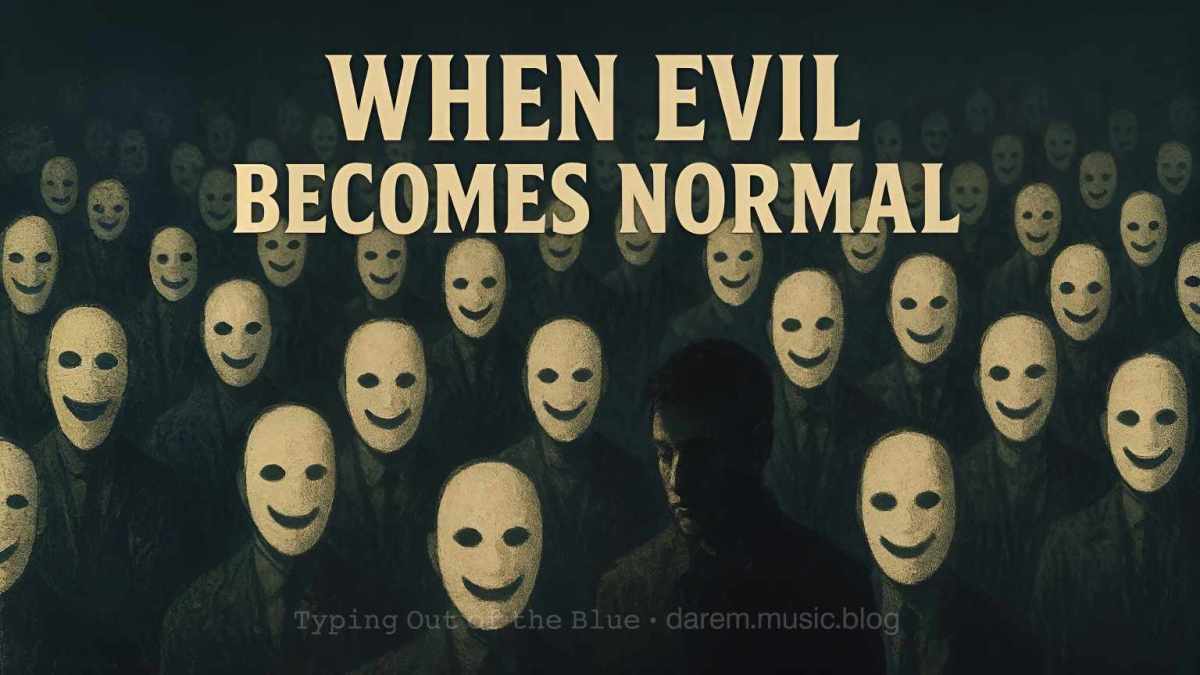
When Evil Becomes Normal

When evil takes the spotlight and good feels rare, we’re left with a choice: follow the noise or bring back what’s missing.

When people stop asking questions about life, they often end up in trouble. They act on impulse, follow only their own thinking, and drift without direction. Without questions, there is no search. Without searching, mistakes multiply.

So let’s ask.

Are we missing the values that once kept us steady—respect, patience, accountability? Do we still know how to listen, or are we only waiting for our turn to speak? Have we lost the patience to endure, the grounding that faith or conscience once gave us?

At the same time, do we now have too much of what doesn’t help? Noise that drowns out truth. Ego that pushes us to chase attention. Anger that feeds division. Freedom stretched so far that it forgets responsibility.

If this is the imbalance—what happens next?

Do we keep sinking under the excess, or do we choose to recover what’s missing?

What Road Do We Take?

One road keeps us distracted: more noise, more anger, more shallow gains.

The other road calls us back: respect, patience, accountability, grounding, and responsibility.

And here’s the harder truth: what was once hidden in the background—evil, selfishness, corruption—now steps boldly into the spotlight. Wrong is dressed up as normal, even rewarded. Goodness, instead of being the standard, is treated like the exception.

So the choice is sharper than ever.
Do we go with the flow of a world where evil plays the lead role?

Or do we stand against it, bringing back what’s missing, even if it feels harder?

Which road will we choose?
And will we be brave enough to start with ourselves?

𝚃𝚢𝚙𝚒𝚗𝚐 𝙾𝚞𝚝 𝚘𝚏 𝚝𝚑𝚎 𝙱𝚕𝚞𝚎 • 𝖽𝖺𝗋𝖾𝗆.𝗆𝗎𝗌𝗂𝖼.𝖻𝗅𝗈𝗀