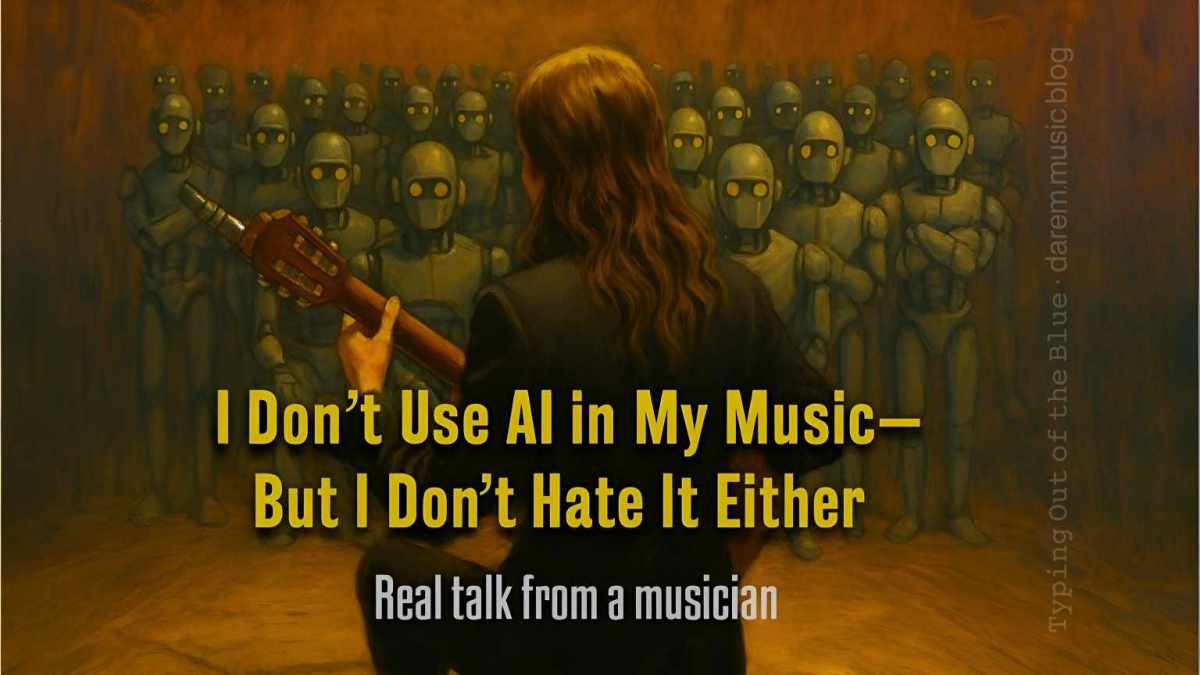
Real talk from a musician
People assume that if you defend AI music, you must be using AI to make yours. But no—I don’t. I can create music without it. That’s why I don’t need it.
Still, I think AI music is cool. Sometimes, it sparks new ideas. Just like when you listen to other human artists, you take what inspires you and discard the rest. It’s a source of inspiration, not a threat.
And honestly, I find it awesome that even frustrated musicians—those who can’t play, can’t mix, or can’t afford gear—can now create something that sounds professional. Sure, they might not be proud of it in the same way, because of guilt… like they cheated. It doesn’t feel fully theirs.
But does that really matter? If someone smiles, gets chills, or cries because of what they made—then it worked. That’s music doing its job.
AI is powerful—but music isn’t just sound. It’s story, struggle, intent, and identity. As the line blurs between human- and machine-made, the world’s artists are calling for one thing:
Let the audience know. Then let them choose.
And here’s the strange part—some people hear a song, get chills, then cancel it after learning it’s AI-made. “It has no soul,” they say.
Yeah, right.
Feelings don’t require permission slips. If it moved you, then it’s real—regardless of who (or what) made it.
The funny thing is, some of these people act like expert critics—“No feeling, no soul!”—as if they’re trained to measure emotional depth. Pretend musicologists, when in reality, real musicologists don’t even do that. They focus on how music works, not how it feels. They can break down a fugue, but not a heartbreak.
In truth, the soul of music has never been inside the song.
It has always been in the listener.
𝚃𝚢𝚙𝚒𝚗𝚐 𝙾𝚞𝚝 𝚘𝚏 𝚝𝚑𝚎 𝙱𝚕𝚞𝚎 • 𝖽𝖺𝗋𝖾𝗆.𝗆𝗎𝗌𝗂𝖼.𝖻𝗅𝗈𝗀
