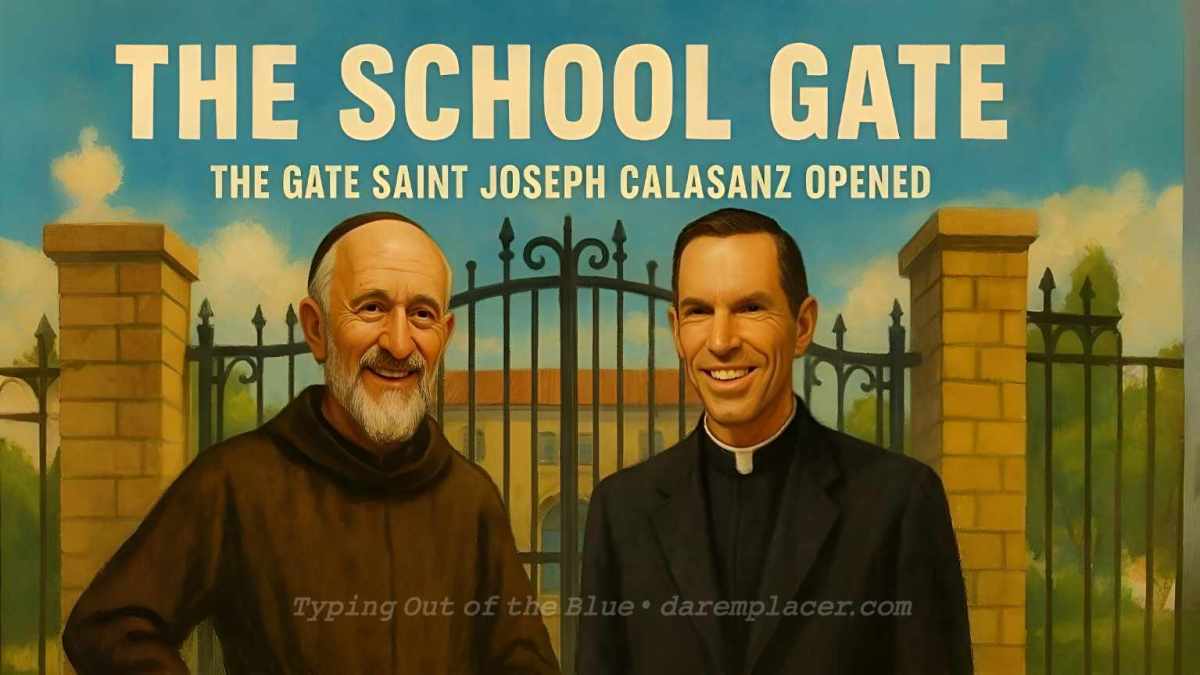
The School Gate

Saint Joseph Calasanz opened the first truly free public school in Europe, removing every obstacle for poor children. Centuries later, Fr. Al Schwartz carried the same spirit in Boystown and Girlstown. On his memorial, we remember the school gate he opened for the poor—and the challenge it leaves us today.

The Gate Saint Joseph Calasanz Opened

A thin boy sat on the streets of Rome, barefoot, eyes fixed on children carrying books. He wanted to study, but he couldn’t. In his time, school was for the rich. Education was like a gate locked shut—the poor were left outside. History doesn’t record one exact boy, but this picture reflects the reality Father Joseph Calasanz saw in Rome.

Moved by this reality, Father Joseph Calasanz could not turn away. In 1597, he opened a school where poor children could enter freely. No tuition, no hidden fees, no barriers. It was the first public school in Europe—but unlike our government public schools today, it was truly free. Today’s “free education” is not really free—it still asks for uniforms, projects, and daily expenses that many families cannot afford. That’s why some poor children still drop out and drift as tambay. Father Joseph’s vision was radical because he removed every obstacle.

Centuries later, Father Aloysius Schwartz—Father Al—walked the streets of Korea and the Philippines. He saw the same eyes in abandoned children. And just like Father Joseph, he could not turn away. He built the Sisters of Mary schools—Boystown and Girlstown—serving poor boys and girls in high school years. Everything is free: food, shelter, clothes, books, medical care, and full education from Grades 7 to 12. For teenagers who once thought doors were closed to them, it became a home, a school, and a family.

History doesn’t show a direct line between Father Joseph Calasanz and Father Al, but their mission flows from the same spirit. Father Joseph opened the gates of school for the poor. Father Al built his schools under the motto “Ad Jesum per Mariam”—to Jesus through Mary. Two different paths, one and the same fire from God: to give the poor not just food for a day, but the light of learning and the love of Christ for a lifetime.

Today, on the optional memorial of Saint Joseph Calasanz every August 25, we remember a priest who first dared to open the school gates for the poor. And maybe that’s our challenge too: to notice the children we pass by, and to remove the gates—big or small—that keep them from the life God wants for them.

𝚃𝚢𝚙𝚒𝚗𝚐 𝙾𝚞𝚝 𝚘𝚏 𝚝𝚑𝚎 𝙱𝚕𝚞𝚎
𝚍𝚊𝚛𝚎𝚖𝚙𝚕𝚊𝚌𝚎𝚛.𝚌𝚘𝚖
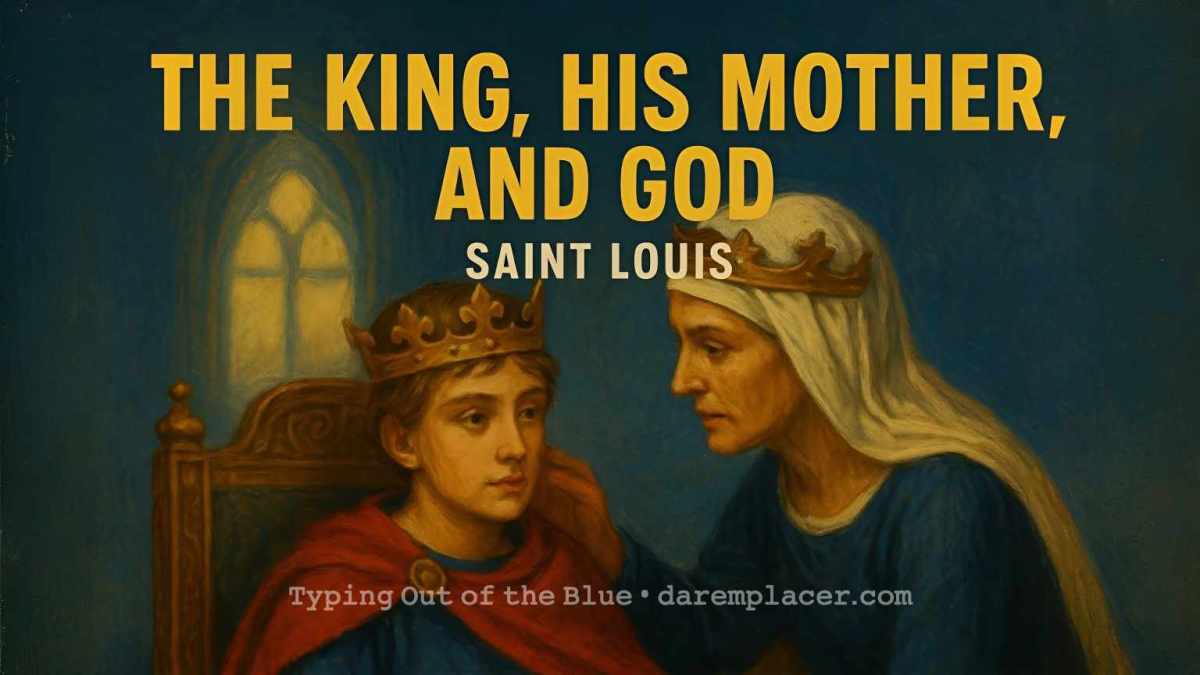
The King, His Mother, and God

Saint Louis became king at just 12 years old. Guided by his mother, Blanche of Castile, he grew up God-centered, fair, and humble—remembered today not just as a king, but as a saint.

Saint Louis

In 1226, a boy named Louis IX became king of France at only 12 years old. Imagine that—while other kids his age were playing or studying, he was already wearing a crown. Of course, he was too young to rule alone. That’s why his mother, Blanche of Castile, stepped in to guide him.

Blanche wasn’t just a mother—she was also a strong leader. She knew the dangers waiting for a young king: pride, greed, and temptations of power. So instead of teaching him just politics, she taught him something deeper—to always stay close to God.

There’s a famous line she told him:

“I would rather see you dead at my feet than that you should ever commit a mortal sin.”

Harsh? Maybe. But for her, the soul was more important than anything else. She wanted Louis to understand that no throne, no riches, no victory was worth losing God for.

And Louis never forgot it. As king, he prayed every day, helped the poor, and even served food with his own hands. He visited the sick and the lepers, and he treated everyone with fairness. He also built the beautiful Sainte-Chapelle in Paris to honor Christ.

Sure, not everything he did was perfect. He led Crusades that ended in failure, and he faced many problems. But through all of it, his mother’s words stayed with him. He lived as a king who was first and foremost a servant of God.

That’s why history remembers him not just as King Louis IX, but as Saint Louis—the boy who became a saintly king because he listened to his mother and stayed rooted in God. And every year on August 25, the Church remembers his life with gratitude, celebrating not just a king, but a saint who showed what it means to put God first.

𝚃𝚢𝚙𝚒𝚗𝚐 𝙾𝚞𝚝 𝚘𝚏 𝚝𝚑𝚎 𝙱𝚕𝚞𝚎
𝚍𝚊𝚛𝚎𝚖𝚙𝚕𝚊𝚌𝚎𝚛.𝚌𝚘𝚖