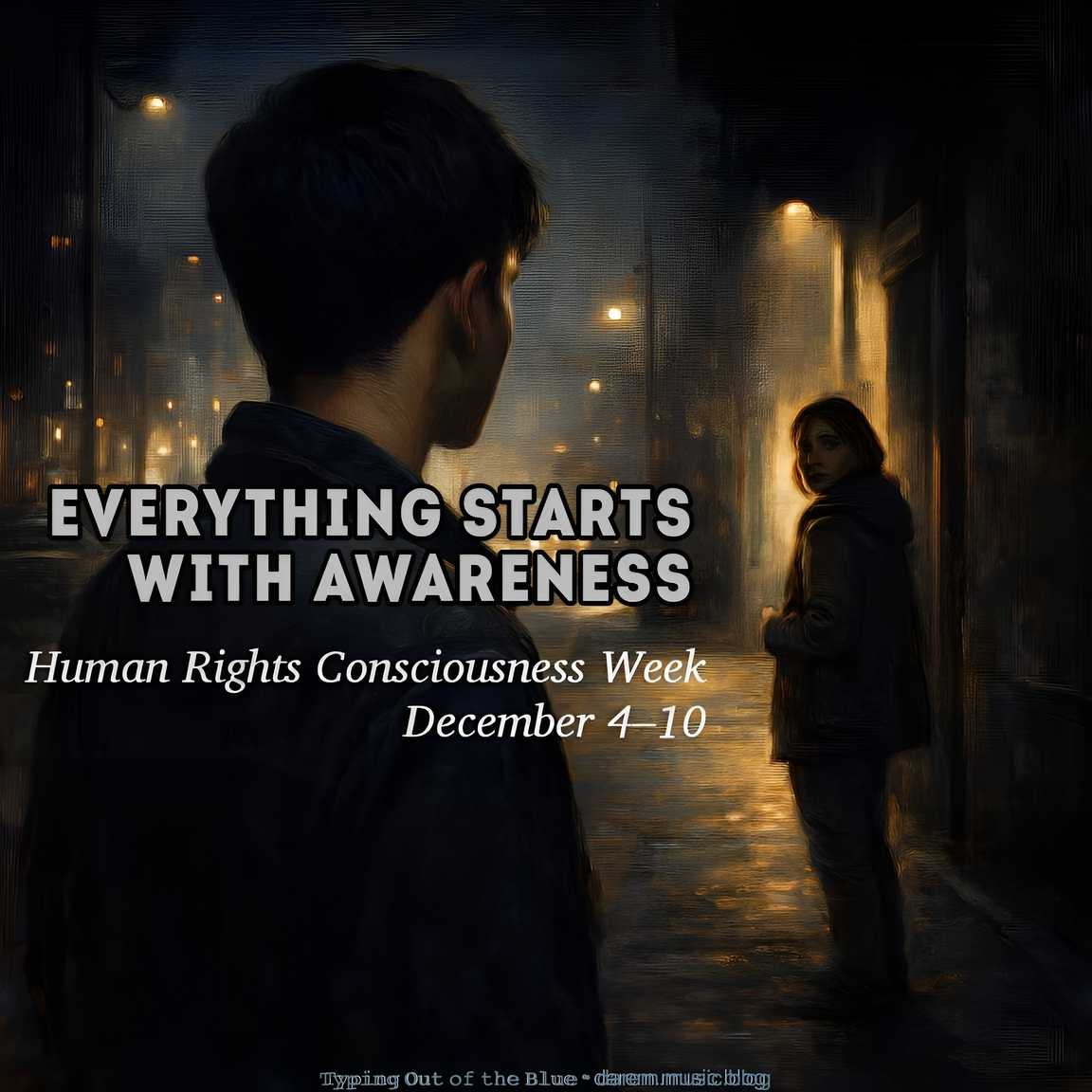
Everything Starts With Awareness

Being conscious is where protection begins. When people stay aware, dignity becomes normal.

Human Rights Consciousness Week • December 4–10

People can’t protect what they’re not conscious of. And human rights—simple, everyday dignity—usually breaks down not because people are evil, but because they stopped noticing.

Consciousness is the trigger. When you become aware of someone being pushed aside, you start caring. When you notice unfairness, you stop pretending it’s normal. When you see a person’s worth, you adjust the way you act.

Most forget this after day one. Big announcements, loud reminders, then silence. But real change doesn’t come from the event—it comes from the habit of staying aware. Human rights fade the moment people stop paying attention.

Being conscious means you don’t move through life half-asleep. You notice who’s left out. You notice who’s afraid to speak. You notice the small injustices others call “normal.” And once you notice, you can’t unsee it. That’s where everything begins—one person choosing to stay awake, even when others drift.

A community that remains conscious becomes a community that protects. And the more we stay aware beyond December 4–10, the more human this world becomes—because we finally see the Hidden Stories.
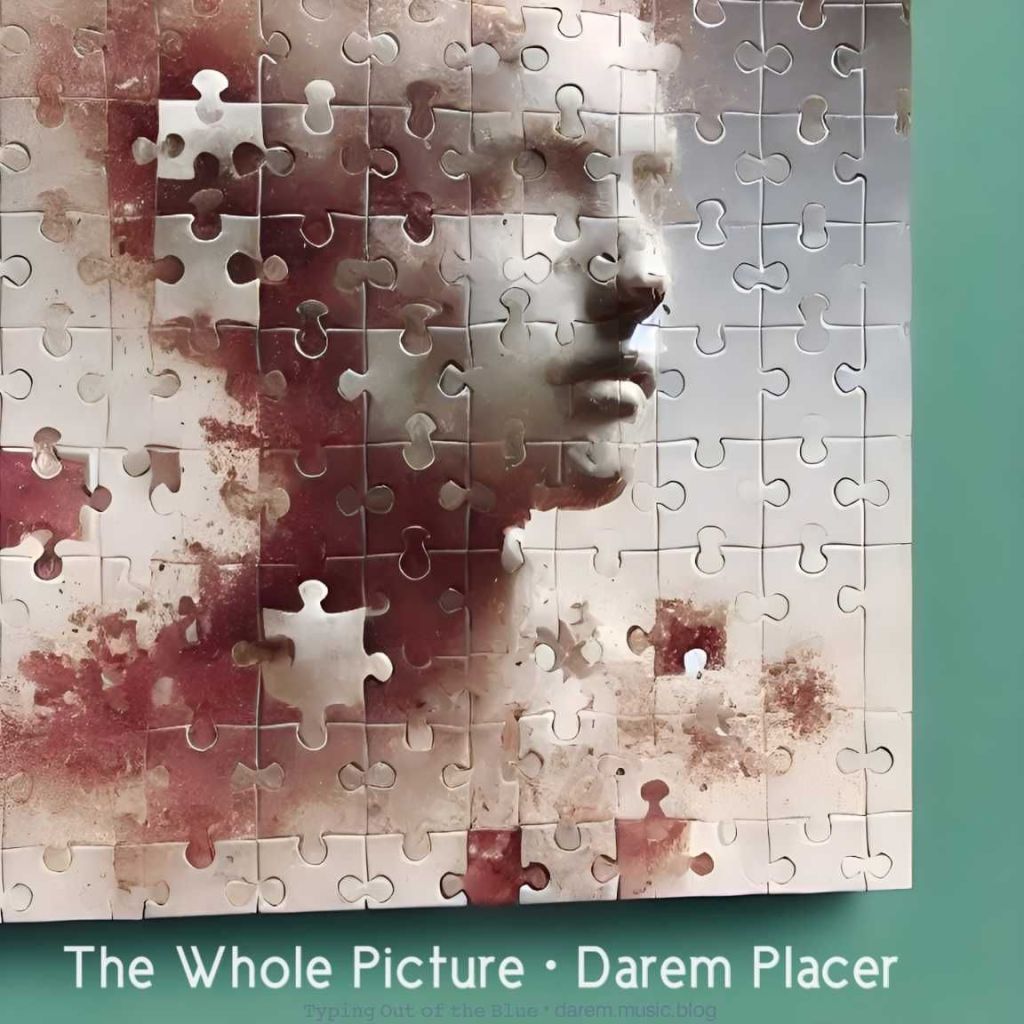
Hidden Stories • Darem Placer
The Whole Picture includes Hidden Stories. Soon on Bandcamp.

⌨ ᴛʸᵖⁱⁿᵍ ᴏᵘᵗ ᵒᶠ ᵗʰᵉ ʙˡᵘᵉ ᵈᵃʳᵉᵐ ᵐᵘˢⁱᶜ ᵇˡᵒᵍ

Saint John Damascene and the Miracle of the Restored Hand

A monk in 700s Damascus loses his hand, prays through the night, and wakes with a miracle that shapes his whole mission.

John Damascene lived in the early 700s in Damascus, a major city in the Umayyad Caliphate (present-day Syria). At that time, the Christian world was divided over the use of holy images. John defended icons through clear, steady writing that reached far beyond his city.

But his words angered Emperor Leo III of Constantinople in the Byzantine Empire. Around 720–730 AD, the emperor forged a letter that made it look like John was plotting against Damascus. The forged letter reached the Umayyad ruler, who believed it.

Without trial or explanation, the ruler ordered that John’s right hand—his writing hand—be cut off. The punishment was carried out in public. His hand was displayed to show the sentence had been done.

John brought the severed hand back to Mar Saba Monastery near Jerusalem. He placed it before an icon of Mary and prayed through the night. His prayer was simple: that he might write again.

By morning, the monks found something impossible. John’s hand was fully restored—joined back to his arm without any sign of injury. It was warm, living, and able to move as before.

When the Umayyad ruler saw the restored hand, he realized the accusation had been false. He reversed the sentence and apologized. But John didn’t return to public service. Instead, he devoted his life completely to prayer, teaching, and writing inside the monastery.

To remember the miracle, John added a silver hand to the icon of Mary. This icon became known as Our Lady of the Three Hands, and it still exists today.

The story spread not because it was dramatic, but because it felt unmistakably real to the people who saw it: a man losing everything, praying in the dark, and waking up with a restored hand in a way no one could explain.

⌨ ᴛʸᵖⁱⁿᵍ ᴏᵘᵗ ᵒᶠ ᵗʰᵉ ʙˡᵘᵉ ᵈᵃʳᵉᵐ ᵐᵘˢⁱᶜ ᵇˡᵒᵍ
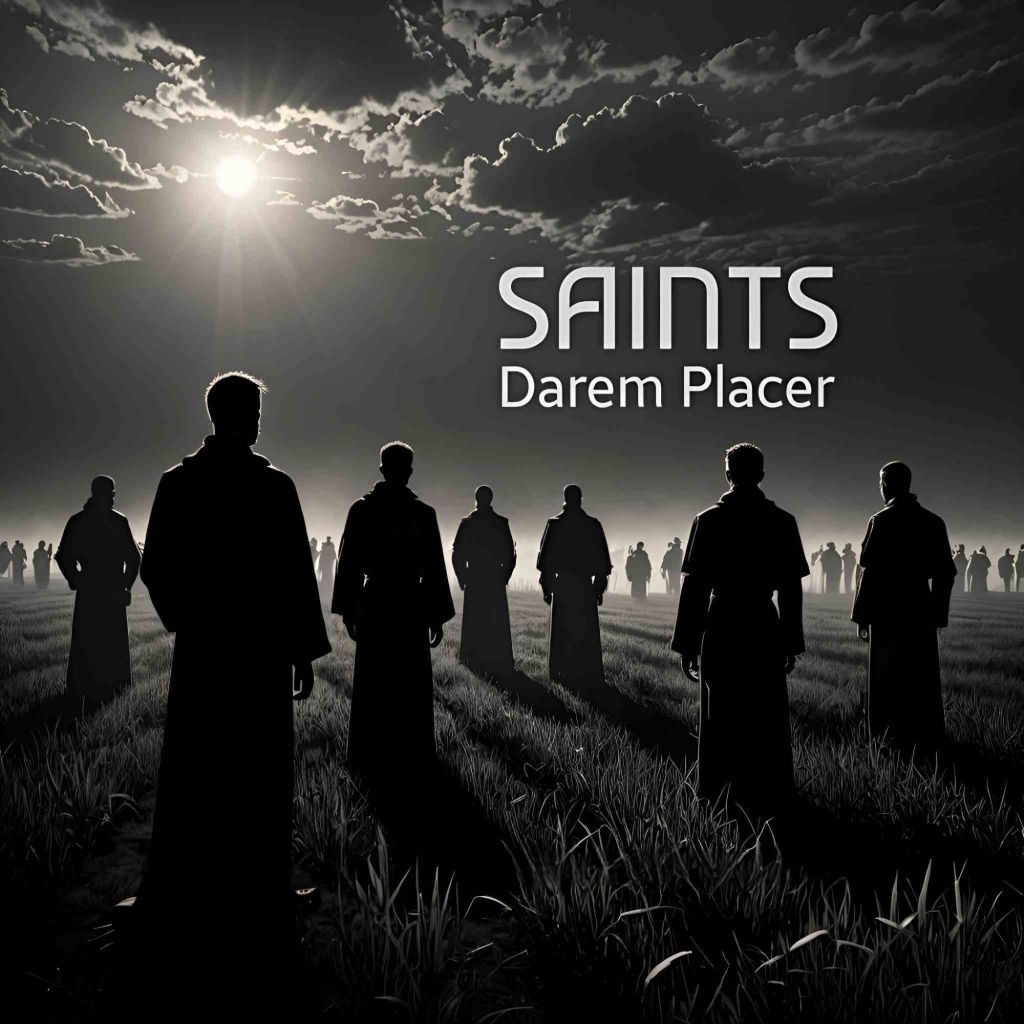
Traces of courage, silence, and sacrifice—this is Saints.

Listen on Apple Music, Apple Music Classical, and YouTube Music