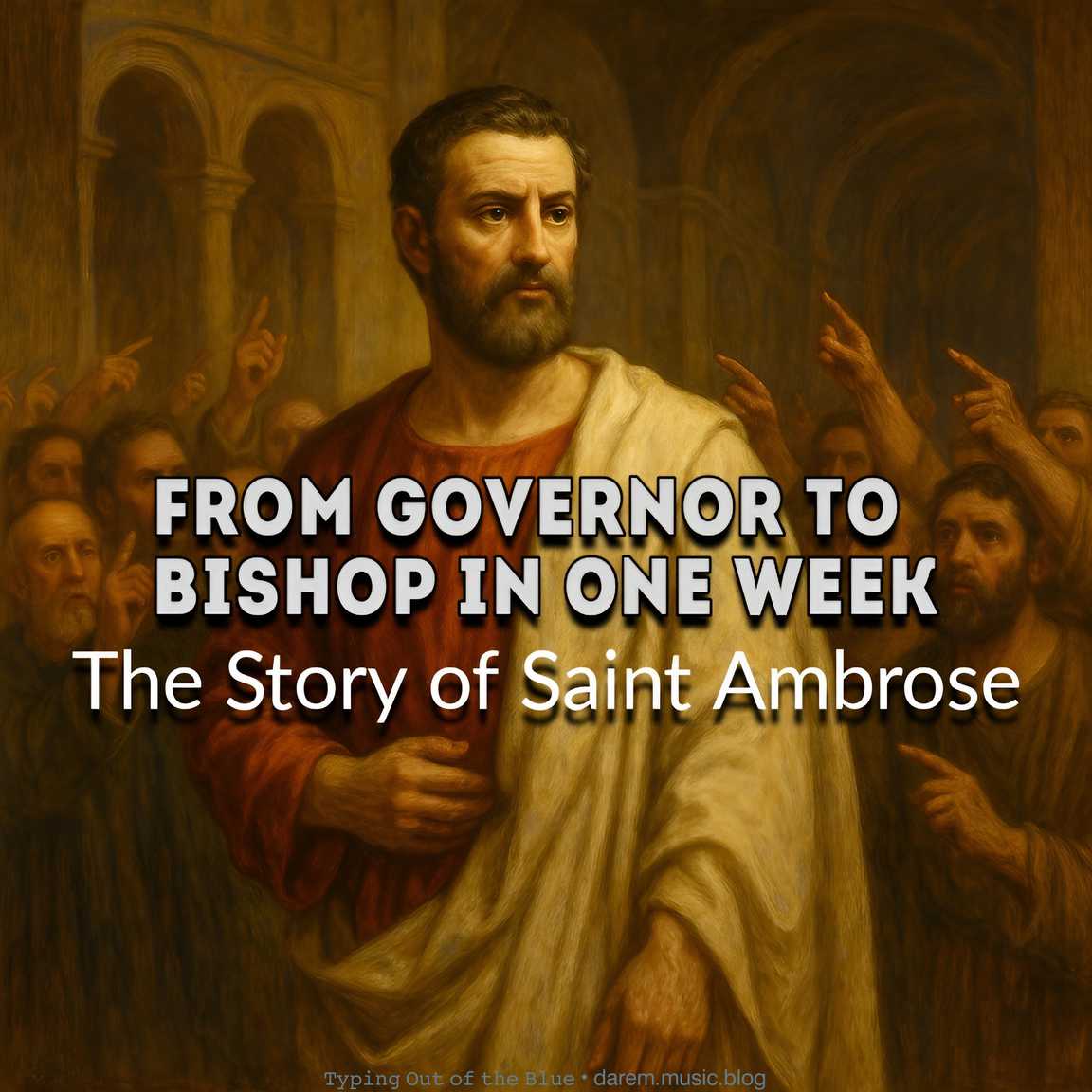
From Governor to Bishop in One Week

A trusted governor unexpectedly stepped into a role that shaped early Church history.

The Story of Saint Ambrose

In 374, the city of Milan was deeply divided. Two Christian groups were fighting over who should become the next bishop. There were many priests available, but the people could not agree on anyone. Every choice created more tension.

Ambrose was the Roman governor at that time. He came only to calm the crowd. He was not a priest. He was not even baptized. He simply wanted peace in the city.

But while he was speaking, the entire crowd suddenly called for him. Both sides trusted him because he was not part of any group. They wanted Ambrose to become bishop.

He resisted at first. He knew he had no proper training for Church leadership. But the people insisted, and even the emperor supported the choice. Ambrose finally accepted.

Everything then moved very fast.

He was baptized.
He was ordained a priest.
He was ordained a bishop.
All within one week.

It became the fastest recorded rise to becoming a bishop in Church history. No one else went from unbaptized civilian to bishop at that pace.

Once in office, Ambrose studied seriously, lived with discipline, and guided Milan through difficult years. He defended the Church when political pressure became strong and later guided Augustine, who would become one of Christianity’s most important thinkers.

This unexpected week in Milan changed the direction of the early Church. And the man at the center of it—who never planned to be bishop—is honored today as a saint.

⌨ ᴛʸᵖⁱⁿᵍ ᴏᵘᵗ ᵒᶠ ᵗʰᵉ ʙˡᵘᵉ ᵈᵃʳᵉᵐ ᵐᵘˢⁱᶜ ᵇˡᵒᵍ

Merely Christmas • Darem Placer
Out this season on Bandcamp.

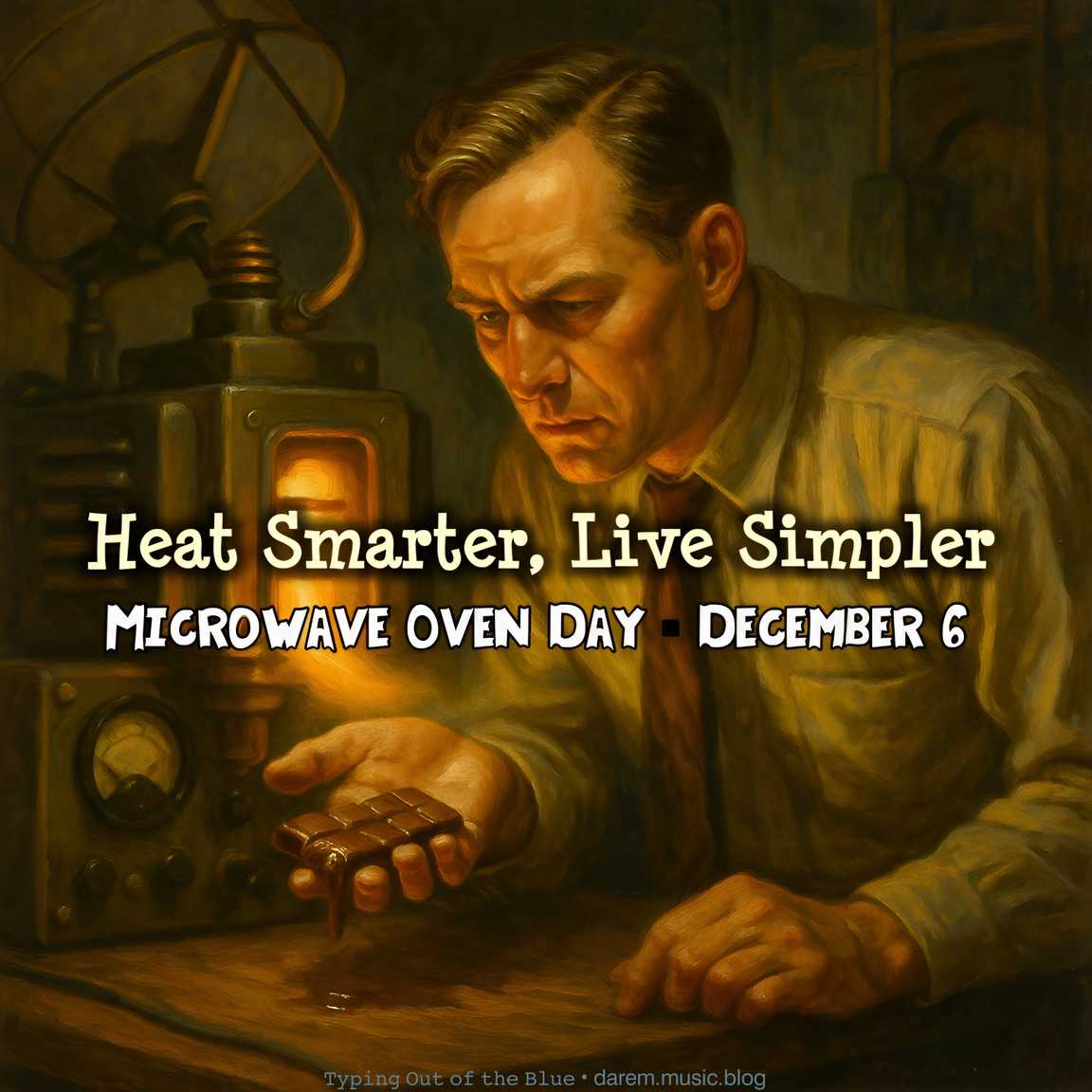
Heat Smarter, Live Simpler

One small accident changed everyday cooking.

Microwave Oven Day ▪︎ December 6

The microwave oven began with a simple accident in the 1940s.

Engineer Percy Spencer was testing a radar device called a magnetron when he noticed the chocolate bar in his pocket had melted. The magnetron produced microwaves that made water molecules move super fast, creating heat. Anything with water, fat, or sugar reacted instantly.

He tried popcorn next. It popped fast.
Then he tried an egg. It burst.
That’s when he knew these waves could actually cook food.

• Chocolate melted
Chocolate has sugar and fat. Microwaves hit it, the molecules moved fast, and it warmed up quickly—even inside a pocket. No fire needed.

• Popcorn popped
Each kernel has a tiny drop of water inside. Microwaves heated that water fast, pressure built, boom—pop.

• Egg burst
Eggs trap steam. When microwaves heated the inside faster than the shell could release pressure, it exploded. Classic microwave chaos.

Raytheon built the first commercial microwave in 1947. It was huge and expensive, meant for restaurants and ships. But the idea was already moving forward.

By the 1960s and 70s, the design finally became smaller and cheaper. Families started buying microwaves because they made everyday life easier—quick heating, easy meals, and fewer pots to clean.

By the 1980s, the microwave became a normal part of the home. Leftovers, drinks, snacks—everything faster.

One odd moment led to a tool that saves time for millions. Nothing fancy—just an invention that helps life run smoother.

⌨ ᴛʸᵖⁱⁿᵍ ᴏᵘᵗ ᵒᶠ ᵗʰᵉ ʙˡᵘᵉ ᵈᵃʳᵉᵐ ᵐᵘˢⁱᶜ ᵇˡᵒᵍ