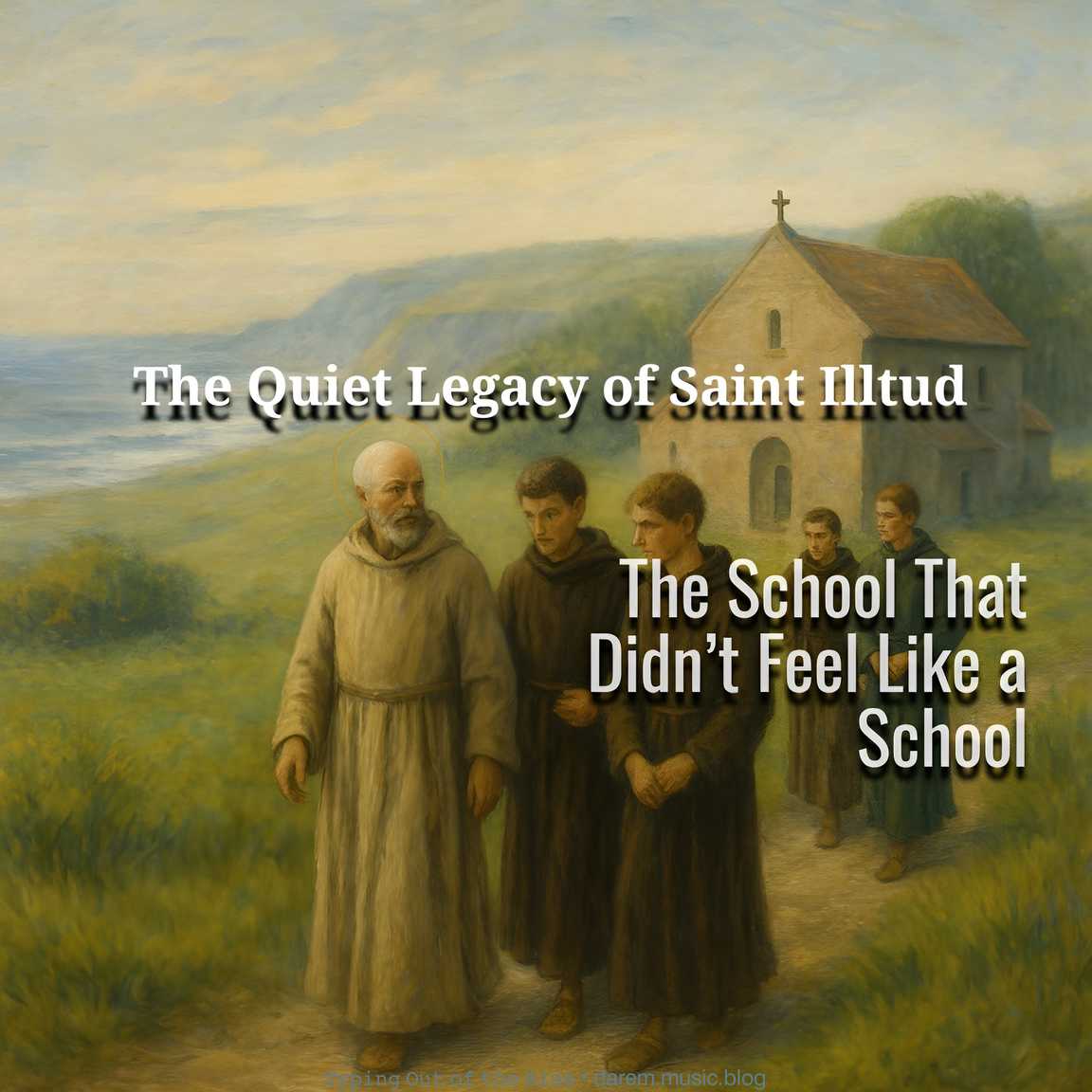
The School That Didn’t Feel Like a School

A quiet coastal monastery in Wales became a school without meaning to—He simply lived, and people learned.

The Quiet Legacy of Saint Illtud

It was around the year 500 AD, in a quiet coastal valley of southern Wales, a place now called Llantwit Major. The sea could be heard from the fields, and the mornings smelled of grass and salt. Life was simple. People worked the land, repaired their homes, and prayed in small stone chapels that faced the wind.

Illtud lived there, away from cities and noise. He only wanted a peaceful life—to pray, work, and help whoever came his way. But then one young man stayed to learn from him. Then another came. Soon, a few more arrived and never left. He didn’t plan to start a school, but the place slowly turned into a monastery—a quiet community that began to look more and more like a school.

It didn’t feel like a real school. There were no lessons to recite, no grades, and no competition. They learned through daily life—working on the land, praying at sunrise, sharing food, and talking when something was worth saying. Saint Illtud didn’t try to impress anyone. He just lived calmly, and they learned by watching him.

Some of his students would later become known across Britain. One of them was Saint David, who became the patron saint of Wales. Another was Saint Samson of Dol, who crossed the sea and became a missionary bishop in Brittany. There was also Saint Gildas, who wrote about Britain after the Romans and helped people remember their own story. But during those early days, they were just young men learning how to live right.

Saint Illtud’s way was simple: don’t talk too much about wisdom—live it until people feel it. That was his way, and that was his school in Llanilltud Fawr.

⌨ ᴛʸᵖⁱⁿᵍ ᴏᵘᵗ ᵒᶠ ᵗʰᵉ ʙˡᵘᵉ ᵈᵃʳᵉᵐ ᵐᵘˢⁱᶜ ᵇˡᵒᵍ

Traces of courage, silence, and sacrifice—this is Saints.

Listen on Apple Music, Apple Music Classical, and YouTube Music
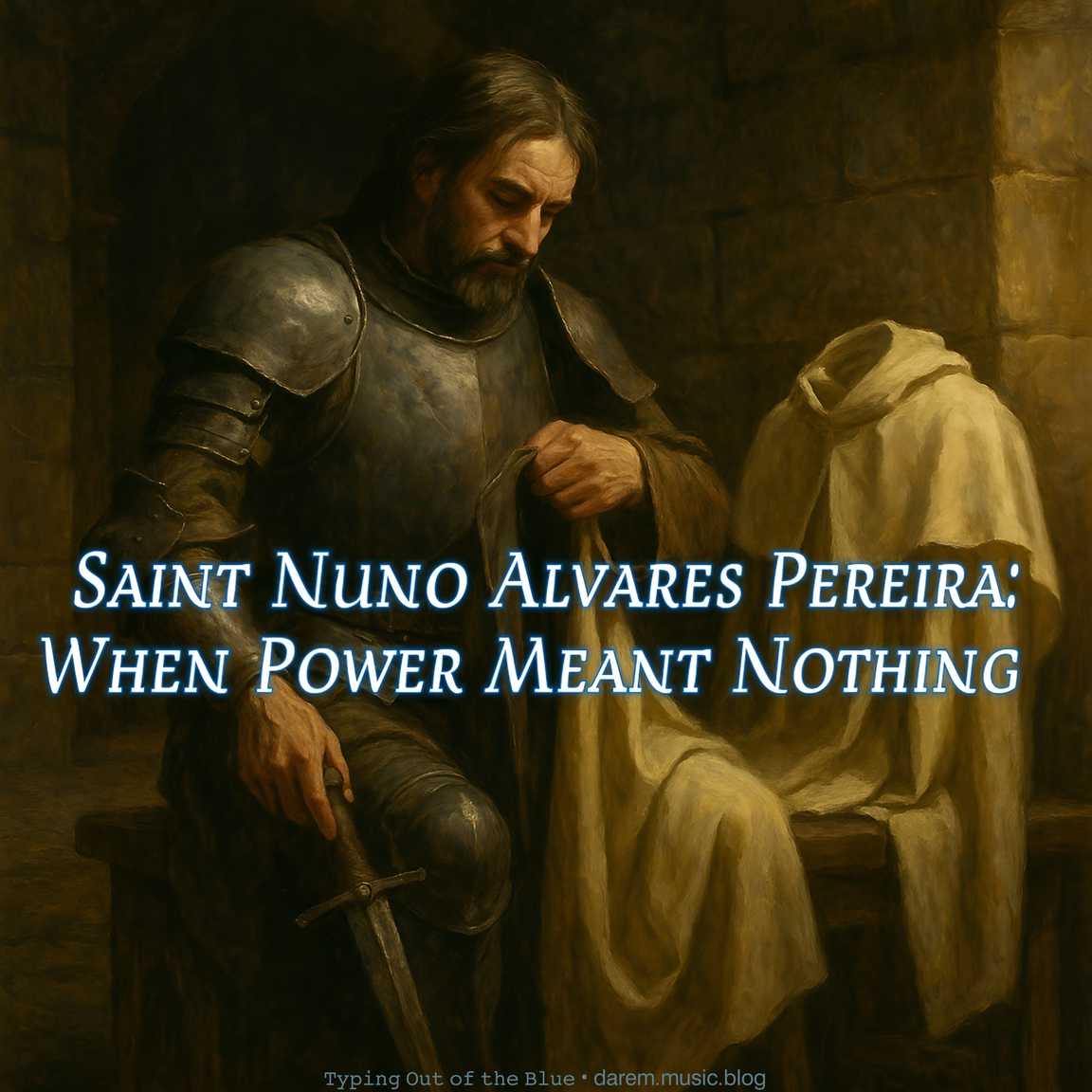
Saint Nuno Alvares Pereira: When Power Meant Nothing

He walked away from power and found peace in silence. His greatest victory wasn’t on any battlefield.

It was the late 1300s in Portugal, a country struggling to stay free. Nuno Alvares Pereira rose from a young nobleman to the greatest general of his time. He led Portugal’s army during the 1383–1385 Crisis, when the nation fought for its independence from Castile. His victory at the Battle of Aljubarrota in 1385 made him a national hero.

But after all the wars, victories, and fame, he realized that no matter how much he achieved, glory felt empty. His wife had died early, and his daughter had married into royalty—so he was left with no one close to him. He began giving away his riches, building churches and monasteries instead of castles.

What truly struck him was the emptiness of power. He saw how short-lived success was. People praised him like a hero, but deep inside, he felt it was all passing—loud today, gone tomorrow. So he walked away from that life completely.

In Lisbon, he entered the Carmelite monastery he had helped build, wearing the habit of a simple friar. Imagine that—one of the most powerful men in Portugal, sweeping floors, praying quietly, and living on charity. Even as a monk, he kept his soldier’s discipline, but his battles now were for peace, humility, and faith.

Nuno Alvares Pereira, once the mighty general of Portugal, became Brother Nuno of Saint Mary. No titles. No armor. Just a man who found more strength in silence than in victory. He died in 1431 in Lisbon, leaving behind not the clash of war, but the peace of someone who finally understood what truly matters.

⌨ ᴛʸᵖⁱⁿᵍ ᴏᵘᵗ ᵒᶠ ᵗʰᵉ ʙˡᵘᵉ ᵈᵃʳᵉᵐ ᵐᵘˢⁱᶜ ᵇˡᵒᵍ

Traces of courage, silence, and sacrifice—this is Saints.

Listen on Apple Music, Apple Music Classical, and YouTube Music