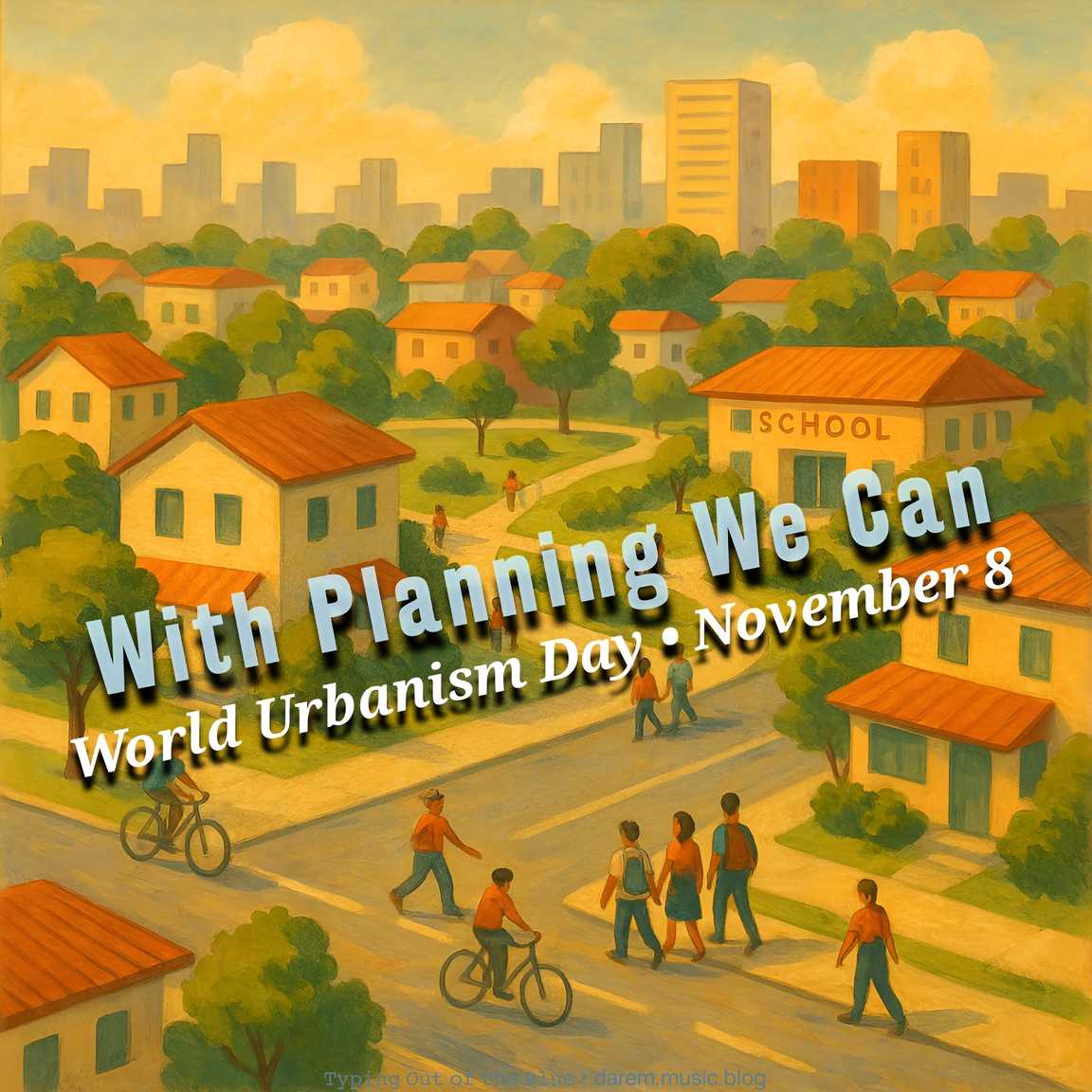
Every November 8, the world observes World Urbanism Day (aka World Town Planning Day)—a reminder that the way cities are planned shapes how people live. It’s not about big words like “urbanism” or “zoning.” It’s about how streets, parks, and public spaces affect everyday life.
Young people today might think it’s something only adults deal with, but planning starts with small choices too—where we walk, how we share space, how we care for what’s around us. City planners do the same on a larger scale, mapping out places where people can move, rest, and breathe. When planning is ignored, we see it through floods, traffic, and disorganized spaces.
A well-planned city feels lighter. You can walk safely, find shade, and enjoy open spaces. Poor planning makes life harder, especially for those who can’t just move somewhere better. Good design isn’t about tall buildings—it’s about fairness and balance.
This year’s theme, “With Planning We Can,” isn’t just about blueprints. It’s a call for everyone to notice what works and what doesn’t. When young people today start asking questions—why are there no trees, why no safe sidewalks—that’s already part of better planning. Because planning isn’t just for experts, it’s for anyone who cares about how life feels in their own city.
⌨ ᴛʸᵖⁱⁿᵍ ᴏᵘᵗ ᵒᶠ ᵗʰᵉ ʙˡᵘᵉ ᵈᵃʳᵉᵐ ᵐᵘˢⁱᶜ ᵇˡᵒᵍ
