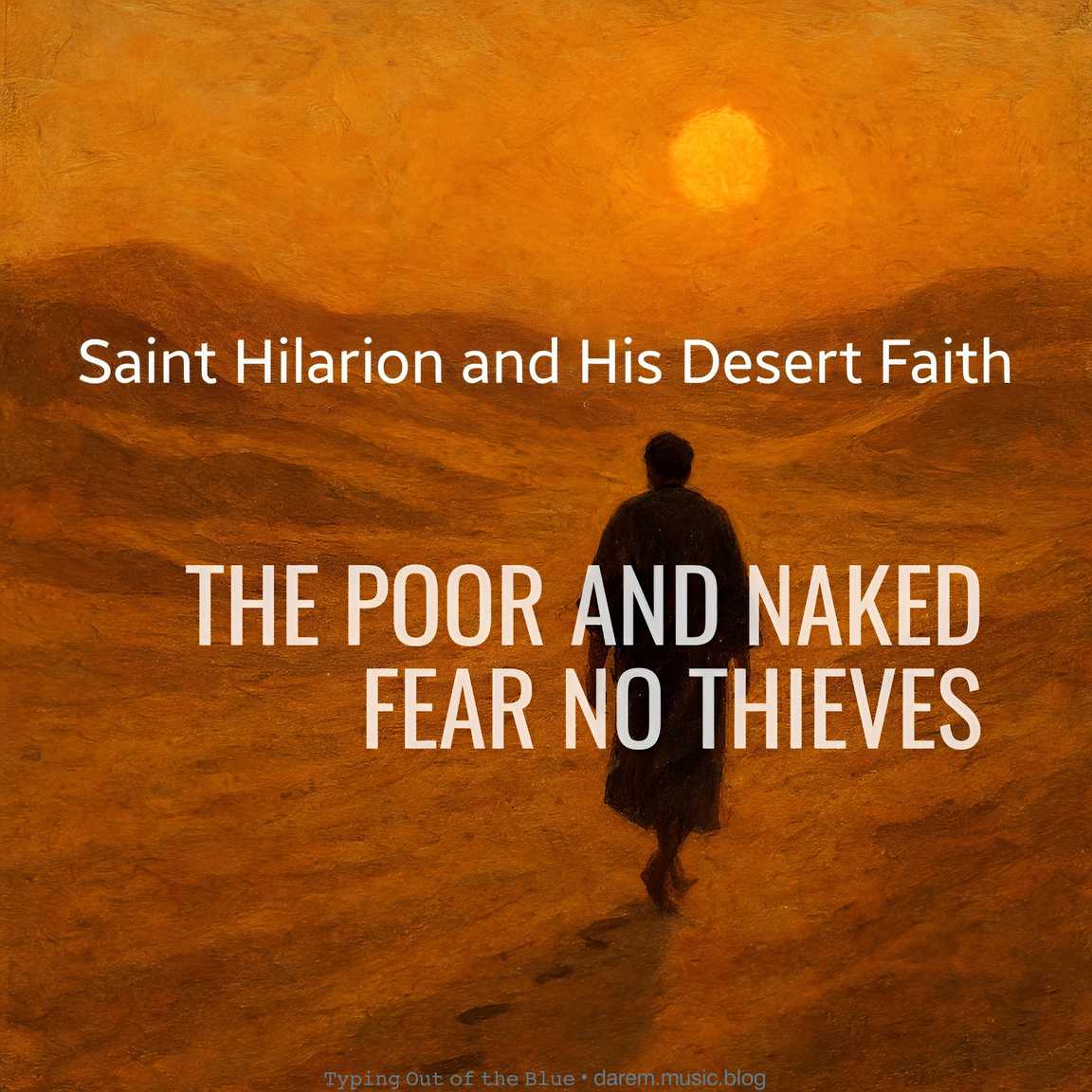
Saint Hilarion and His Desert Faith
While studying in Alexandria, a city of scholars and temples, Hilarion discovered a new kind of wisdom. He converted to Christianity, renounced his inheritance, and gave all his goods to the poor.
Around the year 306 AD, he left the city and walked toward the deserts near Gaza, a coastal city in ancient Palestine—today part of the southern region of modern Israel and the Gaza Strip—where the sun burned all day and silence had its own pulse. He carried no gold, no map—only faith.
There, he built a small shelter made of reeds—tall grass from river plants dried by the sun. Tradition tells that robbers often crossed that lonely stretch and warned him, “They steal from anyone out here.”
Hilarion smiled. “The poor and naked fear no thieves,” he said. And it was true—he had nothing they could take.
According to early writings, he lived with the barest means. For six years, he ate only fifteen figs a day—small sweet desert fruits rich in fiber and sugar—always after sunset. He wove baskets from reeds by day, a quiet rhythm between sunlight and prayer, remembering Saint Paul’s words: “He who does not work shall not eat.” The act of weaving became his prayer in motion, a rhythm that balanced physical effort with inner silence. The desert, they said, became his teacher, shaping him through hunger, heat, and stillness.
As the years passed, stories spread about his peace and discipline. Young men began to seek him out, learning how to live free from desire. Hilarion became known as the Father of Palestinian Monks, the one who showed that faith could thrive even in the harshest silence.
He died in 371 AD and was later honored as Saint Hilarion, remembered not for what he owned, but for what he let go.
Some details—such as the six-year fast of fifteen figs and the encounter with robbers—come from traditional accounts in Saint Jerome’s “Life of Saint Hilarion.” These stories are considered part legend, part history, meant to express the spirit of his faith more than literal fact.
⌨ ᴛʸᵖⁱⁿᵍ ᴏᵘᵗ ᵒᶠ ᵗʰᵉ ʙˡᵘᵉ ᵈᵃʳᵉᵐ ᵐᵘˢⁱᶜ ᵇˡᵒᵍ

Listen on Apple Music, Apple Music Classical, and YouTube Music
