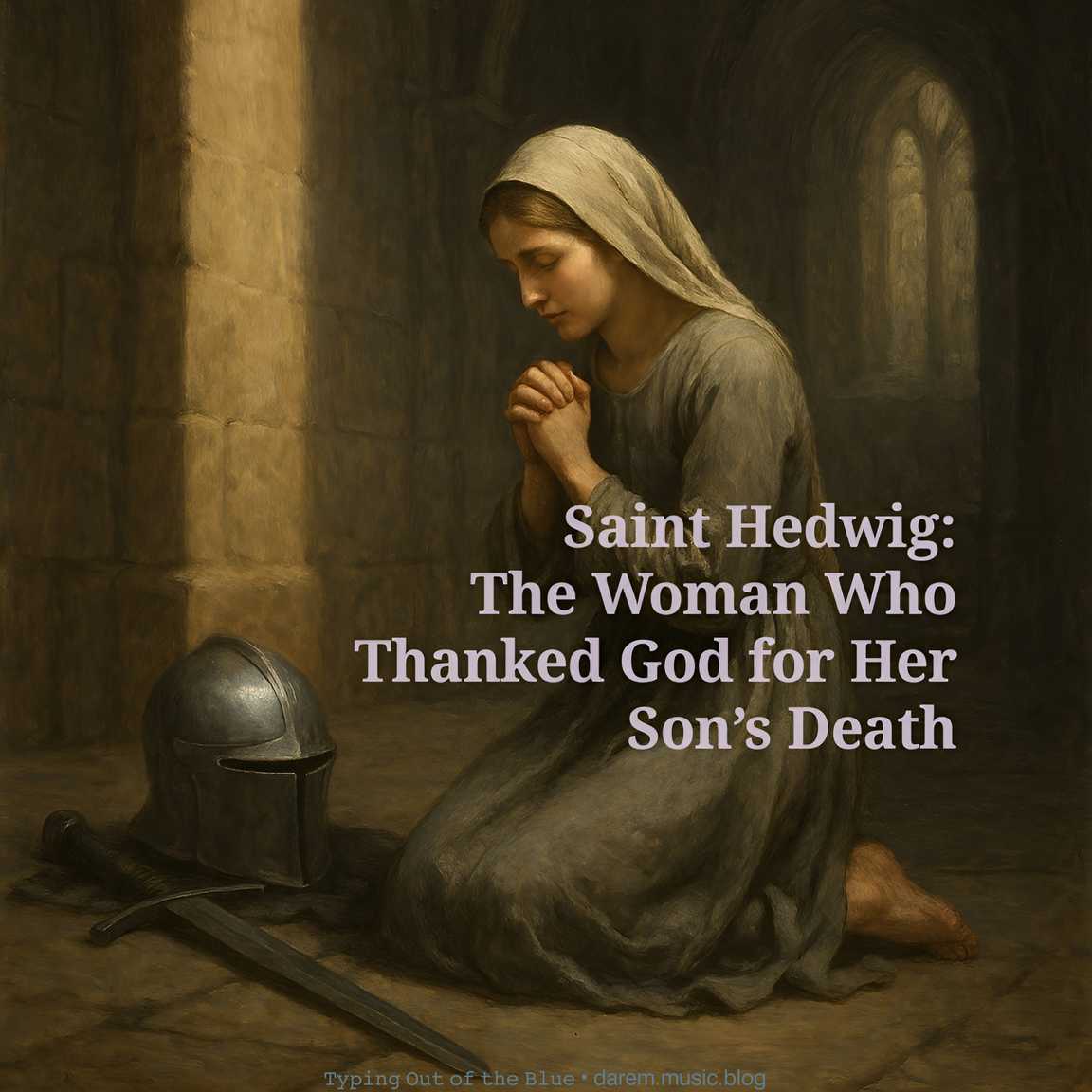
Hedwig of Silesia (1174–1243) was only twelve when she married Duke Henry the Bearded of Silesia. In her time, marriages were made for power, not love. She accepted her life with quiet strength. Even as a duchess, she lived simply—walking barefoot, helping the poor, and turning her castle into a place of care.
After her husband’s death, she chose to live in Trzebnica Abbey, a convent she had founded. She wasn’t a nun, but she lived like one—praying, serving, and staying close to God in silence.
Then came her greatest pain. Her son, Henry the Pious, was killed in 1241 while defending his people from the Mongol invasion. When the message reached Hedwig in the abbey, everyone waited for her to cry. But she knelt, bowed her head, and said, “Thank You, Lord, for giving me a son worthy of Heaven.”
It wasn’t because she didn’t feel pain. It was because her faith was stronger than sorrow. She believed that love means trusting God even when you don’t understand His ways.
Today, people remember Saint Hedwig as the barefoot duchess who turned loss into faith and grief into grace.
⌨ ᴛʸᵖⁱⁿᵍ ᴏᵘᵗ ᵒᶠ ᵗʰᵉ ʙˡᵘᵉ ᵈᵃʳᵉᵐ ᵐᵘˢⁱᶜ ᵇˡᵒᵍ

Listen on Apple Music, Apple Music Classical, and YouTube Music
