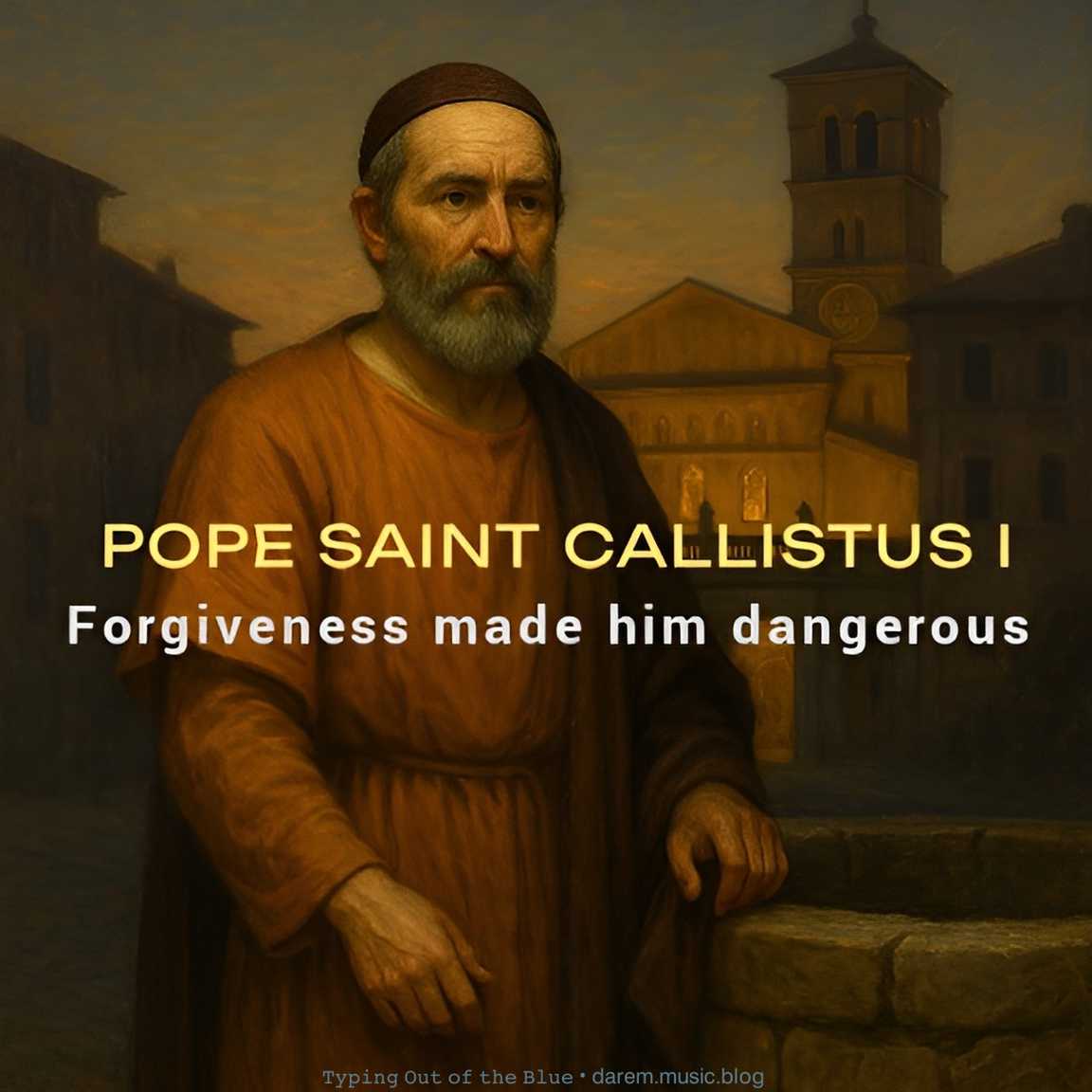
Forgiveness made him dangerous
In the early 200s, when the Roman Empire still ruled with iron and fear, Pope Callistus began as a slave—one of those stories you wouldn’t expect to end with a crown. He once worked with money meant for Christians, lost it, got punished, and ended up working hard in the mines. From the pit to the Pope’s chair—yeah, life has a wild sense of irony.
When freedom finally found him, he didn’t seek revenge; he built tombs. The Catacombs of St. Callistus became his mission, a quiet place for souls. That’s where mercy started to breathe again.
As Pope, he fought not with swords but with scandal—the scandal of forgiveness. A wise priest named Hippolytus stood against him, saying he was too soft for letting even murderers and adulterers return to the Church. But Pope Callistus stood firm: the Church wasn’t a museum of saints—it was a hospital for sinners. That truth divided many, but it shaped mercy forever.
He died a martyr around 222 AD—thrown into a well, fitting for a man who once rose from the depths. His name now lives in Santa Maria in Trastevere, one of the oldest churches in Rome, found in a quiet old street where the story of mercy still lives.
Some saints ruled by fear. Pope Saint Callistus I ruled by forgiveness. And that made him dangerous—in the holiest way possible.
⌨ ᴛʸᵖⁱⁿᵍ ᴏᵘᵗ ᵒᶠ ᵗʰᵉ ʙˡᵘᵉ ᵈᵃʳᵉᵐ ᵐᵘˢⁱᶜ ᵇˡᵒᵍ

Listen on Apple Music, Apple Music Classical, and YouTube Music
