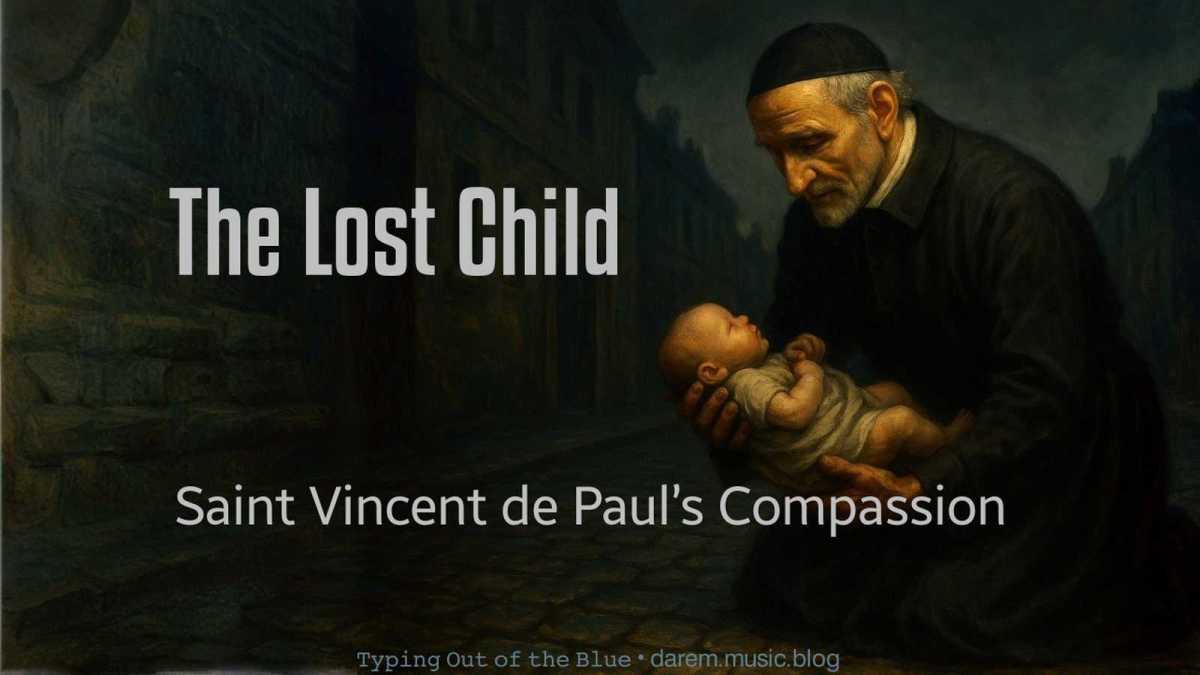
Saint Vincent de Paul’s Compassion
In the early 1630s, Paris was a city of contrasts—lavish wealth on one side, and on the other, desperate poverty that left many infants abandoned on the streets.
Father Vincent de Paul, already a Catholic priest known for his work among the poor, came across a baby left to die. People walked past with pity but no action. Father Vincent could not. He bent down, lifted the fragile child, and carried not only its body but also the weight of society’s failure.
He stormed into the homes of the wealthy. His words were sharp: “If this child dies, we are responsible.” The statement struck hearts. Moved by his urgency, noble women and men gave their support. With their help, Father Vincent organized care for abandoned children, creating the Hospital of Foundlings (Enfants-Trouvés)—a place where little ones once thrown away could now survive and grow.
This was Father Vincent’s way: turning compassion into structures that lasted, making mercy not just a feeling but a system.
Father Vincent lived a long life of service. After decades of caring for the poor, the sick, prisoners, and abandoned children, he died in 1660 in Paris at the age of 79. His body was later found incorrupt, a sign to many of his holiness.
He is remembered as Saint Vincent de Paul, the Apostle of Charity, a man who saw Christ in the weakest and made the world face its responsibility.
ᴛʸᵖⁱⁿᵍ ᴏᵘᵗ ᵒᶠ ᵗʰᵉ ʙˡᵘᵉ ᵈᵃʳᵉᵐ ᵐᵘˢⁱᶜ ᵇˡᵒᵍ

Listen on Apple Music, Apple Music Classical, and YouTube Music
