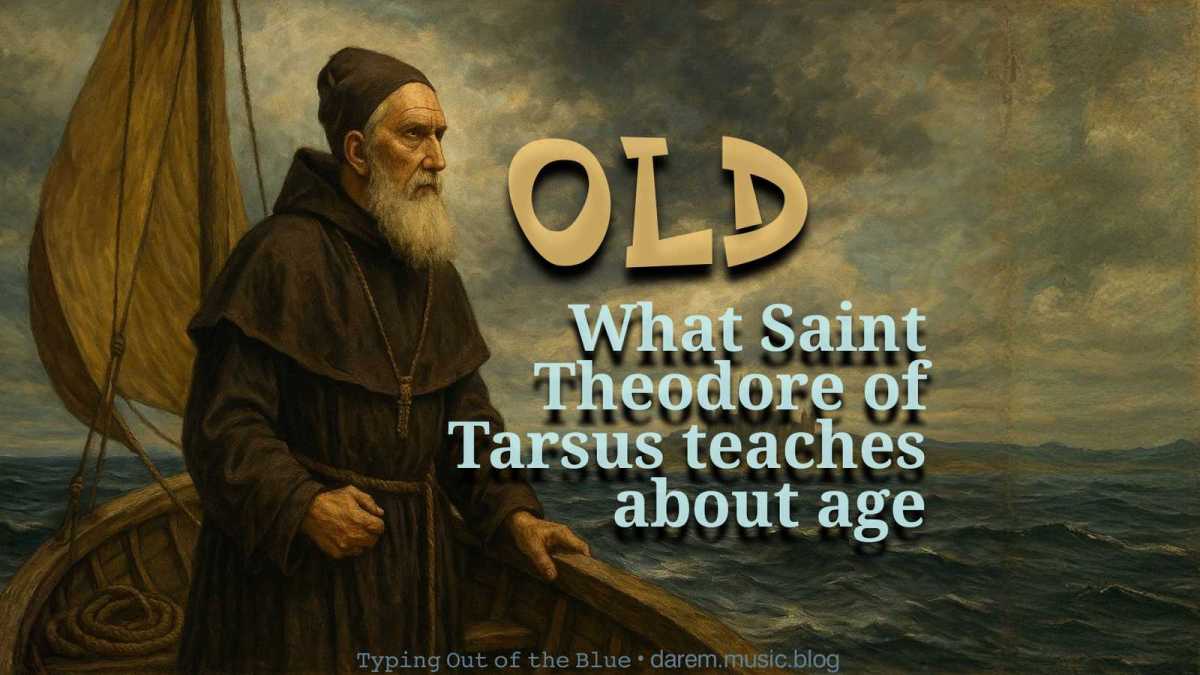
What Saint Theodore of Tarsus teaches about age
In the seventh century, average life expectancy was barely forty. At fifty you were ancient. At sixty you were expected to stay quiet, wait for death, and disappear.
But Theodore of Tarsus was sixty-six when Rome chose him to be Archbishop of Canterbury. He was only a monk in Rome, known for his learning. A scholar, not a bishop. To take the post, he first had to be ordained—all in one quick step, before being sent across the sea.
England’s Church was weak and divided. They needed a leader to bring order. People thought Theodore was too old. Too late. Too weak. Too close to the grave.
He could have believed them. He could have stayed behind. Instead, he crossed the sea and started again. He fixed what was broken. He gathered leaders. He built a school that lit up Europe. Younger men died before him, but he kept going. He lived to eighty-eight.
That is the truth of old. It feels heavy. It feels lonely. People look past you. Sometimes you even look past yourself. But inside, there is still fire.
Today, the world worships youth. The old are pushed aside. Many stop believing they can still matter. But the story of Saint Theodore of Tarsus says otherwise. Old doesn’t mean done. Old means tested. Old means strong. Old means you still carry something no one else can.
ᴛʸᵖⁱⁿᵍ ᴏᵘᵗ ᵒᶠ ᵗʰᵉ ʙˡᵘᵉ ᵈᵃʳᵉᵐ ᵐᵘˢⁱᶜ ᵇˡᵒᵍ
Thoughts drift like clouds across a fading sky, until you find yourself in a quiet room—Alone with a Piano.
Listen to Alone with a Piano on Apple Music and YouTube Music